
Data availability: Sources and Requirements for Stunning Box Monitoring
Data availability drives any robust AI deployment. First, identify key data types that feed an effective system. High-resolution video remains the primary input. Also, biosensors like heart-rate and EEG sensors provide physiological context. Next, environmental logs capture temperature, humidity, and airflow. Together, these sources form a dataset that lets teams accurately identify patterns and incidents. For example, combined video and biosensor signals improve animal welfare assessment by correlating motion with physiological stress.
Transitioning from theory to practice requires clear data quality standards. Frame rate must meet or exceed 30 fps. Resolution should be at least 1080p. Label accuracy needs to top 95 percent for supervised models. Also, timestamp synchronization across devices must keep jitter under a few milliseconds. These rules shorten processing time and allow a system to identify mis-stunning events within the real-time target of under 100 ms; recent work shows AI systems can achieve latencies below 100 milliseconds when properly tuned This AI-powered “black-box” could make surgery safer.
Data governance matters as much as data quality. Use local storage and on-prem model training to keep data private and EU AI Act compliant. Visionplatform.ai helps organisations reuse existing CCTV as a sensor network, keeping video footage inside the site for GDPR readiness. Also, document collection methods and maintain an auditable log of dataset versions. In addition, include metadata for lighting conditions, camera pose, and sensor calibration. That metadata supports model training and boosts robustness in low-light or varied lighting conditions.
Operational metrics depend on quality inputs. Better video and sensor fusion produce more reliable animal welfare metrics. Consequently, teams can monitor animal welfare and detect stress faster. Also, real-time tracking of motion and vitals supports continuous monitoring and lets operators act before an issue escalates. For organisations that want to scale, plan for third-party and internal data pipelines. Finally, perform periodic data collection audits to verify that labels, timestamps, and video monitoring streams still meet standards.
AI: Core Technologies Driving Real-Time Analysis
Computer vision lies at the center of modern systems. Convolutional neural networks (CNNs) power object recognition and object tracking. Also, vision-based models handle detection of animals, operators, and tools. For example, a model based on YOLO or similar architectures detects and classifies targets in video footage and then streams structured events. In many deployments, teams combine video and sensor inputs to improve accuracy. That multi-modal fusion helps a model to detect and track subtle distress signs.
AI-powered black-box concepts are gaining attention. One vendor calls their product an intelligent sentinel that warns operators before errors occur “This AI-powered ‘black-box’ could make surgery safer”. Also, a balanced approach uses local inference on edge devices to protect data. Visionplatform.ai offers flexible model strategies that keep data and model training on-prem, which helps organisations avoid cloud-only processing and maintain control.
Beyond object detection, anomaly detection and predictive maintenance rely on unsupervised and hybrid methods. Clustering, autoencoders, and isolation forests flag unusual patterns. Also, model training uses labelled and unlabelled dataset segments to detect deviations in workflow or a failing actuator in the production process. These models form an ai system that predicts faults and schedules maintenance before failures occur. Using AI, teams reduce downtime and improve operational efficiency.
Emphasise safety and humane restraint in the design. AI-driven alerts can intervene when a restraint exceeds time limits or when indicators show distress, thus helping monitor animal welfare. Additionally, computer vision combined with biosensor thresholds creates an ai-based feedback loop for humane operations. For regulatory alignment, document model performance and decision rules. Finally, include mechanisms to let operators override suggestions so the system supports, rather than replaces, human judgment.
AI vision within minutes?
With our no-code platform you can just focus on your data, we’ll do the rest
Analytics: Turning Data into Actionable Insights
Real value comes from analytics that convert raw signals into actionable insights. Start with a real-time analytics pipeline. First, ingest video data and sensor streams. Next, perform feature extraction to pull posture, motion vectors, and physiological metrics. Then, run classification and scoring models. Finally, publish events to dashboards and automated workflows. This pipeline produces the real-time insights operators need to respond fast and reduce error rates.
Quantitative results back the approach. In clinical and industrial settings, AI monitoring has cut procedural errors by up to 35 percent (35% reduction in procedural errors). Also, automated monitoring increased compliance with animal welfare regulations by roughly 40 percent in processing lines (40% uplift in welfare compliance). These metrics come from controlled evaluations and pilot deployments that combined vision-based detection with biosensor triggers.
Measure models using precision, recall, and F1. Also, log false positives and false negatives as part of continuous model retraining. For sustained performance, implement a feedback loop where operators flag missed events. That flagged data becomes high-value training data. Visionplatform.ai supports this by letting teams build models on local video footage, retrain them, and push updates to edge devices. Consequently, models adapt to site specifics, which reduces false alarms and improves precision.
Analytics also surfaces bottleneck trends in the production process. For example, a dashboard may show dwell time increases at a particular station. Then, teams can optimize operations and schedule maintenance. In addition, real-time scoring helps prioritise alerts. When the system detects a high-severity anomaly, it triggers an immediate alert and escalates the issue. Finally, keep model training records and versions auditable to comply with governance rules and to maintain traceability in audits.
Monitoring systems: Architecture and Integration
Choosing the right architecture determines latency and scalability. Edge deployments reduce processing time and satisfy low-latency needs. Cloud solutions simplify scaling and centralise analytics. However, many sensitive sites combine both. For instance, run core inference at the edge and aggregate anonymised summaries in the cloud for long-term analytics. This hybrid approach helps balance privacy, latency, and model management systems.
Core components include cameras, gateways, on-site GPU servers, sensors, and dashboards. Also, use secure communication channels like MQTT to stream detected events into existing OT and BI stacks. Visionplatform.ai converts CCTV into an operational sensor network and integrates with VMS systems like Milestone XProtect. Also, it publishes events for dashboards and automation. That integration with existing workflow tools ensures alerts reach operations and security teams where they already work.
Integration with existing systems requires careful change management. Start with pilot zones, then expand. Training and clear escalation paths accelerate adoption. A McKinsey study recommends empowering staff with AI tools while addressing cultural resistance AI in the workplace: A report for 2025. Also, avoid vendor lock-in by keeping models and data local where possible. That reduces third-party risk and keeps controls for GDPR and the EU AI Act.
Design for redundancy and maintenance. Use diverse cameras to handle different lighting conditions. Also, provide health checks for each sensor and make the dashboard show sensor status. Finally, define SLAs for processing time and alerts. Clear architecture and disciplined integration make the system resilient and easier to scale across sites.
AI vision within minutes?
With our no-code platform you can just focus on your data, we’ll do the rest
Warehouse & video analytics: Ensuring Efficiency and Ethics
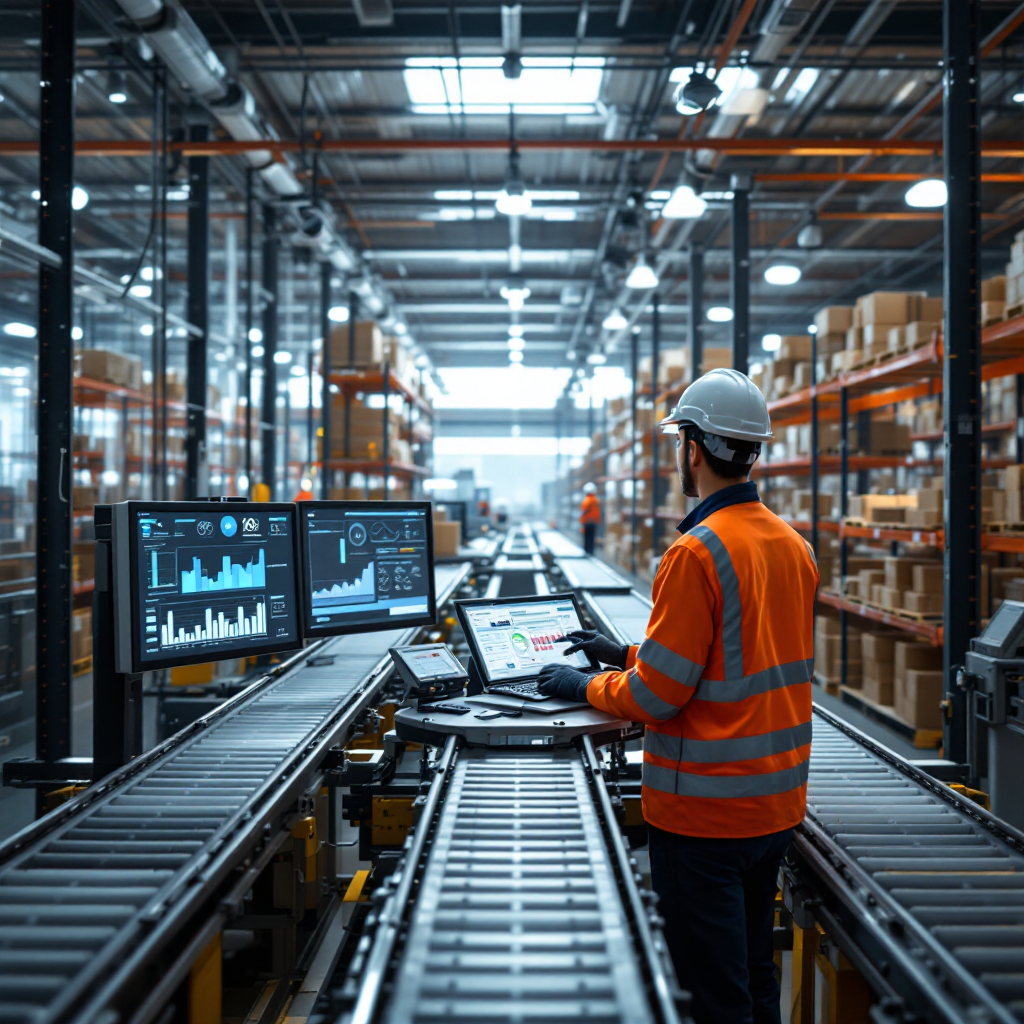
Mapping stunning box operations into warehouse workflows highlights throughput and compliance. First, embed cameras at key stations. Next, tie detection events to the warehouse management systems. That link helps correlate stunning box metrics with overall throughput and inventory flow. For example, when a line stalls, analytics can flag a bottleneck and suggest rerouting to keep the food production process moving.
Real-time video analytics detect protocol deviations and produce compliance reports. Using video, teams can monitor animal welfare and verify time-in-restraint limits. Also, combining CCTV with biosensors allows the system to detect and track welfare indicators at scale. A poultry processing line case study showed protocol adherence rising to 99 percent after deploying vision-based analytics and operator alerts. This kind of outcome demonstrates how automation and monitoring support both efficiency and ethical standards.
Ethics and governance remain central. Implement policies that anonymise human data and store sensitive footage only when necessary. Also, document retention rules and access logs for audits. Visionplatform.ai supports on-prem model training and event streaming so organisations can keep video footage and training data in their control. In addition, integrate process anomaly detection tools to spot irregular patterns that suggest equipment failure or unacceptable practices process anomaly detection.
Operational analytics also highlight bottleneck areas that reduce productivity. For instance, object recognition and object tracking can measure dwell times and handoff delays. Then, teams can optimize operations by changing staffing or conveyor speeds. Finally, implement continuous monitoring to prove compliance over time and to provide transparent metrics for regulators and auditors. That transparency builds trust and supports humane operations.
AI monitoring & alert: Real-Time Support for Operators
Design alert mechanisms to be clear, graded, and actionable. Use threshold triggers for routine events and escalation paths for severe anomalies. Also, deliver multi-channel notifications: SMS, push to dashboards, and integration with dispatch systems. For example, when the system detects excessive motion or biosensor distress, it should issue an immediate alert and follow a scripted escalation to supervisors and technicians.
Dashboards must show live metrics and provide operator feedback loops. Real-time tracking, and live camera clips help an operator confirm an incident. Also, allow operators to annotate events and flag false alarms. These annotations feed model training and reduce future noise. Visionplatform.ai publishes events over MQTT, so teams can push notifications into SCADA, BI, or incident management tools.
Future directions include multi-modal sensing, regulatory compliance dashboards, and enhanced operator training integration. Also, build simulation tools to test alarm fatigue and refine thresholds. For compliance, provide auditable logs that show when an alert fired, who responded, and what action was taken. This trail helps during inspections and supports continuous improvement.
Finally, ensure the AI-driven system remains transparent. Use explainable model outputs and simple scoring so operators understand why an alert triggered. Also, keep human-in-the-loop controls to let staff override or confirm AI suggestions. In the end, real-time monitoring that respects operator workflows, supports animal welfare monitoring, and integrates cleanly with warehouse management systems will deliver safer, faster, and more ethical operations.
FAQ
What data types are essential for AI monitoring in stunning box operations?
High-resolution video, biosensors, and environmental logs form the core dataset. Also, metadata such as timestamps, camera pose, and lighting conditions improves model accuracy.
How fast must the system detect anomalies to be effective?
Target a processing time under 100 ms for critical alerts to enable intervention before harm occurs. Recent studies show AI can achieve sub-100 ms latencies when optimized (Technology Review).
Can existing CCTV be reused for AI monitoring?
Yes; platforms like Visionplatform.ai turn existing CCTV into operational sensors so teams can reuse video footage for detection and model training. This reduces cost and speeds deployment.
How does AI improve animal welfare?
AI monitors behavior and physiological indicators to detect stress and restraint time violations. Also, analytics can enforce protocols and help monitor animal welfare across shifts.
What are the privacy and compliance considerations?
Keep data on-prem when possible to meet GDPR and EU AI Act requirements. Also, maintain auditable logs of model training and access to footage for transparency.
How are alerts delivered to operators?
Alerts use graded thresholds and multi-channel notifications such as dashboard notifications, SMS, and integration with incident systems. Also, dashboards allow operators to provide feedback that improves model training.
What is the role of edge vs cloud in these systems?
Edge reduces latency and keeps sensitive data local. Cloud helps with long-term analytics and scaling. Many setups use a hybrid model for balance.
How do you keep models accurate over time?
Use continuous monitoring, operator feedback, and scheduled model training on updated datasets. Also, track precision, recall, and F1 to measure drift and retrain when needed.
Can AI monitoring integrate with warehouse management tools?
Yes; events can feed warehouse management systems to optimize throughput and respond to bottleneck issues. For process anomaly and operational context, see process anomaly detection resources process anomaly detection.
Where can I learn more about specific detection capabilities?
Explore Visionplatform.ai pages on people detection, PPE detection, and other analytics to see how vision solutions link to operations. Examples include people detection in airports people detection and PPE detection PPE detection.