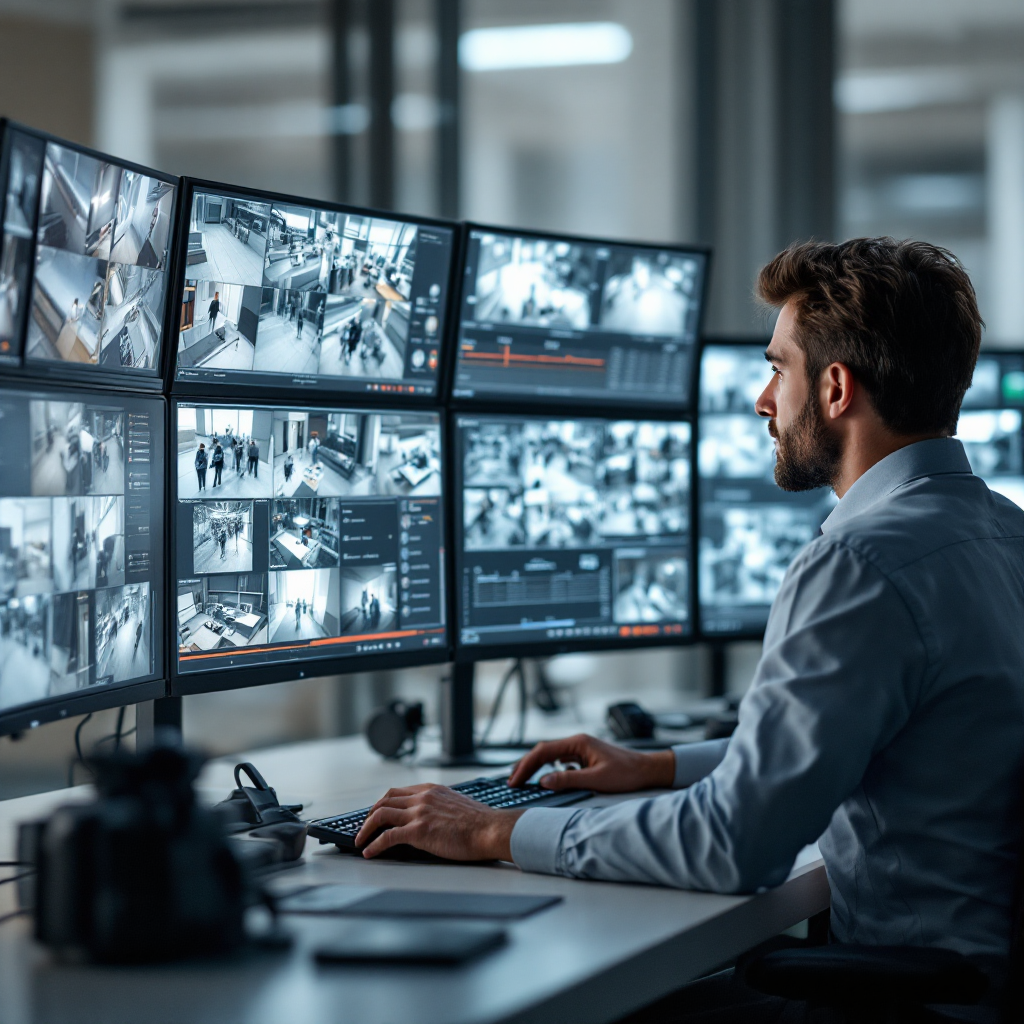
Forensic video analytics in modern forensic investigations
Forensic video analytics is the intersection of computational methods and investigative practice. It converts recorded video into structured evidence for efficient evidence gathering and case work. Forensic teams face thousands of hours of footage from CCTV, body cameras, and mobile sources, and they need tools that sift and surface what matters. Also, AI and deep learning models can process this volume fast, therefore reducing manual review and helping teams focus on leads.
First, this approach automates detection of moving objects, faces, and license plates. Next, it generates metadata that helps investigators search by timestamp, location, or object class. For example, a recent survey found digital evidence is a factor in about 90% of criminal cases, so agencies rely on automated workflows to handle scale. Also, two-thirds of law enforcement managers now put digital evidence above DNA in importance, which explains the investment in systems that can transform video data into court-ready exhibits (Proven Data).
Forensic investigators apply AI to tag events, and then they use search tools to find relevant clips. Also, this helps with video forensics tasks such as authenticity checks and tamper detection. For instance, Interpol highlights authenticity verification as a key step given manipulated media risks (Interpol report). Furthermore, analytics reduce the time to locate a suspect across multiple cameras, and so they speed up case timelines. Visionplatform.ai helps organisations by turning existing CCTV into an operational sensor network, so teams can keep data and models on-premise and align to EU AI Act compliance. Also, teams can read more about tailored people detection and operational use cases on the site’s people detection resource people detection in airports.
Finally, forensic search techniques combine fast indexing with clear audit trails. Also, this supports admissibility when paired with sound chain-of-custody practices. Because video evidence often underpins witness accounts, using a structured forensic workflow makes investigators more efficient while keeping procedural safeguards intact.
Forensic search integration with video surveillance systems
Integrating forensic search with video surveillance networks turns passive cameras into active investigative sensors. First, integration links VMS video feeds to indexing engines that extract frames, tags, and timestamps. Then, data ingestion modules convert recorded video into searchable entries while preserving chain-of-custody logs. Also, a common architecture includes secure storage, a search index, and an interface that lets users draw a search area or predefine a filter to focus analysis.
The system architecture relies on three layers. First, edge capture reads RTSP/ONVIF streams from existing cameras and ingests streaming video. Next, an indexing layer generates metadata and thumbnails for each event. Finally, secure storage retains evidence and audit logs. Also, integrating with a VMS or using an open platform approach allows investigators to correlate access control events with video, and thus speed up investigations. For teams that use Milestone or similar VMS solutions, Visionplatform.ai supports VMS integration and keeps models local to reduce data export risks.
Real-time alerts are crucial. For example, an alert can trigger when a license plate appears in an area of interest, so teams can act immediately. Also, forensic search supports retrospective search across multiple cameras to reconstruct timelines. Investigators can use the search tool to combine search criteria like object type, timestamp, and camera location. Also, partner integrations with camera manufacturers and systems such as Axis Communications and Genetec make it simpler to expand coverage without replacing equipment. Learn how anpr/lpr works in airport contexts with an internal primer on ANPR/LPR in airports ANPR/LPR in airports.
Finally, secure ingestion and indexing maintain evidentiary integrity. Also, teams can audit every retrieval, and therefore show how a clip was found and who accessed it. This combination of fast search and traceability makes forensic search a powerful tool for modern policing, and it helps investigators manage thousands of hours of recorded video efficiently.
AI vision within minutes?
With our no-code platform you can just focus on your data, we’ll do the rest
Advanced forensic search filters and metadata for granular analytics
Advanced forensic search introduces granular controls so investigators can find the exact clip they need. First, user-defined search filters let teams narrow results by timestamp, camera, or object class. Also, more specific search filters can include vehicle type, license plate fragments, or a specific object. This reduces noise, and it helps teams focus on likely leads fast. For instance, generating metadata for each frame creates searchable tags, and so investigators can jump to moments of interest without watching hours of footage.
Metadata plays a central role. Also, metadata can capture camera ID, GPS location, and object bounding boxes. Then, search engines use that metadata to rank and cluster candidate clips. For example, investigators can search for “red vehicle” and refine results by vehicle type or color metadata. Also, thumbnail previews speed validation by letting users visually confirm clips in seconds. This approach reduces manual review time and improves accuracy in evidence gathering and timeline reconstruction.
Customisable filters help too. For example, teams can predefine an area of interest inside a frame by drawing a search area to exclude irrelevant motion. Also, systems can apply a filter for moving objects only, which keeps stationary clutter out of results. Forensic search capabilities can further apply confidence thresholds, so low-confidence detections are omitted from primary search results unless requested. This sort of granular analytics helps investigators sift thousands of hours of footage while maintaining judicial defensibility.
Practical tools support operational workflows. Also, combining search filters with case management systems creates an audit trail from finding video to evidence submission. Visionplatform.ai’s approach supports on-prem model tuning so the metadata you generate reflects site-specific needs. Also, if teams need airport-specific solutions, they can consult targeted pages such as forensic search in airports to see applied examples forensic search in airports.
Using video analytics and search capabilities for people or vehicles detection
People or vehicles detection is a cornerstone of modern investigations. First, detection methods include face recognition, license plate recognition, and gait or silhouette analysis. Also, license plate and ANPR/LPR modules extract textual plate images, which helps link vehicles to registration records. Then, systems consolidate detections across multiple feeds so a suspect can be tracked from entry to exit. This consolidation saves hours of manual cross-referencing.
Search capabilities rank and consolidate results by relevance, and so investigators see the most promising matches first. For example, a search for a specific license plate will return prioritized clips that match plate characters and confidence. Also, searches that include face matches will group similar thumbnails and provide similarity scores. This ranking allows teams to rapidly confirm or discard leads, and thus speed up response times.
Typical workflows are straightforward. First, an operator establishes search criteria such as time range, object type, and area of interest. Next, the forensic search tool returns a set of thumbnails ranked by match quality. Then, the investigator expands high-priority thumbnails for scene reconstruction and to build a timeline. Also, investigators can link multiple events to the same person or vehicle to create a continuous trail. This method helps with suspect tracking, witness correlation, and scene reconstruction.
Automated aggregations support collaboration. Also, search results can be exported with secure audit logs for courtroom use. Visionplatform.ai supports integrations that stream structured events to BI or security systems, and thus allow cameras to act as sensors for operational dashboards. For airport deployments, teams can combine people detection, ANPR/LPR, and PPE checks to form a comprehensive situational picture people detection and ANPR/LPR.
AI vision within minutes?
With our no-code platform you can just focus on your data, we’ll do the rest
Scalable AI-enabled analytics to speed up investigations and refine search results
Scalable architectures let organisations process many video streams while keeping latency low. First, edge-based processing reduces bandwidth by executing models close to cameras. Next, cloud-based options allow elastic scaling when batch processing thousands of hours for deep review. Also, hybrid setups provide a balance where immediate detections run on-site and heavy model training occurs in controlled environments. This flexibility helps teams scale from a handful of streams to enterprise deployments.
AI-powered analytics speed up investigations by automating object detection, anomaly alerts, and event correlation. For example, a system can flag suspicious activities and then generate an event that is searchable by case teams. Also, optimisation techniques such as confidence scoring and scene similarity refine search results so investigators receive higher-quality candidates. This reduces the time spent on low-value clips and lets analysts prioritise high-confidence evidence.
Architectural choices matter. Also, an edge-first design preserves data residency and supports EU AI Act requirements. Meanwhile, server-side indexing improves full-site searches across multiple cameras. Forensic search capabilities combine both approaches so teams can run live incident detection and retrospective analysis. Also, systems can precompute thumbnails and metadata to make interactive playback near-instant even for thousands of hours of footage.
Case workflows benefit from automation. Also, searchable events integrate into case management so evidence moves from detection to chain-of-custody with minimal friction. Visionplatform.ai offers a scalable, intuitive platform that keeps models local, and so organisations can refine models on their own footage to reduce false detections. Also, partner integrations simplify connection to other security systems, which ensures data flows where it is needed without vendor lock-in. Learn about vehicle detection and classification for applied scenarios in transport hubs vehicle detection and classification.

Partner integrations with Genetec to expand area of interest and advanced search
Partner integrations extend functionality and broaden coverage without replacing infrastructure. First, connecting to a platform like Genetec enables synchronised search across a site’s VMS, and so investigators benefit from unified playback and indexing. Also, supported integrations include APIs and plug-in options that let teams predefine an area of interest and tie video events to access control logs. This creates a fuller picture for each incident.
Configuring area of interest is simple and effective. Also, users can draw a search area on a camera view to exclude irrelevant zones, which reduces false positives. Then, the system generates metadata for events inside that area so searches return focused results. For example, setting an area of interest around a loading dock helps teams monitor deliveries and detect suspicious behaviors quickly.
APIs and plug-ins power collaborative workflows. Also, integrations with Genetec and other VMS providers allow events to be pushed to case management and SIEM systems. This ensures alerts reach the right teams, and it helps operations use camera data for non-security use cases. For organisations that need an open platform approach, Visionplatform.ai supports connections to common camera ecosystems such as Hanwha and Axis Communications so existing cameras continue to provide value.
Finally, partner integrations make advanced search practical. Also, combining license plate recognition, people-detection, and access control logs accelerates investigations and helps prove timelines. For teams wanting a step-by-step example, look at our forensic search in airports page for workflow patterns and integration notes forensic search in airports. Also, partner integrations with Arcules-style cloud connectors can support hybrid deployments where needed, while still keeping core models and sensitive data under customer control.
FAQ
What is forensic video analytics?
Forensic video analytics is the use of automated algorithms to convert video footage into searchable evidence. It combines detection, tagging, and indexing so investigators can find relevant clips quickly and with audit trails.
How does metadata help with investigations?
Metadata captures contextual details like timestamps, camera ID, and object class. It lets teams filter and rank search results, and therefore narrows the scope of manual review while preserving evidentiary information.
Can forensic search tools integrate with existing VMS?
Yes. Forensic search tools often integrate with VMS solutions to ingest streaming video and recorded video. This allows teams to use existing cameras and retain a single source of truth for footage.
How do systems detect people and vehicles?
Detection uses AI models such as deep learning classifiers to identify object types, faces, and license plate regions. Then, recognition modules like license plate recognition extract readable characters and link them to registries when permitted.
Are edge-based solutions better than cloud-only options?
Edge-based solutions reduce bandwidth and keep sensitive footage on-premise, which helps with compliance. Cloud-based options can scale elastically for batch processing, so hybrid approaches often offer the best balance.
What is an area of interest and how is it used?
An area of interest is a user-defined zone inside a camera view that focuses detection and search. Drawing a search area reduces irrelevant detections and improves the relevance of search results for investigators.
How do thumbnail previews speed up review?
Thumbnails give visual snapshots of events, so analysts can validate matches without full playback. This saves time and lets investigators prioritise high-confidence clips quickly.
How do integrations with platforms like Genetec help?
Integrations enable unified search across multiple cameras and tie video events to access control or other security logs. This streamlines workflows and helps build complete incident timelines for investigators.
How does Visionplatform.ai support compliance?
Visionplatform.ai supports on-prem and edge deployments, customer-controlled datasets, and auditable logs. This design helps organisations meet GDPR and EU AI Act requirements while keeping models tailored to site needs.
Can forensic analytics be used outside security?
Yes. Structured events can feed operational systems, dashboards, and BI tools. This turns camera feeds into sensors that support operations, maintenance, and business reporting as well as safety and security.