CCTV and CCTV Camera: Basics for the Control Room Operator
Closed-circuit television is the backbone of many modern security systems. First, a control room operator needs to understand that closed-circuit television, or cctv, captures images from surveillance cameras and sends them back to a central monitoring hub. Next, the cctv camera records and streams video to a monitor or a bank of up to 15 displays in larger monitoring rooms. For example, a single cctv camera with good low-light capability will help reduce blind spots and safeguard entry points. In addition, an operator must know basic technical specs: resolution, field of view, frame rate and low-light capability. These specs tell the skilled operator how reliable each camera will be during the night shift.
Then, an operator’s first tasks include standard start-up checks. First, confirm each lens is clean and each camera is powered. Second, verify network links and that the video feeds reach the control room’s servers. Also, run quick calibration to align pan-tilt-zoom presets and to set motion zones. Additionally, verify that access control integrations are live so alerts from access control systems appear at the operator console. A control room operator must log these checks in the monitoring room log at the start of every shift.
Furthermore, operator training includes understanding how cctv interacts with other security systems like intrusion detectors and building security alarms. In practice, working as a cctv operator requires situational awareness, a calm approach and the ability to act when an alert appears. Visionplatform.ai helps by turning existing cameras into sensors for real-time detection, which lets an operator focus on verified events. Finally, clear SOPs help the room operator to know when to escalate to security guards or to call emergency services.
Surveillance and Surveillance Room: Core Functions of the CCTV Operator
The surveillance room is a command node in wider security strategy. First, the surveillance room collects cctv streams and presents them so a control room operator can monitor multiple views at once. Then, the operator uses analytics and alarm tagging to focus on potential incidents. For example, sensor alerts from a people detection model can highlight an unattended bag or suspicious movement. A quoted study found that “operators passed on information on approximately one fifth of incidents,” which shows how selective surveillance decisions are os operadores transmitiram informações em aproximadamente um quinto dos incidentes.
Next, the surveillance room supports real-time decision making. The operator watches live footage and annotated video feeds. Also, the surveillance room hosts integrations such as ANPR/LPR and PPE detection that can alert on vehicle or compliance events. If an alert flags a potential threat, the operator must verify and then escalate. In many sites, escalation involves coordination with on-site security and emergency services. In practice, cctv surveillance works best when analytics produce few false positives and when the operator receives usable event context.
Additionally, a surveillance room links to remote monitoring setups for off-site review. Visionplatform.ai provides flexible model strategies so analytics match site rules; this reduces false alerts and makes the control room’s work more effective. Lastly, the surveillance room supports forensic search of recorded cctv footage, which helps investigations and legal follow-up. This capability lets security professionals find the exact clip they need without watching hours of video.
AI vision within minutes?
With our no-code platform you can just focus on your data, we’ll do the rest
Control Room and Room Design: Optimal Set-up for the Operator
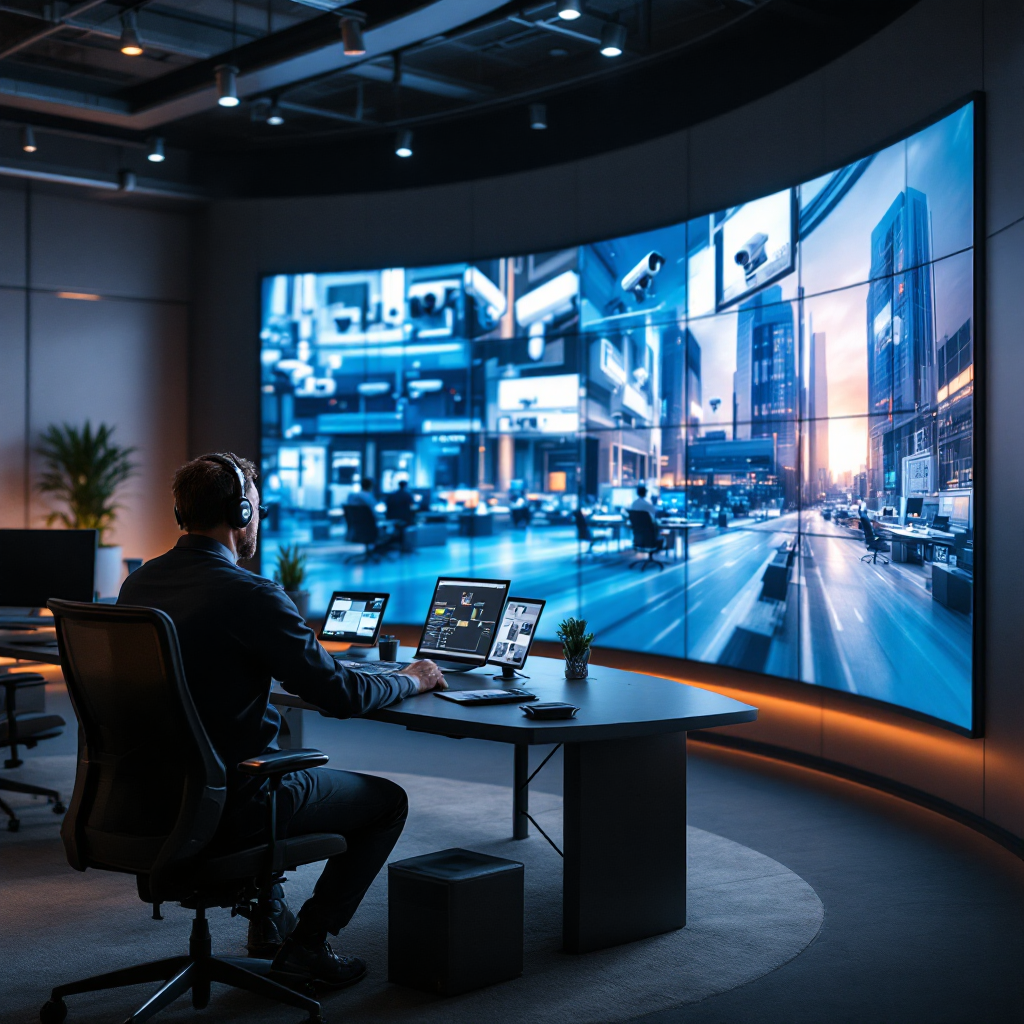
A good control room design reduces errors and speeds response. First, room layout must place multiple screens within easy sight and reduce neck strain. For example, a control room requires a bank of up to 15 monitors when covering large sites. Second, seating and lighting should support long shifts so operators to work comfortably. Third, noise control and neutral wall colours help maintain focus during quiet periods.
Then, hardware matters. Video walls, resilient workstations, headsets and redundant power form the physical backbone. Also, backup systems and storage must preserve cctv footage for investigations. In one guide, experts recommend filing and organizing security data in reliable storage systems for future referencearquivar e organizar dados de segurança em sistemas de armazenamento fiáveis para referência futura. Furthermore, IT infrastructure needs network redundancy, encrypted links and strong access control to protect video and logs. For instance, limit control room access to authorised personnel and log entries to prevent theft or tamperingRestringir o acesso à sala de controlo: garantir que apenas o pessoal autorizado possa aceder à sala de CCTV.
Moreover, control room layout should enable a supervisor to oversee operations while letting room operators handle alarms. The control room’s ergonomic choices help operators stay alert and reduce fatigue. Additionally, access control systems and physical locks are part of the safeguard for rooms provide security for critical equipment. Finally, clear policies on room needs and secure entry keep data inside the control room and support compliance efforts with privacy rules.
Duties and Responsibilities of the Control Room Operator
Responsibilities in a monitoring role are clear and routine. First, live monitoring is primary: the operator watches multiple camera streams and must detect suspicious activity. Second, routine system maintenance keeps cameras aligned and networks stable. Third, shift handovers require a precise handoff so the next operator inherits context. These duties and responsibilities appear in SOPs and training curriculums.
Next, incident response follows a standard path: identify, verify and report. When an alarm fires or an alert arrives, the control room operator must evaluate the event. If verified, notify security teams or security guards and, when needed, call emergency services. Also, coordinate with on-site security or police or fire depending on the incident. In some cases, the operator exports cctv footage and prepares a report for management. Indeed, “The control room played a key role in crime control” as noted in a case study, yet operators faced workload challengesA sala de controlo desempenhou um papel fundamental no combate ao crime.
Additionally, discretion and accuracy matter. A skilled operator must avoid false accusations and must follow legal limits when sharing cctv footage. For larger enterprises, control room operators must publish events to business systems so cameras act as sensors. Visionplatform.ai supports this need by streaming structured events so security solutions and operations teams gain value beyond alarms. Finally, the control room operator often trains with security patrols and security staff to verify protocols and to align security work across shifts.
AI vision within minutes?
With our no-code platform you can just focus on your data, we’ll do the rest
CCTV Control Room Operations: How Room Operators Monitor Security
A typical monitoring session follows a clear rhythm. First, the operator completes start-up checks and confirms network and camera health. Next, the operator monitors live footage and follows alerts from video analytics or access control. An alarm will flag a motion event or an ANPR/LPR match. Then, the operator uses tools to zoom, track and record footage for escalation. In practice, an operator works with multiple screens and with software that highlights the most relevant video feeds.
Then, escalation protocols vary by incident. For minor trespass, notify security teams and log the event. For theft, send guards and preserve cctv footage for evidence. For safety events, call emergency services immediately and patch communications to on-site security. Control room operators perform these steps every shift. Also, post-incident tasks include video export, report creation and evidence handover to investigators or to police. In many sites, a supervisor reviews the export and signs off on the chain of custody.
Moreover, modern operations use analytics to reduce workload. For example, people detection and crowd analytics help a control room operator spot anomalies in public space surveillance; see people detection in airports for a similar use case. Similarly, vehicle detection systems support parking and perimeter checks; read about ANPR/LPR in airports for how vehicles are managed. Finally, remote monitoring lets supervisors review incidents off-site, which adds flexibility but requires strong cybersecurity and clear SOPs to safeguard recorded data.
Control Room Operators Perform: Incident Detection, Reporting and Coordination
Measuring performance keeps the operation effective. First, key metrics include incident detection rate, false-alarm ratio and average response time. For example, studies show operators pass on roughly 20% of captured incidents, which highlights training needs and judgement challengesos operadores transmitiram informações em aproximadamente um quinto dos incidentes. Second, training methods such as scenario drills and software simulations build accuracy. Third, ongoing assessments and audits keep standards high.
Next, challenges persist. Operator fatigue and information overload reduce effectiveness. Also, the digitalization of the monitoring environment increases task complexity and can affect cognitive reliabilityinvestigation of the impact of main control room digitalization on operators’ cognitive reliability. In response, companies must schedule shifts to reduce fatigue and to let operators take breaks. Also, AI-assisted monitoring can help operators by filtering low-value alerts and by rising up the most relevant incidents. Visionplatform.ai focuses on on-prem, customer-controlled analytics that reduce false alerts and keep data private, which helps teams meet EU AI Act expectations and safeguard privacy.
Finally, combine people, training and technology to raise outcomes. Security professionals, security staff and private security can all benefit when a control room supports clear coordination. To improve overall security, add periodic audits, integrate access control systems and ensure the control room design includes ergonomic seating and an intuitive interface. Control room operators must follow SOPs. Ultimately, the goal is to detect and to respond quickly so teams can respond to potential threats and protect people and property.
FAQ
What is the role of a CCTV control room operator?
The role of a cctv control room operator is to monitor video feeds, detect incidents and to coordinate response. They verify alerts, notify on-site staff or emergency services, and document events for later review.
How does a CCTV camera send video to the control room?
A cctv camera sends video over wired or wireless networks to a central server or VMS, where a control room operator can monitor it in real-time. Then, recordings are archived for forensic review when needed.
What technical specs should I check for surveillance cameras?
Check resolution, field of view, low-light capability and frame rate. These specs determine how well a monitor or an operator can identify faces, license plates and other details in live footage.
How do control room operators handle false alarms?
Operators verify each alarm by viewing live footage, checking analytics metadata and, if needed, dispatching security guards. Then, they log false alarms and adjust detection zones or analytic sensitivity to improve accuracy.
What training helps a control room operator perform well?
Scenario drills, software simulations and supervised shift shadowing help operators build judgement and speed. Regular assessments and feedback from room supervisors keep skills current.
How do control rooms protect recorded CCTV footage?
Control rooms use secure storage, encrypted networks and strict access control systems to protect footage. Additionally, access logs and audits ensure that only authorised security staff can export or view sensitive video.
Can AI help reduce operator workload?
Yes, AI and video analytics can filter routine events and raise only validated alerts for review. Visionplatform.ai, for example, turns existing cameras into operational sensors and streams events to business systems to reduce false alerts and help operators.
What is the difference between a surveillance room and a monitoring room?
A surveillance room focuses on real-time oversight of public or private spaces, while a monitoring room may also include broader building management functions. Both require a clear control room layout and trained staff for effective security monitoring.
How do control rooms coordinate with emergency services?
When a verified incident requires urgent help, the operator calls police or fire and then briefs responders with location, nature of the event and any live footage. This coordination speeds response and preserves evidence for later investigation.
What are key requirements when setting up a new control room?
Key requirements include an ergonomic room design, robust IT infrastructure, redundant power and secure access control. Also, define SOPs, staff training and clear escalation paths so the control room supports overall security effectively.