
AI Agent in Critical Infrastructure Control Room
An AI agent is a software component that senses, reasons, and acts, and it can work alongside human operators in a control room to speed detection and response. In a CONTROL ROOM setting the ai agent ingests telemetry and video, and then it correlates signals, and it issues an alert or an action recommendation. Operators still retain manual control, and the ai agent does not replace final authority. To integrate with legacy control systems the agent must link to SCADA, DCS and sensor networks, and it must maintain secure service accounts and role-based access so it can read data and write permitted commands to the control system.
Integration is typically done with adapters that stream data in real-time, and then route events into a common data infrastructure for analytics and visualization. This enables AI to detect weak signals and to flag an anomaly within seconds, and it enables faster escalation to field crews. Experimental deployments in power grid testbeds showed a 30% improvement in anomaly detection accuracy compared to traditional monitoring systems, and that result supports wider trials 30% improvement in anomaly detection. At the same time, research on LLMs and generative models shows how synthetic scenario generation can improve operator situational awareness and training Generative AI and LLMs for Critical Infrastructure Protection.
A practical CONTROL ROOM SOLUTION must include auditable logs, and it must record every event so audit trails remain intact for compliance and forensic review. Visionplatform.ai converts CCTV into operational sensor streams, and so cameras can feed contextual video events into the agent for better decisions. The system can embed video-based events into dashboards and command consoles, and this gives operators higher observability and better decision support. Because outages and cyber incidents move fast, the goal is to work at machine speed while keeping human oversight in the loop for escalation and final sign-off.
Use Cases for AI-Assisted Infrastructure Operations
AI-assisted features solve practical problems across multiple sectors, and they provide measurable improvements in reliability and safety. Use cases include predictive maintenance for water networks, traffic flow optimisation, energy load balancing, and process control in a refinery. For example, cameras and vibration sensors feed models that spot early wear and then schedule field crews before a part fails. This reduces unplanned downtime and improves infrastructure resilience while also enhancing efficiency for operations teams.
Pattern recognition in time-series data and video delivers early warnings, and then operators get just-in-time decision support to prioritise repairs and reroute loads. In transportation, AI helps optimise flows at intersections and on highways, and it reduces congestion during peak hours. In energy, AI helps balance distributed generation and demand, and it supports the energy transition by predicting where batteries or demand response will be most effective.
Adoption is growing. A 2024 CISA review found that over 70% of critical infrastructure sectors are exploring or piloting ai-based solutions in utility control rooms and operations centers, and operators cited both promise and new risks CISA AI guidance. A recent ai agent survey run with infrastructure operators highlighted that most teams want agents that improve reliability and reduce downtime, and yet they expect tight guardrails and auditability before wider rollout CSET workshop findings. For hands-on examples of how video feeds can be operationalised, see Visionplatform.ai’s people detection and process anomaly pages to learn how camera events are repurposed for operations: people detection in video and process anomaly detection.
Finally, use cases scale from a single site to city-wide systems, and they often combine multiple systems and data sources so the agent can make better, faster recommendations. This means automation must be configured conservatively, and that operators must balance speed with human judgement.
AI vision within minutes?
With our no-code platform you can just focus on your data, we’ll do the rest
Framework for AI Security and AI Agent Security
Designing a security framework for agents means covering data governance, model validation, and adversarial resilience. The framework must define who can access to data and what they can do with it, and it must require role-based access and least-privilege service accounts. Standards guidance from ITU and national agencies helps shape governance frameworks and compliance requirements for sensitive operations ITU AI standards.
Model validation should include continuous testing and pen-tests, and teams should check for drift and model poisoning. For ai agent security you need to simulate attacks and verify that the agent does not accept poisoned inputs or unsafe commands. Record keeping must support auditability and audit trails so forensic work is straightforward after any incident. Furthermore, explainability matters. Operators must understand why the agent recommended an action, and logging must capture feature-level reasons so human reviewers can assess trust.
Adversarial resilience also requires checks on external integrations. Agents that integrate with SCADA or a building management system must limit writes and commands, and they should keep a manual control override so human operators can stop any unsafe act. The framework should include regular tabletop exercises, and it should test failure modes where the agent goes offline or starts to behave unpredictably. A RAND report recommends planning for AI loss scenarios and for robust continuity mechanisms AI loss preparedness.
Finally, make systems compliant with regulations, and ensure each agent operates inside documented guardrail policies. Include a mechanism to discover every agent on the network, and keep discovery results in a secure registry. This helps teams spot rogue service accounts and to prevent escalation from insider misuse.
Deploy AI Agent: Agent Needs and Human-in-the-Loop
To deploy AI agents successfully you need compute infrastructure, secure networks, and repeatable data pipelines. The deployment must be auditable so regulators can see configuration and data lineage. Every agent needs high-quality training data, and it needs contextual knowledge bases that include operational procedures and plant specifics. The agent needs labelled video, maintenance logs, and SCADA point inventories to learn what normal looks like.
Agent needs include GPU capacity for training and inference, and they include resilient storage for datasets. Data infrastructure should support observability and fast retrieval so the agent can work in real-time, and it should support retraining on site so models remain domain-specific and compliant. If you embed video events into operations, you must ensure privacy and ownership of data, and you must keep processing local when regulation requires it. Visionplatform.ai emphasises on-prem and edge processing so operators keep control of models and footage.
Human-in-the-loop oversight is essential. Agents should escalate to an operator for any high-impact decision, and human operators must retain final authority for shutdowns, reconfigurations, and safety overrides. A practical workflow uses checkpoints and approvals so every action is logged. For example, an agent flags a potential outage, and then it sends an alert and recommended steps. An operator reviews the evidence and either approves the remediation or requests more data. This workflow creates auditable decisions and reduces over-reliance on automation.
Finally, train staff to read agent outputs. Provide clear interfaces and plain-language summaries, and combine video clips, sensor traces, and priority scores so operators can decide quickly. If a powerful agent suggests an action, human oversight prevents missteps and maintains resilience in operations.
AI vision within minutes?
With our no-code platform you can just focus on your data, we’ll do the rest
Scaling Agentic AI and Enterprise AI for Agents at Scale
Scaling agents introduces challenges in cost, orchestration, and governance. To scale ai you must manage compute budgets and data throughput, and you must reduce latency for critical signals. Enterprise AI platforms help by providing Kubernetes-based microservices, and they help with CI/CD pipelines that push models from testing to production safely. For large fleets, agents at scale need autoscaling, multi-tenant isolation, and consistent monitoring so teams can spot performance regressions across sites.
Agentic AI that composes tools can be valuable. An agentic ai solution might integrate a BIM viewer, scheduling software, and notification systems so actions span planning and execution. For example, an agent could read a floor plan, update a maintenance schedule, and then send an SMS to a technician. To deploy ai agents across many sites you need to containerise models, to orchestrate resources, and to instrument telemetry for observability and cost control.
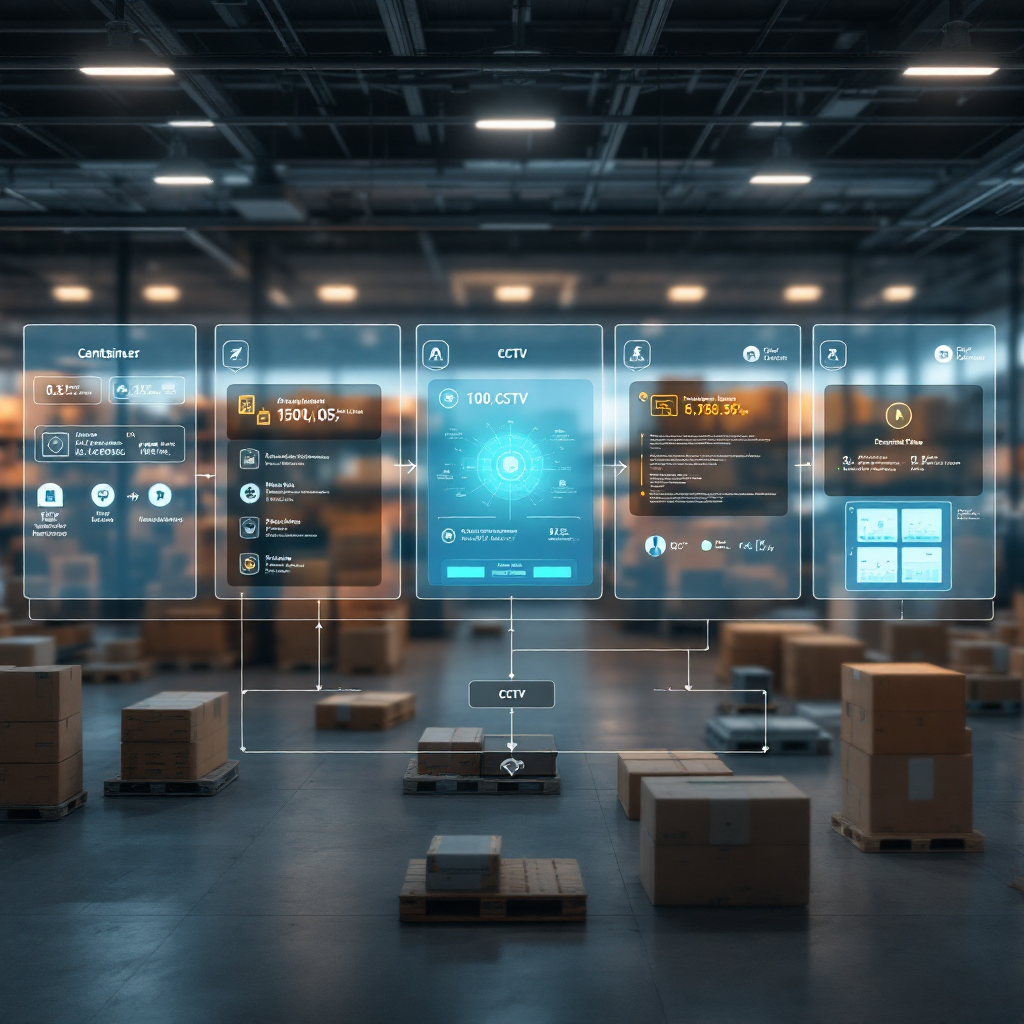
Enterprises should also embed governance frameworks that define who approves models, and that set policies for retraining and model retirement. The platform must enable teams to discover every agent, and it must allow admins to revoke ai agent access quickly when needed. With proper design, agents perform repetitive tasks autonomously while developers keep human oversight for strategic choices. That balance helps organisations scale without losing control, and it enables rapid innovation across your organization while remaining compliant with rules.
Agent Behaviour: Just-in-Time Building Security
Modeling agent behavior with reinforcement learning can produce adaptive responses in building security and grid operations. Agents learn preferred actions by trial, and they can then act just-in-time to prevent incidents. For building security, this means just-in-time alerts for door access breaches, HVAC anomalies, and suspicious loitering. A well-trained agent monitors occupant patterns, and it correlates them with environmental sensors to pre-empt threats before they escalate.
Utility control rooms and campus management systems can use such agents to reduce downtime and to enhance infrastructure resilience. For instance, agents can predict transformer overloads and then trigger load balancing to avoid an outage. Agents operate with guardrails, and they log each decision so auditors can trace why a decision was made. A CSET workshop found that 85% of operators see AI as essential for handling evolving threats, and yet they also want strict guardrails and explainability before trusting autonomous systems CSET findings.
In building security pilots, smart campus deployments cut response times for security incidents substantially, and they helped security teams coordinate with field crews faster. In one pilot, integration of video analytics with alarm routing and access control reduced response latency by a large margin, and that outcome improved safety and auditability. Visionplatform.ai supports such integrations, and our platform streams structured events to security stacks so cameras act as sensors for operations and compliance. To avoid over-reliance, planners should define manual control points, and they should require human sign-off for any action with safety impact. By designing agents to work alongside humans, teams achieve resilience, and they make systems that are robust in the age of autonomous systems.
FAQ
What exactly is an AI agent in a control room?
An AI agent is software that senses inputs, reasons about conditions, and recommends or executes actions. It augments human operators and provides decision support while keeping humans in the loop.
How does an AI agent connect to SCADA and DCS?
Connections use secure adapters, APIs, and service accounts to stream telemetry into a data infrastructure. These integrations respect role-based access and create auditable logs for every interaction.
Are AI agents secure enough for critical infrastructure?
Security depends on the framework you use, and on practices like model validation, pen-testing, and least-privilege access. Governance frameworks and continuous testing reduce risk, and ITU guidance helps shape secure designs ITU guidance.
Can AI agents reduce outages?
Yes. Agents detect early failures and enable predictive maintenance so teams act before an outage. Trials show improved anomaly detection and faster response times that reduce downtime detection improvement.
How do AI agents handle privacy for camera feeds?
Best practice is to process video on-prem or at the edge, and to keep training data local when regulation requires it. Visionplatform.ai emphasises customer-controlled models and on-prem processing for GDPR and EU AI Act readiness.
What is agentic AI and how does it help?
Agentic AI composes tools and systems to complete multi-step tasks, and it can interface with BIM viewers, scheduling tools, and notification systems. This reduces manual coordination and enables just-in-time actions.
How do I keep control when agents work autonomously?
Design guardrails, require human oversight for high-impact actions, and keep manual control options. Also record audit trails so you can review decisions and rollback if needed.
What resources are required to scale agents across sites?
Scaling needs orchestration platforms like Kubernetes, resource autoscaling, and consistent CI/CD pipelines. You also need a data infrastructure for observability and to manage model lifecycle.
How do agents help field crews?
Agents provide early, contextual alerts and prioritized work orders so field crews arrive with the right tools. This reduces repeat visits and increases first-time fix rates.
Where can I learn more about using video as sensors?
See practical examples like Visionplatform.ai’s people detection and intrusion features for how CCTV is turned into operational events: intrusion detection and people detection in video. These pages show how cameras feed analytics and business systems for operations.