ai and agentic ai in airport control rooms: revolutionize airline operations
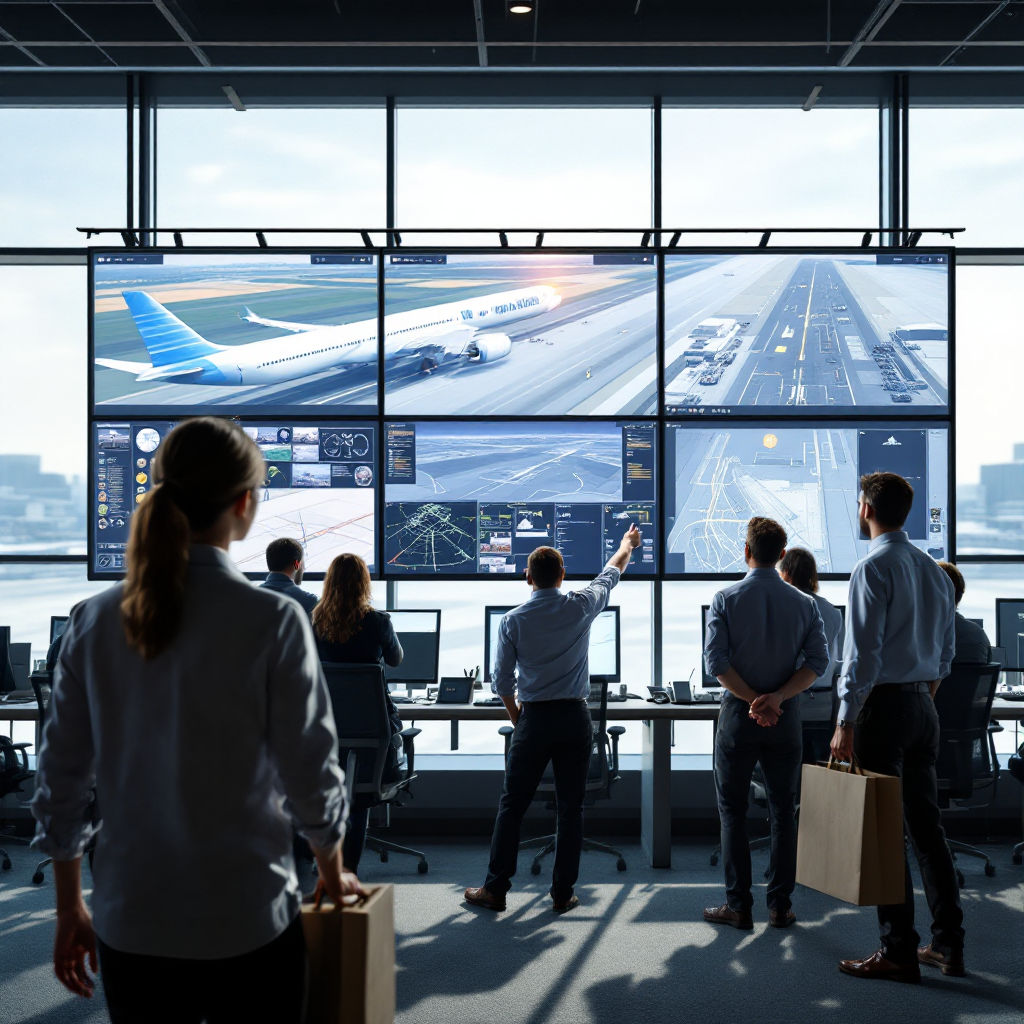
First, this chapter introduces core concepts. AI and agentic AI now appear in operational control rooms to help human teams handle growing traffic. AI agents manage routine tasks, share recommendations, and present alternatives. Next, these tools help controllers optimize flight sequencing, de-icing windows, and runway assignments. For example, trials at London Heathrow showed capacity gains up to 20% and controller workload drops up to 30% How Artificial Intelligence Is Enhancing Air Traffic Control. These figures show how AI can help airports and human teams work in tandem.
Second, AI agent behavior ranges from advisory to semi-autonomous. An AI agent may suggest a new runway assignment when weather shifts. Then controllers confirm the change, keeping final authority. This human-in-the-loop model supports safer decision-making and increases throughput.
Third, agentic AI describes systems that plan and act across tasks. Agentic AI can re-sequence arrivals while also suggesting de-icing slots and ground movements. This multi-step coordination helps airline operations run smoother. At the same time, AI systems must be transparent. Regulators want traceable logic so controllers can trust suggestions. For further reading on human-in-the-loop testing, see the HITL framework used in simulator evaluations Human-in-the-Loop Testing of AI Agents for Air Traffic Control.
Fourth, Visionplatform.ai shows how video analytics turn cameras into operational sensors that feed AI with high-quality inputs. For example, integrating people detection and vehicle detection data into the control room can support ground sequencing and resource allocation. Learn about people detection in airports at our resource on people detection in airports people detection in airports. Finally, these technologies help revolutionize airline operations by cutting delays, lowering risk, and enabling more flights inside the same airspace.
how ai agents work: real-world use cases in airport air traffic management
First, let us break down architecture and data flows so readers can see how AI agents work. AI here combines machine learning models with sensor feeds, VMS camera input, weather APIs, radar, and ADS-B. These inputs support real-time data processing and predictive analytics. For example, camera-derived queues from crowd detection density help forecast gate delays. Visionplatform.ai transforms CCTV into operational sensors so teams get accurate event streams for dashboards and automation. See our crowd detection and vehicle detection pages for practical deployments: crowd detection density in airports and vehicle detection classification in airports.
Next, the AI stack typically layers perception, prediction, and planning. Perception uses computer vision and natural language inputs. Prediction uses machine learning models or language models to forecast conflicts, weather impacts, and runway occupancy. Planning uses heuristics or search to propose sequences. Then a human controller evaluates those plans. This workflow keeps humans in charge while AI speeds decision-making.
Third, real-world use cases include conflict detection, weather-driven rerouting, and slot management. Trials report hazard prediction accuracy above 95% in some conditions Can AI Replace Air Traffic Controllers?. Further, Heathrow trial data highlight capacity improvement and workload reduction cited earlier How Artificial Intelligence Is Enhancing Air Traffic Control. These metrics validate investment in sensors, models, and procedures.
Fourth, real-time data and analytics combine to produce alerts and decision support. For instance, an AI-powered module can send an alert when runway occupancy risk rises, and then propose a mitigation option. This improves safety and helps controllers manage traffic faster. Finally, when AI agents integrate with legacy control systems via standard APIs, they fit into existing workflows without disrupting certification paths. For more on HITL testing and validation see the simulator-based framework used for air traffic AI Human-in-the-Loop Testing.
AI vision within minutes?
With our no-code platform you can just focus on your data, we’ll do the rest
using ai agents: use cases for efficiency and capacity enhancement
First, using AI agents across airline operations creates many advantages. Airlines can streamline fuel planning, crew scheduling, and baggage flow. AI helps predict turnaround delays and then reassign resources. For example, predictive analytics can suggest gate changes that reduce taxi time and save fuel. These improvements support broader business operations and better on-time performance.
Second, AI-driven capacity gains sit around 15–20% in busy airspace when airspace management and sequencing are coordinated Digitalisation and AI in air traffic control. Therefore, airports can accept more flights without adding runways. These gains translate into revenue management upside for airlines and airports alike.
Third, integration matters. AI agents integrate with radar, VMS, and airport resource management tools. They must also respect regulatory compliance and audit trails. For example, Visionplatform.ai keeps models and data on-premise by default to support GDPR and EU AI Act readiness. Video events stream over MQTT to feed dashboards and operational systems. Teams can therefore reuse camera feeds beyond security to improve OEE and resource allocation. If you want to see how thermal detection helps, visit our thermal people detection in airports page thermal people detection in airports.
Fourth, human-in-the-loop workflows preserve controller authority. AI generates proposals; humans approve them. This arrangement balances automation and judgement. In practice, implemented AI agents reduce routine workload up to 30% while controllers manage exceptions. For numbers tied to HITL testing see the simulator research Human-in-the-Loop Testing. Finally, use cases include optimized slot allocation, dynamic runway assignment, and automated de-icing scheduling. These specific use cases show how AI agents offer measurable gains in throughput and reliability.
transform travel experiences: ai chatbots and ai agents in travel
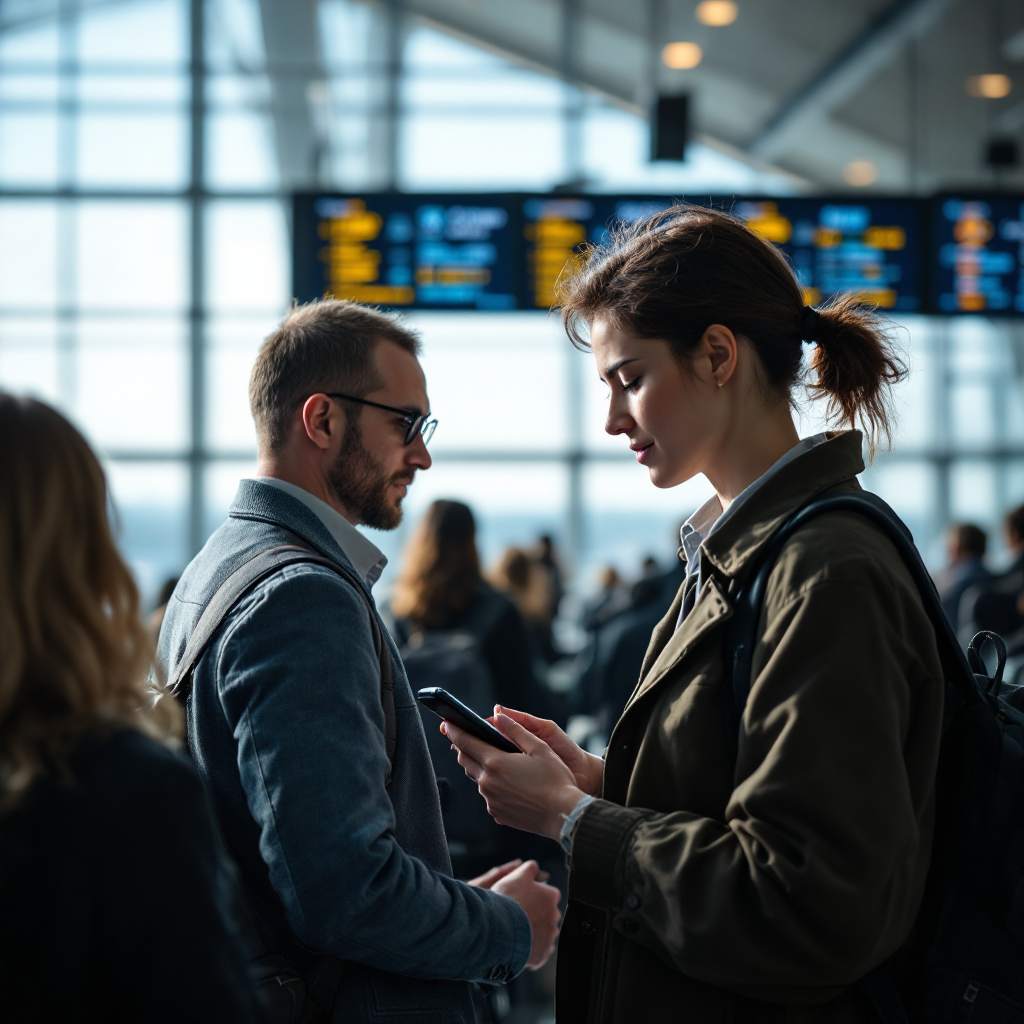
First, agentic tools also affect the passenger journey and passenger experience. AI chatbots and an AI-powered travel assistant can push live updates drawn from control room feeds to a mobile app. For instance, when a gate change occurs, a control room AI can send an alert to the airline app and to travel agents. This keeps passengers informed and reduces queueing at service desks. These touchpoints improve satisfaction and reduce stress.
Next, ai agents in travel can also automate rebooking offers when delays occur. A system can suggest to rebook affected passengers on alternate flights and then flag priority cases for human review. This approach streamlines disruption management and speeds recovery. One carrier reported a 10% rise in satisfaction after deploying enhanced passenger notifications and rebooking workflows.
Third, AI in airline customer services includes chatbots that use natural language and language models to answer queries. Travel companies and booking platforms can integrate these services to personalize itineraries and provide tailored recommendations based on travel history. For concrete integrations, platforms use apis to push updates from control rooms to booking platforms and airline CRM systems. This lets travel companies coordinate baggage flow and boarding updates.
Fourth, these systems also enable personalized travel and improved revenue management. For example, when delays free up seats on a later flight, an AI-driven offer can be sent via mobile app with rebook options. In addition, predictive analytics help airlines balance loads and set fares with more confidence. Finally, by linking operational control with customer-facing services, the travel industry can transform how passengers experience air travel and reduce friction across the passenger journey.
AI vision within minutes?
With our no-code platform you can just focus on your data, we’ll do the rest
disruption in travel businesses: uses ai for safety and operational resilience
First, AI plays a major role in safety and resilience. AI can reduce runway incursions by monitoring ground movements and predicting unsafe crossings. For example, pairing computer vision with ANPR/LPR detection improves vehicle tracking on airside roads. Visionplatform.ai supports ANPR use cases and streams events to security stacks, which helps prevent incursions. See our ANPR/LPR in airports resource ANPR/LPR in airports.
Second, cybersecurity and model integrity demand attention. AI systems are vulnerable to data manipulation and adversarial attacks, so teams must secure sensors, networks, and models. Research on attacking AI highlights these risks and recommends layered defenses Attacking Artificial Intelligence. Therefore, airports must harden feeds and ensure auditable logs for regulatory compliance.
Third, regulation is evolving. EASA and other bodies are writing guidance for machine learning in aviation. These guidelines focus on transparency and traceability so that controllers and airport authorities can validate results EASA Concept Paper. Consequently, certification may require new testing regimes, simulator runs, and human oversight protocols.
Fourth, future disruption scenarios include autonomous ground vehicles and voice-driven towers. These shifts affect security checkpoints, ground handling, and service desks. Travel businesses should plan for phased adoption. For example, starting with perception tasks such as object-left-behind detection or people-counting reduces risk and yields quick wins. Visionplatform.ai helps streamline video-to-event workflows so data stays on-premise and supports operational KPIs. Finally, AI enables resilience by predicting bottlenecks, supporting disruption management, and helping keep air travel moving during stress.
agentic: ensuring human oversight and security in ai agents
First, safety depends on human oversight. Human-in-the-loop testing protocols ensure AI agents act as assistants, not replacements. For instance, simulator-based tests validate agent proposals under rare conditions before live deployment Human-in-the-Loop Testing. These protocols calibrate trust and confirm that decision-making traces are auditable.
Second, data-security best practices reduce manipulation risk. Teams should encrypt feeds, monitor model inputs, and log actions. In addition, privacy-preserving on-premise processing helps meet regulatory compliance and supports EU AI Act readiness. Visionplatform.ai’s approach keeps models and data local to reduce vendor lock-in and limit data export.
Third, standards and research continue to evolve. Work on interpretability and human interfaces, including virtual and augmented reality, aims to improve controller situational awareness Virtual/augmented reality-based human-machine interface. Therefore, airports should adopt modular architectures that let teams swap models, add sensors, and update policies without disrupting control systems. APIs and structured event streaming let legacy systems receive new feeds with minimal change.
Fourth, to build trust, teams must publish performance metrics and maintain clear escalation paths. For example, when an AI agent suggests a plan, the system must show key inputs, confidence, and alternatives so a controller can decide. Finally, ongoing research will focus on safe agentic AI, better natural language explanations, and robust real-time data processing. These advances will shape the future of aviation and support safer, more efficient skies.
FAQ
What is an AI agent in an airport control room?
An AI agent is a software component that perceives inputs, predicts outcomes, and proposes actions to human controllers. It supports decision-making by offering prioritized options while leaving final authority with humans.
How do AI agents improve runway capacity and sequencing?
They analyze multiple data streams, simulate scenarios, and propose optimized sequences that reduce delays and taxi time. Trials at Heathrow showed notable capacity gains and workload reductions when AI assisted sequencing How Artificial Intelligence Is Enhancing Air Traffic Control.
Are AI agents replacing air traffic controllers?
No. AI agents augment controllers by automating routine tasks and increasing situational awareness. Human-in-the-loop frameworks ensure controllers review and approve AI recommendations.
What data sources feed AI agents?
Sources include radar, ADS-B, weather feeds, CCTV, ANPR/LPR, and airline operational systems. Visionplatform.ai converts camera streams into structured events that feed analytics and control systems.
How do AI chatbots tie into airport operations?
AI chatbots can relay live operational updates to passengers, rebook options, and answer queries using natural language processing. They connect control-room alerts to passenger apps, improving the passenger experience.
What security risks should airports consider with AI?
Key risks include adversarial inputs, data tampering, and model exploitation. Robust encryption, monitoring, and on-premise processing reduce exposure and assist regulatory compliance.
How does regulation affect AI deployment in aviation?
Regulators like EASA require transparency, testing, and traceability for machine learning applications. Certification will likely demand simulator validation and auditable decision logs.
Can legacy control systems receive AI outputs?
Yes. Standard APIs and event streams let AI agents integrate without full system replacement. Structured outputs can feed existing displays and workflows.
What are common use cases that demonstrate AI value?
Examples include conflict detection, predictive de-icing, slot management, and ground resource allocation. These specific use cases reduce delays and improve safety across operations.
How should airports start implementing AI agents?
Begin with perception tasks like people-counting or object-left-behind detection and then expand to planning modules. Pilot in simulator environments, validate metrics, and scale with human oversight.