
AI Agent Integration in Incident Response Control Rooms
Incident response control rooms are centralized hubs where teams monitor and coordinate actions during security incidents and emergency events. These control rooms gather feeds from cameras, sensors, network logs, and service consoles, and they present a single operational view for security professionals and operations staff. AI connects to these feeds and acts as a continuous analyst, and it helps teams by reducing manual effort and increasing situational clarity.
AI tools connect to monitoring feeds and data sources through standardized connectors, APIs, and message brokers. Visionplatform.ai, for example, turns existing CCTV into an operational sensor network and streams structured events to the security stack and business systems, so cameras become searchable sensors and not just video archives. This integration supports observability and enhances root cause analysis by combining video events with SIEM logs and telemetry.
When an AI agent ingests alerts and telemetry, it can correlate events across network, endpoints, and cameras. The agents provide consistent analysis and can automate repetitive tasks. As a result, teams detect threats faster and reduce manual effort for low-value work. For many organizations, this means faster detection and consistent handling of similar incidents, and it means fewer false alarms and more usable events for operations and OT.
A common integration is with SIEM platforms, where AI agents centralise alerts and enrich them with context from video, identity, and asset inventories. This makes it easier to prioritize what truly matters and to resolve incidents with clearer evidence. External studies show AI-powered detection improves accuracy by up to 60% compared to older approaches (research), and adoption in enterprise security operations is growing fast (market data). By integrating AI agents, control rooms gain a single pane of truth, and they gain the ability to act on a full incident record that ties alerts to video and asset context.
Automate Triage with Agentic AI for Real-Time Alerts
Agentic AI introduces autonomous decision loops that can analyze and sort incoming alerts and then execute playbooks. These agents use rules, models, and feedback to triage events, and they can automatically prioritize and escalate based on severity. This reduces the burden on analysts and improves the speed of triage for critical incidents.
Automate workflows let teams capture repeatable logic and then let AI run that logic at scale. For instance, an agent can flag a suspicious login and then correlate it with anomalous camera activity, and then it can create a correlated incident with evidence links. The system can prioritize alerts by severity and confidence scores, and it can route high-severity items to human responders immediately. Real-time flagging reduces dwell time, and it triggers escalation rules that match SLA needs.
Agentic workflows execute playbooks that contain steps to gather logs, collect forensic artifacts, and attempt automated containment. These agents are designed to run in hybrid environments and they can perform safe automated diagnostics before human review. In practice, agentic triage reduces human review time significantly. Case studies report up to a 60% reduction in review time when an AI agent performs initial triage and evidence collection (study). This kind of automation lets security teams focus on complex decisions, and it cuts mean time to respond by removing repetitive steps.
Using AI to automate triage also improves auditability. Each automated action leaves a log and context, and this supports root cause analysis and compliance reviews. Design patterns encourage human-in-the-loop checkpoints, and they ensure that autonomous actions are reversible. For teams that want to adopt ai, a staged rollout from pilot to production helps prove value and manage risk. When integrating ai agents, ensure playbooks map to incident lifecycle steps so that the system can escalate, notify, and hand off incidents smoothly and predictably.
AI vision within minutes?
With our no-code platform you can just focus on your data, we’ll do the rest
AI-Powered Monitoring in Security Operations and Service Management
AI-powered correlation links events across network, endpoints, and cloud so analysts see how a single compromise appears across multiple layers. This capability supports continuous threat hunting and reduces noise by grouping related alerts into one comprehensive incident. The resulting view simplifies the full incident timeline and helps with root cause analysis.
In Security Operations Centers, AI assists with continuous monitoring and automated detection and response. The technology supports security operations by surfacing anomaly detection and by suggesting containment steps. For many SOCs, AI-powered systems are now a core tool. A recent industry survey found that 78% of enterprises use AI-powered systems in their SOCs to automate detection and response tasks (survey). This adoption shows how ai is transforming SOC workflows and how it helps security practitioners handle larger alert volumes.
Integration with service management platforms allows automatic ticket generation and lifecycle tracking. When an agent correlates a network intrusion with suspicious camera events, it can open a ticket in the service management queue and add forensic attachments, and it can tag the incident for priority handling. This automated handoff reduces manual logging and ensures SLAs are tracked. Service management integration improves incident lifecycle transparency and accelerates resolution.
AI systems in SOCs also support proactive monitoring by surfacing trends and predicting escalation risks. Using observability data, models can detect subtle signs of lateral movement or misconfiguration. Teams gain a continuous picture of the security ecosystem and they can allocate resources more effectively. For teams working in sensitive environments, on-prem AI processing, like the approach Visionplatform.ai offers, keeps data local and supports compliance with GDPR and other regulations. This keeps control rooms both effective and auditable while integrating video intelligence into the SOC toolkit.
Proactive Incident Management: Faster Incident Resolution with AI Assistant
Proactive analytics use predictive modelling to forecast risk and to help teams act before issues escalate. An AI Assistant operates as a decision-support and notification agent that monitors signals and then issues early warnings. This proactive control reduces surprises and lets teams prevent outages and breaches.
The AI Assistant can surface patterns in incident data and it can suggest next steps for human operators. This assistant uses conversational AI to summarize evidence, and it allows operators to query timelines, logs, and video events quickly. By combining automated diagnostics with human oversight, the assistant improves the quality of decisions and it speeds up resolution. Many organizations report a roughly 50% reduction in time to respond when AI is used across incident response workflows (research).
An AI Assistant also helps with prioritization and resource allocation. It can recommend which incidents to prioritize and then assign teams based on skills and current load. These recommendations reduce wasted time and they improve the business impact of response actions. Agents provide contextual enrichment, and they link camera-derived events to service tickets and asset inventories, so resolution steps can be clear and measurable.
AI quickly identifies likely root cause and it proposes remediation paths. This helps teams resolve incidents and close the loop for post-incident reviews. The assistant logs each action for compliance and for root cause analysis. For organizations that need both rapid response and strong governance, combining autonomous checks with human approval is the best practices approach. The result is faster incident recovery, better evidence trails, and improved confidence that the system will act reliably during an emergency.
AI vision within minutes?
With our no-code platform you can just focus on your data, we’ll do the rest
Adopt AI in Incident Control Rooms: Improving Security and Optimizing Incident Management
To adopt AI in control rooms, begin with a clear proof of concept and then run pilot projects that validate value against KPIs. Start by automating the highest-volume, lowest-risk tasks, and then expand to more critical playbooks. Scaling requires strong observability and a plan to integrate with existing security infrastructure and service management tools.
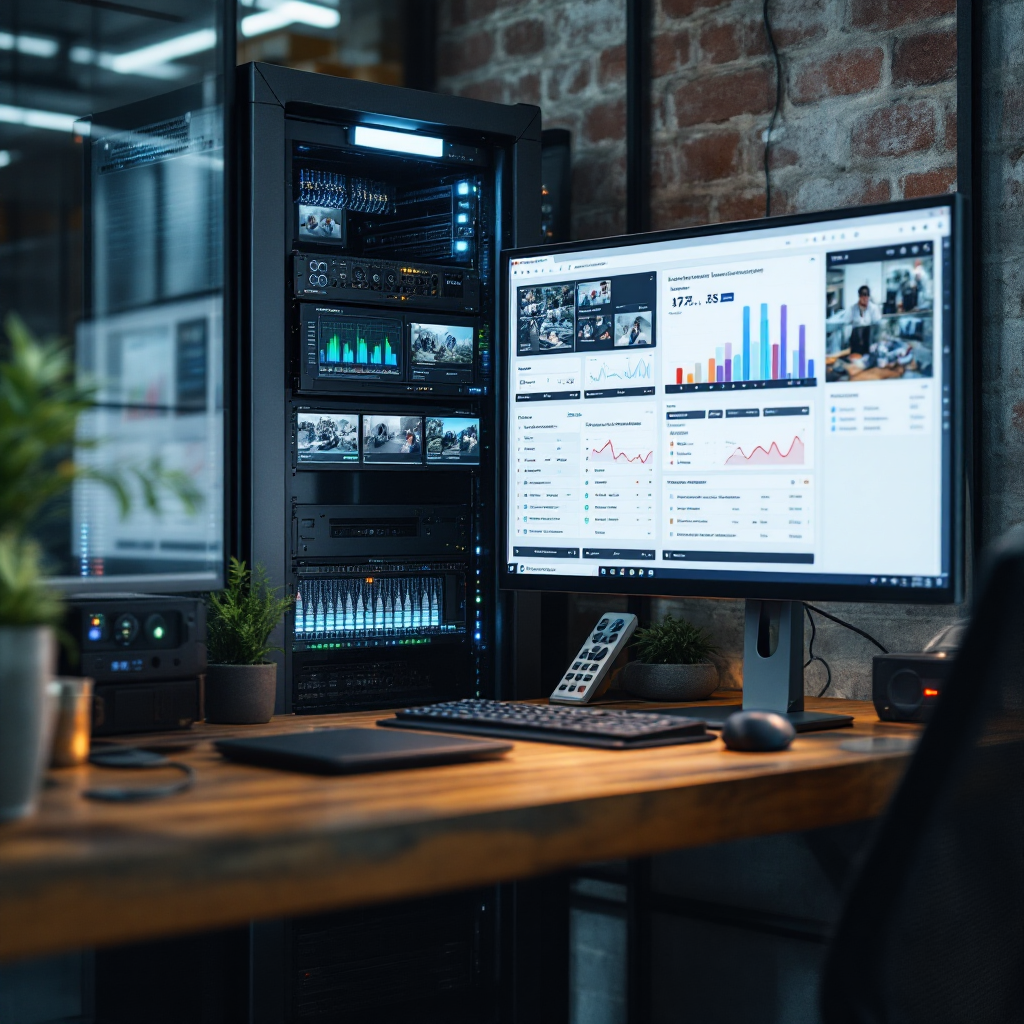
Improving security posture involves automated compliance checks, continuous audit logs, and regular model validation. AI delivers measurable improvements in detection and it automates repetitive audits that used to consume analyst time. Many enterprises report up to a 40% year-over-year efficiency gain after broader ai adoption, and this improves both cost and security outcomes (market data). To make this happen, adopt ai incrementally and ensure teams retain control over models and data. Visionplatform.ai emphasizes on-prem, customer-controlled datasets so organizations can meet EU AI Act requirements and retain audit trails.
Optimizing incident management also means tracking SLAs and allocating resources automatically. AI can monitor open tickets and it can escalate items that approach SLA breaches. This optimizes staff time and it improves incident lifecycle outcomes. Using automated diagnostics, systems can attempt basic containment actions and then invite human review for higher-risk steps. The combined approach reduces mean time to resolve and it improves post-incident learning.
When integrating AI agents, ensure integration points are documented and that observability data flows into dashboards used by war rooms. Link video detections, like people detection or ANPR/LPR events, to incident tickets to create richer context; see practical examples such as people-detection in airports (people detection) and ANPR/LPR pipelines (ANPR/LPR). By following a phased rollout, and by validating impact on response times and business impact, teams can adopt ai safely and scale to enterprise systems.
AI Redefines the Future of AI, Transforming Incident Management
Looking ahead, AI agents will gain more self-learning and contextual reasoning. Continuous feedback loops will let models improve on-site data, and agents will adjust playbooks to reflect new threat behaviors. This evolution is transforming incident playbooks and it allows control rooms to adapt faster than ever.
Emerging capabilities will include stronger edge processing and tighter integration with IoT and big data. AI in incident control rooms will fuse observability data from cameras, sensors, and logs to build a comprehensive incident picture. This convergence helps with faster incident detection and with more accurate root cause analysis. Agents use on-prem models to preserve privacy and to meet regulatory needs, and this supports deployments in sensitive environments and hybrid environments.
Ethical frameworks and human-in-the-loop controls will guide autonomous actions and ensure safety. Research on trustworthy agentic AI highlights the need for layered control and clear audit trails (review). As agent capabilities expand, organizations must maintain oversight and must enforce reversible actions so that autonomous steps do not create unintended consequences. Conversational AI will let operators query the incident timeline, and it will provide summaries that aid rapid decision-making.
Overall, AI redefines how teams respond and how incidents are resolved. By integrating AI agents, teams improve response, and they gain proactive control that anticipates issues before escalation. To learn how AI-based incident management ties video intelligence to operational workflows, explore forensic search and crowd detection use cases like forensic search in airports (forensic search) and crowd-detection analytics (crowd detection). The future of AI in control rooms will be safer, faster, and more adaptive, and it will let security teams focus on strategic tasks while agents handle routine analysis and automation.
FAQ
What is an AI agent in an incident response control room?
An AI agent is software that ingests telemetry, video, and logs to detect anomalies and to suggest or execute response steps. It can automate triage and provide evidence for human analysts while leaving an auditable trail of actions.
How do AI agents integrate with existing SIEM and VMS systems?
Agents connect via APIs, webhooks, or message brokers and enrich alerts with contextual data from VMS and SIEM. For camera-specific workflows, platforms like Visionplatform.ai stream structured events to the security stack so video becomes actionable.
Can AI automate triage without human oversight?
AI can automate low-risk triage steps and execute safe diagnostics, but best practices call for human-in-the-loop controls for high-risk actions. This hybrid approach balances speed with governance.
Do AI agents improve mean time to respond?
Yes. Studies show AI-driven processes can cut time to respond by roughly 50%, and practical deployments report large reductions in review time when agents handle initial triage (study).
How do AI agents help with root cause analysis?
Agents correlate logs, camera events, and telemetry to create a full incident timeline that points to probable root cause. They store enriched evidence and logs to support post-incident reviews and root cause analysis.
Are on-prem AI deployments better for compliance?
For many regulated environments, on-prem or edge processing keeps data local and adds transparency for audits. Visionplatform.ai offers on-prem options to support GDPR and EU AI Act readiness and to keep control over datasets.
What role does the AI Assistant play during incidents?
The AI Assistant summarizes evidence, recommends next steps, and opens tickets in service management systems. It improves decision speed and helps teams prioritize work based on current load and SLA risks.
How can organizations adopt AI safely in their control rooms?
Start with a proof of concept, then run pilot projects and validate KPIs before scaling. Ensure model governance, logging, and human checkpoints are in place to manage risk and to measure business impact.
Will AI replace security analysts?
No. AI automates repetitive tasks and it reduces manual effort, but it allows teams to focus on high-value investigations and strategy. Systems help analysts become more effective rather than replace them.
Where can I learn more about video-driven incident use cases?
Explore people-detection and ANPR/LPR case studies to see practical applications of video intelligence in control rooms. See people detection in airports (case) and ANPR/LPR solutions (case) for examples of integrating video events into incident workflows.