ai agent and agents in smart cities: urban planning and process vast amounts
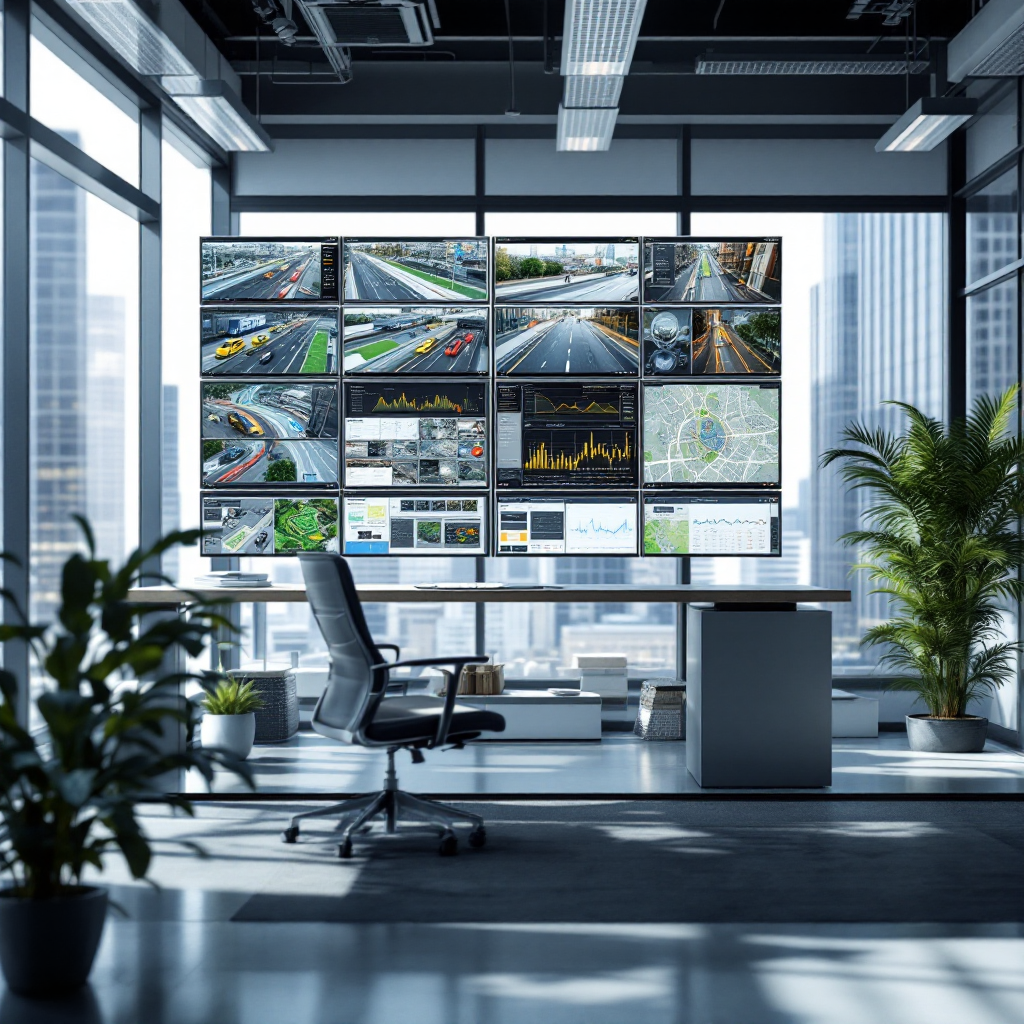
Smart city control rooms rely on an AI agent to interpret street-level feeds and sensor outputs. For example, an AI agent can tag traffic incidents, flag overcrowded hubs, and surface trends. Also, the goal is to help urban planners and operators see patterns fast. Additionally, agents in smart cities collect telemetry from cameras, meters, signage, and other IoT devices. In addition, they ingest data from building management and public transport APIs so teams have a single view.
First, the role of an AI agent in a smart city control room is to turn raw streams into actionable insight. Next, these systems must process vast amounts of video, telemetry, and logs to feed dashboards. For example, operators can watch occupancy trends or follow permit status for new construction. Also, urban planning teams use these insights for zoning changes, transit routing, and mobility forecasts. In one workflow city planners compare footfall and road usage to decide on curb allocation, bus lanes, or bike paths.
In practice, control rooms combine computer vision with time-series analytics and machine learning. For example, AI models detect pedestrians or vehicles and feed counts to capacity planners. Also, control rooms support public services like permitting and building permits by prioritizing inspections where data shows repeated faults. Furthermore, the architecture provides a framework for ingestion, cleaning, and enrichment so teams can run forecasts and simulations.
Finally, an AI agent gives planners a continuous overview dashboard that updates as events happen. For example, when a sensor trips, analysts see correlated video and alarm data. Also, this reduces response delays and helps local governments plan with better evidence. For background reading on deployment barriers and applications, see this review of AI in smart cities Artificial Intelligence in Smart Cities—Applications, Barriers, and ….
integrating ai agents into critical infrastructure: traffic management and real-time traffic data
Integrating AI agents links transport, energy, and safety systems so cities operate as a whole. First, control rooms must ingest real-time traffic data and CCTV feeds. Then, AI systems correlate that data with transit schedules, roadworks, and weather reports. Also, integrating AI agents enables predictive rerouting and smoother signal timing across corridors. For example, pilot deployments have shown up to a 30% reduction in congestion through AI-driven predictive modeling The Role of AI in Predictive Modelling for Sustainable Urban ….
Next, traffic management uses camera streams, ANPR, and loop detectors to forecast queues and to reroute vehicles. Also, Visionplatform.ai turns existing CCTV into operational sensors and streams events to business systems so operators can act fast. For case studies on vision-based detection that support routing and enforcement, see vehicle detection and classification tools like this example vehicle detection and classification. In addition, ANPR feeds help manage curb access and freight movements; learn more about ANPR deployments ANPR/LPR in airports.
Meanwhile, critical infrastructure monitoring spans CCTV, air quality sensors, and power grid telemetry. Also, computer vision flags unattended items or crowding and sends structured events to SCADA and BI. Furthermore, interoperability standards and open APIs make integrations feasible across historic siloed stacks. For example, systems that operate with MQTT and ONVIF reduce vendor lock-in and let local governments reuse camera feeds across security and operations. Finally, real-time routing and demand-aware transit require data in real time and standardized metadata.
AI vision within minutes?
With our no-code platform you can just focus on your data, we’ll do the rest
agentic ai and autonomous workflow: automate processes and decision-making
Agentic AI refers to software entities that pursue goals and coordinate tasks. First, agentic AI can plan steps, request data, and call APIs. Also, unlike traditional AI, these systems persist across incidents and take initiative when appropriate. For urban control rooms, autonomous AI agents handle routine tasks while a human reviews critical choices.
Next, automated decision-making follows a clear pattern: detection, assessment, recommendation, and action. For example, an anomaly triggers a detection model, then the agent scores severity and proposes a course. In many setups human-in-the-loop checks sit between recommendation and execution to maintain oversight. Also, this mix balances speed with accountability so operators keep control.
Then, automation shortens the path from alert to response. For instance, anomaly detection can spawn an incident ticket and assign it to a field crew. Also, the single workflow reduces handoffs and cuts mean time to remediate. Furthermore, control rooms benefit when these agentic systems run predefined playbooks and escalate only when thresholds exceed policy.
Finally, automating incident triage improves emergency response. For example, when vision analytics detect a perimeter breach, an autonomous agent can lock gates, notify teams, and preview an incident timeline. Also, for cities that require GDPR and EU AI Act alignment, running detection on edge devices keeps data local and auditable. In practice, agencies combine large language models with classical planners to draft messages and to summarise events, which speeds coordination without removing human judgment.
ai-driven ai platform use case: optimize energy consumption and resource management with renewable energy sources
An AI platform harmonises meteorological, grid, and demand signals to run predictive load balancing. For example, cities can optimize energy consumption across neighborhoods by shifting nonessential loads into cheap or clean periods. Also, smart grids respond to forecasts and balance distributed generation with storage. For quantified benefits, pilot work shows up to a 25% increase in energy efficiency with AI-driven predictive strategies The Role of AI in Predictive Modelling for Sustainable Urban …. In addition, market growth in AI agent tools indicates rising investment in these platforms Latest AI Agents Statistics (2026): Market Size & Adoption.
Next, the platform layers streams from meters, weather forecasts, EV chargers, and rooftop PV into a single decision layer. Also, the platform uses learning models to predict short-term demand and to schedule distributed storage. Furthermore, the grid benefits from demand-response programs that reduce peaks and stabilize frequency. For cities that deploy smart grids, predictive orchestration lowers operational costs and emissions.
In resource management, AI coordinates water pumping, street lighting, and waste-to-energy facilities. For example, adaptive streetlight dimming uses occupancy and calendar data to save power while keeping safety. Also, predictive maintenance flags equipment before failures so teams schedule repairs rather than react. In addition, renewable energy sources like solar and wind get integrated by forecasting output and shifting loads to match production.
Finally, this AI platform can be the single pane for local governments to monitor energy consumption and to plan upgrades. Also, this reduces risk and helps authorities in real time to manage outages or to prioritize upgrades. For a practical video analytics angle that supports asset monitoring and occupancy metrics, see Visionplatform.ai’s people counting and occupancy analytics people counting in airports.

AI vision within minutes?
With our no-code platform you can just focus on your data, we’ll do the rest
agents analyze and ai agents process data: waste management and data processing
Waste management benefits when agents analyze route data and collect bin-level telemetry. Also, AI agents process GPS, fill-level sensors, and collection logs to create optimized schedules. For example, dynamic routing reduces empty pickups and avoids missed collections. In addition, cities cut fuel use and labor hours while keeping streets cleaner.
Next, data processing pipelines start with cleaning and enrichment. Also, ingested camera events are matched to GPS traces and to collection records so analysts can spot trends. Furthermore, aggregation supports forecasting; planners can predict seasonal peaks and allocate crews ahead of demand. For process visibility, event streams must be auditable and comply with data privacy rules.
Then, intelligent agents feed forecasts into dispatch systems so trucks follow fuel-efficient paths. Also, integrating vision event streams with vehicle telematics ensures compliance and safety in tight urban environments. For video-based detection that supports route analytics and anomaly spotting, see crowd detection and density tools that work with existing VMS crowd detection and density. In addition, forensic search over stored footage helps verify complaints and to improve service delivery forensic search in airports.
Finally, data processing delivers direct public-service improvements: cleaner streets, fewer overflowing bins, and lower collection costs. Also, this frees crews to focus on complex tasks and to maintain infrastructure. In the end, agents reduce waste miles and enable optimizing resource allocation across neighborhoods while respecting data privacy and local regulations.
impact on smart cities: ai agents contribute to livable cities, smarter cities and city development
AI agents contribute to faster and smarter urban management in measurable ways. For example, studies show many initiatives now incorporate AI agents for decision support; one report highlights that over 50% of smart city projects use these tools for real-time analysis 50+ Key AI Agent Statistics and Adoption Trends in 2025. Also, the OECD notes that “AI can help address key urban development challenges by enabling more responsive, efficient, and sustainable city management” Artificial Intelligence for Advancing Smart Cities – OECD. In addition, these gains translate into reduced emissions and faster incident response across urban systems.
Next, social impact matters. Also, AI improves accessibility through adaptive transit and better pedestrian routing. Furthermore, safety improves with vision systems that monitor perimeters and detect falls or crowding. For practical deployments that link security to operations, Visionplatform.ai shows how cameras can be repurposed as sensors to power dashboards and alarms while keeping data on-prem for compliance.
However, deployment challenges remain. Data privacy, interoperability, and transparent decision-making are central concerns. Also, cities need standards for logging, audit trails, and explainability so citizens trust automated choices. In addition, local governments must plan governance, workforce training, and procurement to deploy multiple AI agents responsibly. Finally, the future points to agentic systems that collaborate, share context, and scale across neighborhoods, accelerating urban development and sustaining livable cities.
To explore how AI agents enable ongoing improvement, planners should study pilots, adopt open APIs, and set clear performance metrics. Also, cities should require auditable logs and data minimization so AI must respect privacy and policy. In the longer view, multiple AI agents working together will reshape urban living and infrastructure maintenance, while keeping residents at the center of development.
FAQ
What is an AI agent in the context of smart cities?
An AI agent is a software entity that observes data, makes assessments, and suggests or executes actions. It helps control rooms process sensor streams and supports human operators in decision-making.
How do AI agents gather data from city infrastructure?
They ingest feeds from cameras, meters, and IoT devices via APIs and standardized protocols. Then they clean and enrich that data for dashboards and automation.
Can AI agents improve traffic management?
Yes. They use real-time traffic data and predictive models to forecast congestion and to reroute vehicles. They can reduce delays and lower emissions when integrated with signal and transit systems.
Do AI agents work without human oversight?
Some autonomous functions run with human-in-the-loop checks for critical steps. This balance preserves accountability while speeding routine workflows.
How do AI platforms help optimize energy consumption?
Platforms combine grid telemetry, weather forecasts, and demand forecasts to balance loads and to schedule storage. This reduces peak demand and integrates renewable energy sources more reliably.
What role does computer vision play in city operations?
Computer vision turns CCTV into structured event streams that support public services and security. It helps detect people, vehicles, and unusual activity while feeding analytics for planning.
How do cities address data privacy with AI?
Cities adopt edge processing, auditable logs, and strict access controls to keep personal data local and to comply with regulations. They also anonymize and minimize data where possible.
What is a common use case for AI in waste management?
AI schedules dynamic collection by analyzing bin-level sensors, GPS routes, and historic demand patterns. This reduces unnecessary pickups and lowers operational costs.
How should local governments prepare to deploy these systems?
They need clear procurement rules, interoperability standards, and staff training. They should also pilot projects and measure outcomes before scaling.
Will multiple AI agents change city development?
Yes. Multiple AI agents can coordinate across domains to improve resilience and service delivery. They will shape smarter cities and influence long-term city development.