AI and traditional traffic systems: Challenges for control system in traffic management
Traditional traffic systems rely on fixed signal timing, scheduled plans, and human operators who adjust settings based on reports. In contrast, AI uses data and models to adapt signals to live demand. First, define what a control system looks like today. It often has static timing plans, periodic audits, and manual overrides. Second, explain AI and how it differs. AI applies machine learning and rule logic so systems respond to changing conditions automatically. Third, outline clear limits of legacy approaches. They struggle with congestion during peak hours, they produce uneven traffic flow across corridors, and they have slow incident response when crashes occur.
Traffic lights follow schedules that work in theory, but not always in practice. That mismatch leads to more travel time and more stop-and-go behavior. Cities report longer travel time, and delays add fuel and emissions. For example, researchers show AI agents can shift control rooms from reactive to proactive management, helping to anticipate incidents “AI agents enable control rooms to move from reactive to proactive traffic management, anticipating issues before they escalate and coordinating responses seamlessly”. At the enterprise level, over 80% of organizations plan to use intelligent automation, which suggests widespread interest in moving beyond static control processes 80% enterprise adoption trends.
Legacy control system limits also include uneven detection. Many intersections remain blind because of poor sensor placement or limited coverage. Traffic cameras feed limited views, and loop detectors miss lane-level detail. As a result, traffic managers must rely on historical traffic data that does not represent current traffic conditions. That worsens congestion and raises road risk. In addition, incident management often depends on third-party reports, so response times lag.
Finally, traditional traffic control and manual tuning do not scale well for modern cities and smart cities initiatives. The result is inefficient traffic, unnecessary delays, and higher accident risk. To manage traffic better, agencies need adaptive, evidence-based tools. For that reason, a management system that layers AI on top of existing infrastructure can reduce delays and reroute traffic faster. Integrating such tools helps control room staff deliver smoother traffic flow and support urban mobility goals.
AI agent, artificial intelligence and traffic management system
An AI agent is an autonomous decision-maker that ingests streams of sensor inputs and acts within the traffic management system. In practical terms, an AI agent receives data from traffic cameras, loop detectors, connected vehicles, and weather feeds. Then it predicts short-term traffic patterns and issues commands to signals or advisories to drivers. This approach contrasts with a traditional traffic control system that uses fixed schedules or human-led adjustments. An AI system can process millions of events per hour. It can spot incident signatures, then trigger incident management protocols.
Core methods include machine learning models for prediction and rule-based engines for control. Machine learning models forecast travel time, detect anomalies, and predict where congestion will form. Rule-based engines enforce safety, ensure legal compliance, and keep signal timing within approved bounds. Together, intelligent agents blend learning with guardrails. That mix reduces errors, speeds decisions, and keeps human staff in the loop. As one review notes, “The integration of AI agents in centralized control environments demands new research into human-AI cooperation, trust, and system transparency to maximize safety and efficiency” systematic review on human-AI interaction.
Pilot deployments already report measurable gains. Early projects achieved faster decision cycles and lower error rates, and some cited projected improvements of 30–40% in operational efficiency in safety-critical environments 30–40% efficiency gains. Also, many teams that rely on AI agent models find they can predict traffic jams before they form, which allows them to dynamically adjust traffic volumes. For visual detection, platforms that turn CCTV into structured events help this work. For example, Visionplatform.ai turns existing CCTV into an operational sensor network, so operators can use camera feeds for vehicle detection and stream events into dashboards for real-time action.
To summarize, artificial intelligence integrated with a traffic management system can detect, predict, and act. It can reroute traffic, adjust signals based on live demand, and support traffic managers with ranked options. Thus agencies get a management system that improves responsiveness while keeping staff accountable for final decisions.
AI vision within minutes?
With our no-code platform you can just focus on your data, we’ll do the rest
Analytics and AI-powered traffic management for urban traffic systems
Real-time analytics pipelines form the backbone of ai-powered traffic management. First, data ingestion takes in feeds from traffic cameras, connected vehicles, sensors, and weather APIs. Next, processing pipelines clean and enrich the feeds. Then, models generate predictions and visualisations that help teams act quickly. This flow from raw video to structured event is essential. It turns CCTV into operational data rather than archived footage. Visionplatform.ai, for example, streams structured events out of VMS so dashboards and SCADA systems can use them. That capability supports shorter decision cycles and clearer KPIs.
Use cases are concrete and varied. Adaptive traffic signal control changes cycle lengths when congestion appears. Dynamic lane management opens or closes lanes based on demand. Incident detection systems spot stopped vehicles and then dispatch responders. In addition, ANPR/LPR tools identify vehicles for access control or incident investigation; learn more about ANPR implementations in transport settings vehicle identification and ANPR examples. Also, vehicle detection and classification feed volume counts to predictive models; see vehicle detection examples that translate video to counts vehicle detection and classification.
Case studies show strong metric improvements. Cities using adaptive systems report reductions in congestion and increased average speeds. In some pilots, adaptive signal control cut intersection delays by up to 30%. In other deployments, average speeds rose and travel time fell. These improvements come from combining historical traffic with real-time data, then applying models that can predict traffic scenarios ahead of time. That ability to predict traffic lets systems dynamically adjust traffic and reroute traffic when necessary.
Analytics also feed visualization tools that improve situational awareness in the control room. Dashboards highlight hotspots, and alerts point to incidents with suggested responses. When operators accept suggestions, the system logs actions for auditing and learning. Finally, such analytics support longer-term planning. Planners use enriched historical traffic records to tune networks and to design smarter traffic corridors for modern cities and smarter traffic initiatives.
Transforming traffic management with AI in traffic to optimise traffic flow
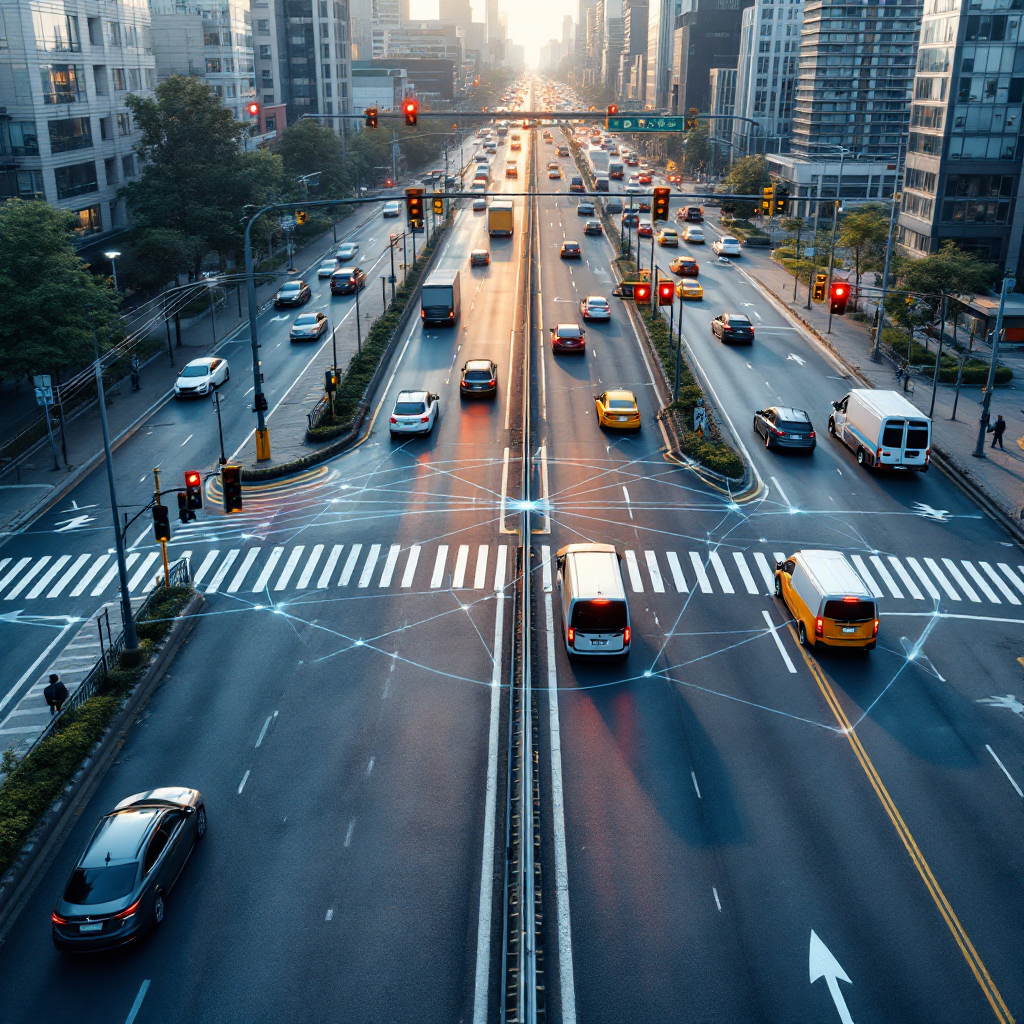
Adaptive algorithms optimise traffic based on live conditions. They measure traffic volume, queue length, and speed, and then they compute new timings for traffic lights. That computation happens continuously. By contrast, reactive control waits for congestion to appear and then tries to clear it. Proactive control anticipates jams and acts earlier. For example, AI in traffic can forecast a bottleneck 10 to 15 minutes ahead and adjust signals to prevent gridlock. This proactive stance helps keep traffic moving and reduces travel time.
Compare reactive versus proactive control. Reactive systems respond after incidents. Proactive systems predict incidents and mitigate them. The result is improving traffic flow, and often achieving smoother traffic flow across corridors. Some real-world deployments show up to 30% improvement in throughput when adaptive strategies are applied. In addition, AI-driven traffic management reduces stop-start cycles, which lowers emissions and improves fuel efficiency for fleets. These outcomes show why transport systems are shifting toward automation.
Autonomous agents work alongside operators to propose changes. They simulate traffic scenarios and recommend optimal timing plans. When combined with dynamic signage and reroute strategies, they can reroute traffic away from trouble spots. Collaborative AI helps operators decide, then it implements agreed plans. That collaboration maintains human oversight while enabling faster intervention.
Cutting-edge AI models now include reinforcement learning agents that learn from live feedback. They test small timing variations and keep those that improve throughput. Over time, these agents refine policies across different times of day and special events. To manage risk, control rooms use fail-safe policies and limit adjustments to approved ranges. Thus operators retain control, while AI amplifies capacity to manage complex, dynamic networks.
AI vision within minutes?
With our no-code platform you can just focus on your data, we’ll do the rest
Traffic control system and management system integration for traffic managers
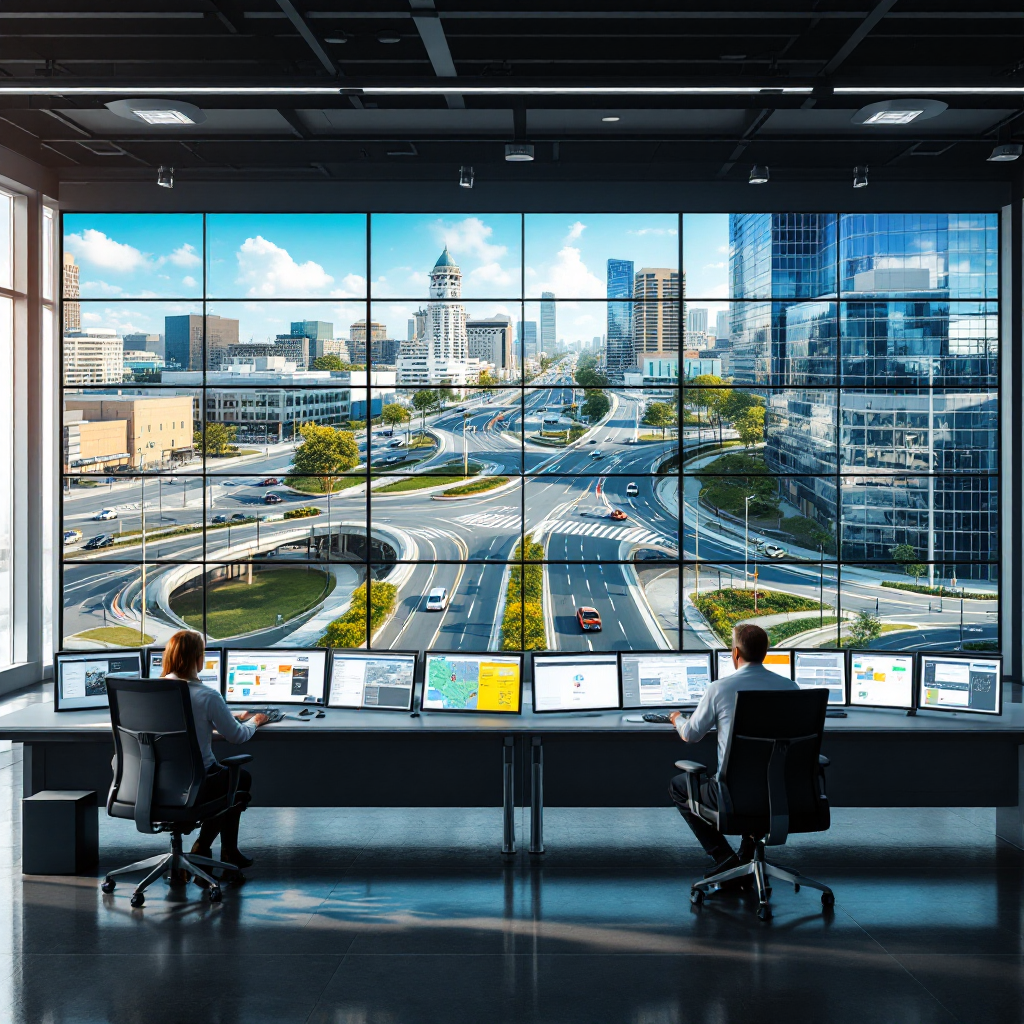
A modern control room integrates AI agents, human operators, VMS, and other subsystems into a single workflow. The architecture layers real-time feeds, a decision layer, and a human interface. Operators see high-level alerts and can drill into live camera views. The system logs decisions and model outputs for auditing. This design gives transparency and traceability. That traceability helps when regulators ask about decisions, especially under the EU AI Act.
Human-AI cooperation matters. Trust builds when systems explain recommendations, show confidence scores, and provide alternative actions. Systems that provide clear rationale reduce operator hesitation. For example, an ai agent might recommend a timing change and show predicted delay reduction. If operators accept, the system applies the change and monitors results. If not, staff can overrule quickly. Fail-safe mechanisms keep signals in safe states and revert plans if conditions worsen. These safeguards ensure reliable traffic control and protect public safety.
Standards and protocols support integration. Open standards like ONVIF help connect traffic cameras to analytics platforms. MQTT and webhooks stream structured events to dashboards and SCADA. In addition, secure on-prem processing supports GDPR and local compliance. Visionplatform.ai offers on-prem and edge deployment, which lets agencies own their data and models and keeps sensitive video inside their environment. That approach reduces vendor lock-in and supports local auditing.
Finally, training and change management matter. Traffic managers need hands-on sessions that explain model logic, boundaries, and escalation paths. Regular tabletop drills build familiarity. Also, continuous model monitoring detects drift and performance degradation. Together, these elements ensure the management system remains resilient and that traffic control rooms can scale AI capabilities safely.
Use AI to improve traffic management and urban mobility in smart traffic for modern cities
Future trends include connected vehicles, V2I communication, and digital twins. These technologies extend the senses of control rooms and offer richer input for AI. Connected vehicles broadcast speed and intent. Infrastructure sensors share occupancy and lane usage. Digital twins simulate networks and test responses before applying them live. These advances allow AI to optimize traffic with more precision and fewer surprises.
Governance and data quality present hurdles. Data must be accurate, timely, and labelled consistently. Without good data, models drift and recommendations falter. Also, policy frameworks must govern data sharing, privacy, and model explainability. Agencies that rely on AI must define clear SLAs and audit trails. In addition, integrating ai in traffic management requires cross-agency collaboration across transport, emergency services, and utilities.
Recommendations for traffic managers include starting small, proving value, and scaling pragmatically. First, pilot an adaptive traffic control on a corridor. Second, connect traffic cameras to an analytics platform that publishes events for dashboards and incident feeds. Visionplatform.ai demonstrates how existing CCTV can become operational sensors, enabling better detection and fewer false alarms for transport teams. Third, adopt modular systems that let you choose between on-prem and edge models to meet compliance needs.
Overall, use AI to improve traffic management by combining prediction, adaptive control, and human oversight. This approach yields efficient traffic, reduces traffic jams, and supports urban mobility goals. As cities embrace smart traffic, they can deliver efficient traffic services that cut delays and make roads safer while keeping control in human hands. For agencies ready to scale, the right AI and clear governance will deliver measurable results and a path to smarter, safer streets.
FAQ
What is an AI agent in traffic management?
An AI agent is an automated decision-making component that ingests sensor inputs and recommends or executes actions in a traffic network. It can predict traffic patterns, suggest signal changes, and support incident management while keeping operators in control.
How do AI agents use traffic cameras?
AI agents use traffic cameras to detect vehicles, count volume, and identify incidents in real time. Platforms that convert CCTV into structured events help feed analytics and dashboards for faster operator response.
Can AI reduce congestion on busy roads?
Yes. Adaptive traffic control and predictive models can reduce congestion by adjusting timings and rerouting traffic before jams form. Some pilots have reported reductions in delay and increases in throughput.
Are AI traffic systems safe for public roads?
They can be safe when deployed with transparency, human oversight, and fail-safe mechanisms. Standards, simulation testing, and audit logs contribute to reliable and auditable operations.
How do traffic managers trust AI recommendations?
Trust builds through explainability, confidence scores, and trial periods. When AI provides clear reasons for recommendations and shows expected outcomes, operators gain confidence to use suggested actions.
What data do AI agents need to predict traffic?
They need feeds from traffic cameras, detectors, connected vehicles, and weather or event schedules. Combining historical traffic with real-time data improves prediction accuracy.
Can existing CCTV be used for traffic analytics?
Yes. Systems that integrate with VMS can turn cameras into sensors and stream vehicle and event data to dashboards. This avoids new hardware installs and increases coverage quickly.
What governance issues should cities consider?
Cities must address data privacy, model auditability, and compliance with regulations such as the EU AI Act. On-prem processing and clear data ownership help meet these requirements.
How do AI and human operators work together?
AI proposes options and operators make final calls. The best systems explain suggestions, allow overrides, and log actions for review, fostering a collaborative human-AI relationship.
What are the first steps to implement AI-driven traffic management?
Start with a focused pilot on a single corridor, connect existing cameras to an analytics platform, and measure impact on delays and travel time. Then scale gradually, adding governance and training for traffic managers.