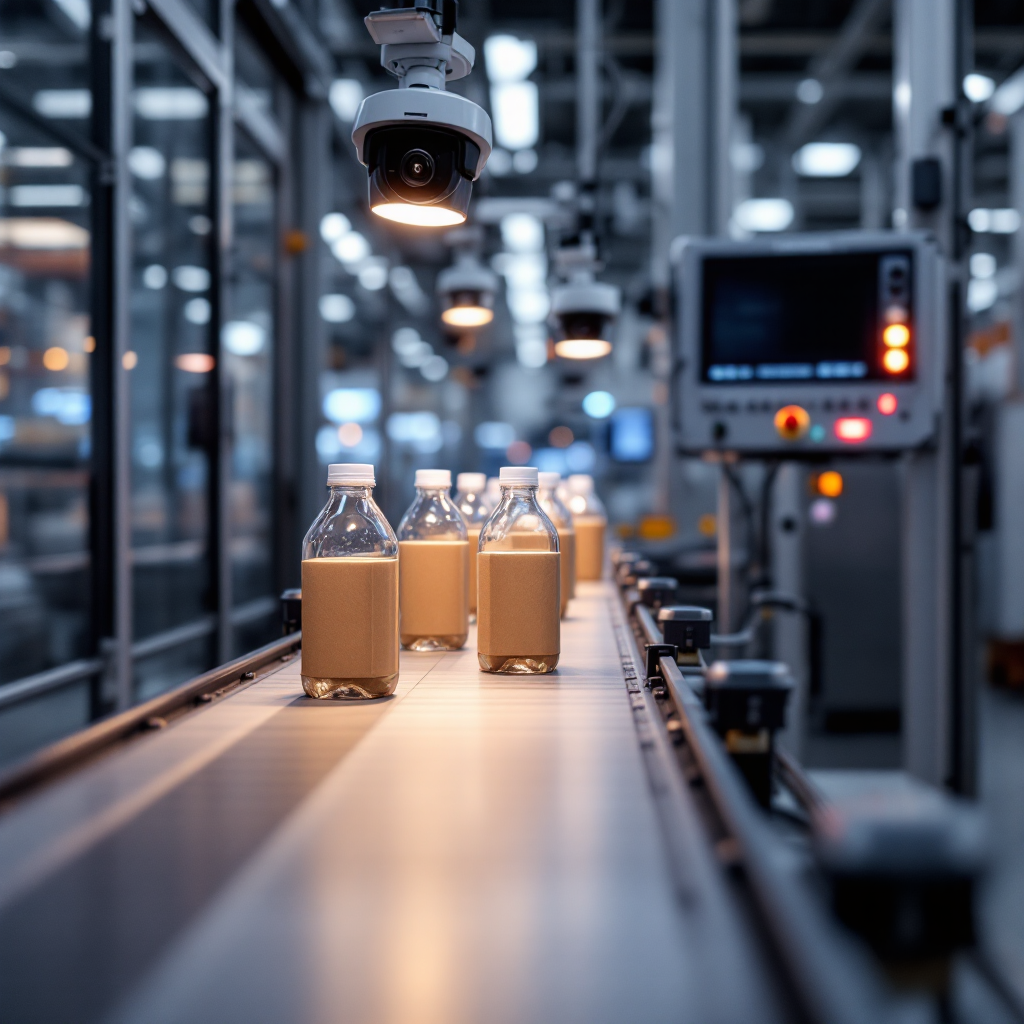
AI computer vision inspection for packaging quality control
AI-Powered packaging inspection for Quality Control
AI is changing how manufacturers approach packaging inspection for Quality Control. First, it replaces slow manual checks with automated inspection that runs at line speed. Second, it delivers consistent decisions and reduces human error. For example, ai-powered systems have shown remarkable performance: defect detection accuracy can reach 99.8% and defect rates can fall by 83% in some deployments 99.8% detection accuracy and 83% rate drop. These figures translate to real cost savings and fewer product recalls.
Manufacturers in food, beverage, and pharmaceutical lines rely on consistent product presentation. Brand standards and regulatory compliance matter. Label seal color consistency and print quality affect brand reputation and consumer trust. Therefore, production teams now use computer vision for packaging to verify colors, seals, alignment, and barcode readability. AI can detect deviations below human thresholds. It can also flag potential tampering or contamination that would otherwise lead to costly recalls or product recalls.
Integration begins with cameras and an inspection system on the packaging line. Edge or cloud inference choices exist. Visionplatform.ai, for instance, can reuse existing CCTV and VMS to turn cameras into operational sensors that stream events into operations and BI systems. This approach reduces hardware waste and lowers deployment risk because you can use your current video feeds and avoid vendor lock-in. See how camera-driven process analytics are used in other contexts like people counting for site analytics people counting for site analytics.
Benefits include up to 90% fewer defects and a 31% reduction in inspection costs reported across sectors. A switch to automated inspection improves throughput and helps teams hit quality standards. Finally, it improves traceability for safety standards and regulatory compliance by logging each verification step. For manufacturers who rely on manual inspection, automating quality control with AI delivers measurable gains in both speed and consistency.
AI vision within minutes?
With our no-code platform you can just focus on your data, we’ll do the rest
Real Time defect detection using Vision AI
Real-time defect detection is now feasible on high-speed conveyors. Cameras capture images at line speed. Then AI analyzes each frame to detect anomalies and stop bad cartons before they leave the packaging line. Convolutional neural networks scan every pixel and compare color, seal edges, and text placement to trained templates. As a result, defects in real time become visible in milliseconds and corrective actions can start immediately. The result is fewer rejects and reduced rework.
Vision AI models focus on speed and accuracy. They use optimized inference on edge GPUs or lightweight models in the cloud. This lets production teams maintain throughput while running defect detection and label verification simultaneously. In practice, manufacturers report defect detection accuracy as high as 99.8% and an 83% drop in defect rates when AI is applied to repetitive visual tasks 99.8% accuracy and 83% reduction. Another review shows AI systems can cut defects by up to 90% and boost efficiency by 30% in manufacturing lines 90% defect reduction and 30% efficiency gains.
Practical deployment requires synchronizing image capture to the conveyor. Triggered capture avoids motion blur and ensures consistent framing. Additionally, lighting control reduces false positives from reflections. AI vision uses data augmentation to handle lighting variation. It learns what constitutes acceptable color ranges and seal integrity. When an anomaly is detected, the inspection system sends an event with the image and metadata. That event can feed a verification system and operator dashboard or be published to analytics for trend tracking.
Therefore, teams get near-instant feedback. They can trace defects to shifts, presses, or material lots. This traceability helps reduce costly recalls and protects consumer safety. Finally, realtime inspection reduces bottleneck pressure at final packaging by catching defects earlier in the production process.
Automate label inspection to detect label defects on Packaging Labels
Consistent label inspection protects brand reputation and reduces product recalls. Labels must meet print quality and color targets. They must also maintain barcode readability and text accuracy. When ai models inspect packaging label and seal zones, they flag misalignment, missing text, or label defects within milliseconds. These automated checks scale across lines and SKUs. They also verify that product information and traceability data are correct before products ship.
AI combines deep learning and classical image processing to assess color consistency, seal uniformity, and alignment. For color checks, AI computes color distance in calibrated color space so it can detect inconsistency that humans often miss under shop lighting. For example, label verification tasks can identify subtle hue shifts that break brand standards but pass visual inspection by eye. The system will verify seal color and compare it to a reference. When the deviation crosses thresholds, the system flags the package for removal.
Label inspection also covers barcode readability and object detection for missing caps or tamper bands. AI-powered models perform OCR to verify ingredient lists and lot codes. They can validate print quality against templates. The result is fewer manual checks, and consistent product presentation on retail shelves. At the same time, validation logs provide audit trails for regulatory compliance and quality assurance.
In factories that still rely on manual inspection, automation and automated inspection reduce human error and speed up lines. Visionplatform.ai supports model retraining on local datasets so the ai models adapt to new artwork or seasonal label variants without sending data offsite. This local control helps meet EU AI Act and privacy expectations while improving accuracy and reducing false positives. For teams focused on reducing recalls, automating label inspection is an essential part of packaging quality.
AI vision within minutes?
With our no-code platform you can just focus on your data, we’ll do the rest
Inspection System integration: AI Models and ROI
An inspection system starts with hardware and ends with outcomes. Cameras, lighting, and processing nodes compose the technical setup. Choose between edge computing and cloud inference based on latency and compliance. Edge deployment lowers latency and keeps footage local. That arrangement supports traceability and helps meet regulatory compliance. It also reduces bandwidth costs and supports real-time actions on the packaging line.
AI models require labeled datasets that cover normal variation and defect types. During training, teams split data into training and validation sets. They use augmentation to simulate lighting shifts and material variation. Deep learning models, such as convolutional neural networks, learn from examples. Afterwards, vision models are validated on holdout sets and then on live production. Continuous monitoring and retraining keep performance high.
ROI is measurable. Consider throughput gains, reduced rework, and labour savings. In one report, automated visual inspection reduced inspection costs by about 31% while improving defect rates dramatically 31% reduction in inspection costs. McKinsey shows potential reductions of up to 90% in defects and efficiency gains near 30% in similar contexts up to 90% defect reduction. Practical ROI calculations should include avoided costly recalls, less material waste, lower labour, and faster time-to-shelf.
Integration must also consider software hooks. Publish inspection events to MQTT or webhooks for BI and SCADA systems. That way, vision events become operational metrics. Visionplatform.ai, for instance, streams structured events so cameras act as sensors across security and operations. Teams can link events to KPI dashboards, which improves OEE and reduces bottleneck risk. Finally, plan for ongoing maintenance: retraining budgets, camera recalibration schedules, and clear thresholds for when operators must intervene.
Visual inspection challenges and Inspection with AI
Inspection challenges are common on packaging lines. Lighting variation, camera calibration drift, and material sheen can lead to false positives. Likewise, new SKUs and design tweaks may confuse models. AI does not eliminate these challenges, but inspection with AI mitigates them. For example, data augmentation teaches models to tolerate lighting shifts. Periodic recalibration and color targets improve color consistency measurements. Also, XAI tools help teams validate AI decisions so operators trust flags and do not override them reflexively.
False positives create wasted stops. To reduce them, teams use confidence thresholds and secondary checks. They may route ambiguous cases to human operators for rapid review. This hybrid workflow reduces reliance on manual inspection while keeping quality assurance robust. In regulated fields, verification systems must provide auditable logs. Using explainable AI and clear validation steps makes it easier to defend decisions during audits.
Training datasets should include negative examples and edge cases. That reduces blind spots. Also include label defects, misalignment, and print quality errors in training. When models encounter new failure modes, a quick retraining cycle prevents escalation to product recalls. In short, the model lifecycle matters. Plan for regular validation, scheduled retraining, and continuous monitoring of model drift. This prevents degradation of performance and preserves consumer trust.
Finally, practical advice: start small, validate on a single packaging line, then scale. Use existing VMS and camera infrastructure to accelerate deployment. If you need examples of reusing CCTV and VMS feeds for detection and analytics, review how video analytics support process anomaly detection process anomaly detection and forensic search forensic search workflows in other industries. These patterns translate to packaging operations and help avoid a costly rollout.

Vision Inspection with AI: Improving Product Quality in Packaging Inspection with AI
Vision inspection with AI improves product quality by catching defects before products leave the plant. Advanced models identify label defects, seal anomalies, and misalignment. They also ensure barcode readability and text accuracy. With automated inspection, teams see a reduction in rework and improved on-shelf consistency. That supports brand standards and helps prevent recalls that damage brand reputation and cost money.
Several manufacturers report near-zero defects after adopting AI-driven inspection systems. These systems combine deep learning with classic vision checks. They stream inspection events into analytics to show trends over time. That visibility helps quality teams target process improvements and supplier issues. It also supports traceability when consumer safety or regulatory compliance questions arise. For example, explainable AI techniques are improving transparency in how models make decisions and help validate automated results explainable AI literature.
Looking ahead, adaptive learning and continuous integration will make packaging quality control more resilient. AI models will adapt to new materials and printing presses faster. They will reduce human oversight for routine defects while escalating uncertain cases. Manufacturers will benefit from lower reduction in inspection costs and improved accuracy and efficiency. At the same time, cameras can double as operational sensors across production processes. That helps break the bottleneck at final packaging and turns vision data into measurable improvements in the production process.
If you want to explore practical deployments, consider pilots that reuse your VMS and CCTV. Visionplatform.ai helps teams own data, train models on-site, and stream events to BI or SCADA systems. This approach improves ROI and respects data governance rules, particularly for enterprises concerned about EU AI Act requirements. By combining AI, machine vision, and structured analytics, you can achieve consistent product presentation, prevent recalls, and preserve consumer trust.
FAQ
What is AI computer vision inspection for packaging?
AI computer vision inspection uses machine learning models to analyze images of packaging. It inspects labels, seals, barcodes, and print quality to detect defects and inconsistencies automatically.
How fast can AI detect defects in a production line?
AI systems can detect defects in real time, often within milliseconds per image, depending on hardware. This speed allows corrective actions before products reach final packaging.
What accuracy can manufacturers expect from vision AI?
Many deployments report detection accuracies near 99.8% for common defect classes 99.8% detection accuracy. Actual accuracy depends on data quality, lighting, and model validation.
Can vision AI check color consistency on labels?
Yes. AI verifies color by comparing captured samples against calibrated references and can find subtle inconsistencies beyond human thresholds. This protects brand standards and reduces costly recalls.
Do I need new cameras to deploy inspection with AI?
Not always. Many systems reuse existing CCTV and VMS to act as sensors. Using current cameras lowers deployment cost and speeds up pilots. Visionplatform.ai offers ways to integrate existing VMS feeds into operational detection pipelines.
How does AI reduce false positives from lighting changes?
Teams use data augmentation, controlled lighting, and confidence thresholds to reduce false positives. They may route ambiguous cases to operators for quick review, so the system learns over time.
Will AI replace human inspectors?
AI automates repetitive and high-volume checks, but humans still handle complex or ambiguous cases. Hybrid workflows keep quality assurance robust while reducing reliance on manual inspection.
What ROI can packaging teams expect from automated inspection?
Typical benefits include throughput improvements, labour savings, and lower rework. Reports show inspection cost reductions around 31% and significant defect rate drops 31% reduction in inspection costs.
How do I handle new SKUs or label changes?
Collect labeled examples for new SKUs and retrain vision models as needed. Many vendors and platforms support quick retraining on local datasets to validate new formats and maintain performance.
Can AI inspection help with regulatory compliance and traceability?
Yes. AI systems can log verification events, provide audit trails, and store images for traceability. These records support regulatory compliance and faster root-cause analysis when quality issues occur.