ai video monitoring in a slaughterhouse: poultry analytics overview
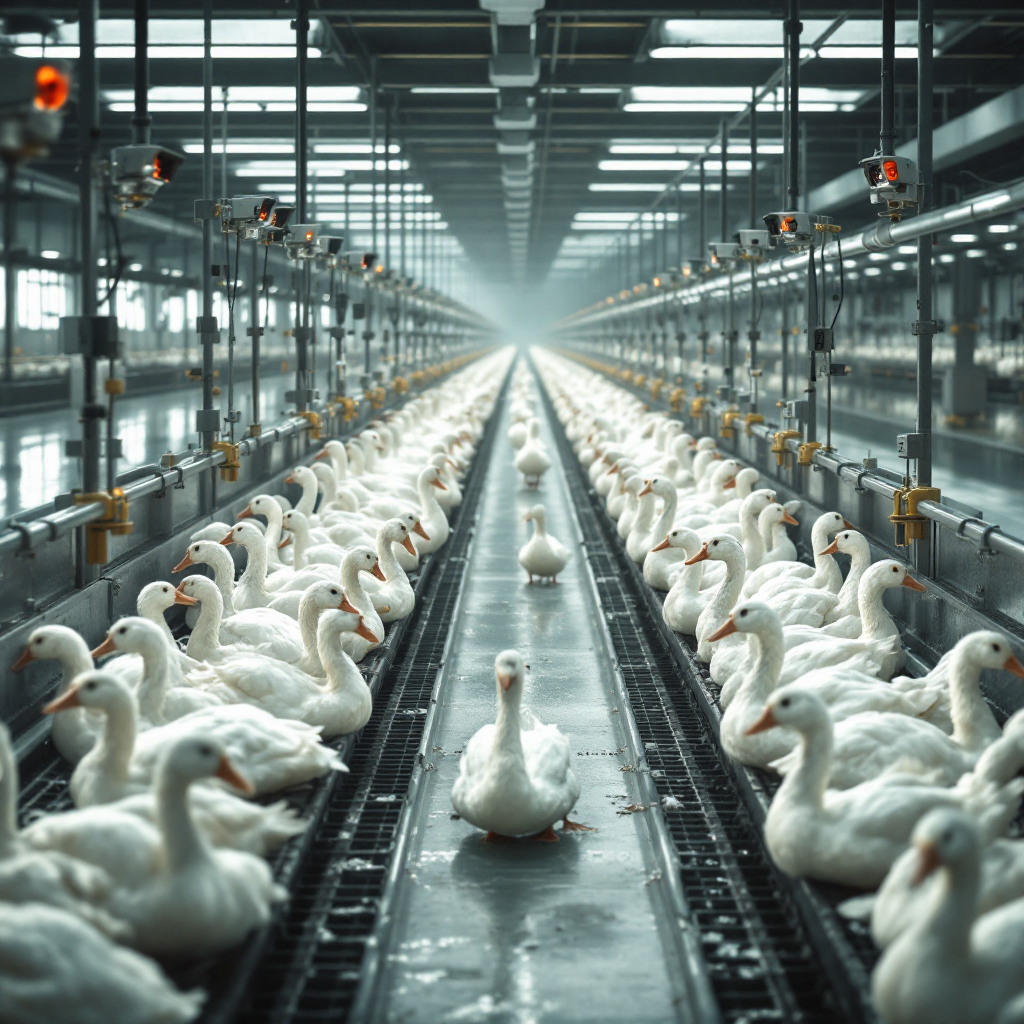
AI video monitoring turns cameras into active sensors that watch process lines and animal areas. Furthermore, it analyses video footage in real time to flag motion, posture, and batch counts. Also, it helps plant teams respond faster and reduce welfare problems. In duck and goose plants, waterfowl behaviour differs from chicken behaviour. Therefore, solutions need species-specific configuration and training data. For example, ducks have different gait and wing use. Next, a typical camera layout places fixed overhead cameras over receiving, lairage, and processing lines. Specifically, additional side views cover shackling and set-up points. Furthermore, a camera system that combines top and side angles reduces occlusion. Also, cameras near the scald tank and evisceration bench focus on carcass quality and hygiene. In addition, installing cameras at transport unloading and lairage gives continuous monitoring and helps identify animal handling issues.
Furthermore, core analytics tasks include motion detection, posture analysis, and batch counting. Also, analytics to monitor movement and condition supports humane handling. Next, computer vision models can detect individual animal movement, distress signals, and irregular posture. Additionally, they can count batches, estimate throughput, and link events to a dashboard for operations. For example, people counting style algorithms translate to counting birds on a conveyor. Also, Visionplatform.ai converts existing CCTV to an operational sensor network and streams structured events to dashboards and business systems. Therefore, teams can reuse their VMS video and retain control of training data, while also addressing gdpr and eu ai act concerns.
Also, the role of artificial intelligence in this environment is to automate repetitive observation tasks. Additionally, it provides precise timestamps and searchable clips that improve traceability. Furthermore, hundreds of hours of video can be mined for patterns without moving data offsite. Finally, combining AI with on-prem deployment helps validate model outputs and keeps data local. Overall, AI brings continuous monitoring, measurable welfare monitoring, and quality assurance into the production process at waterfowl slaughterhouses.
real-time analytics using artificial intelligence for animal welfare
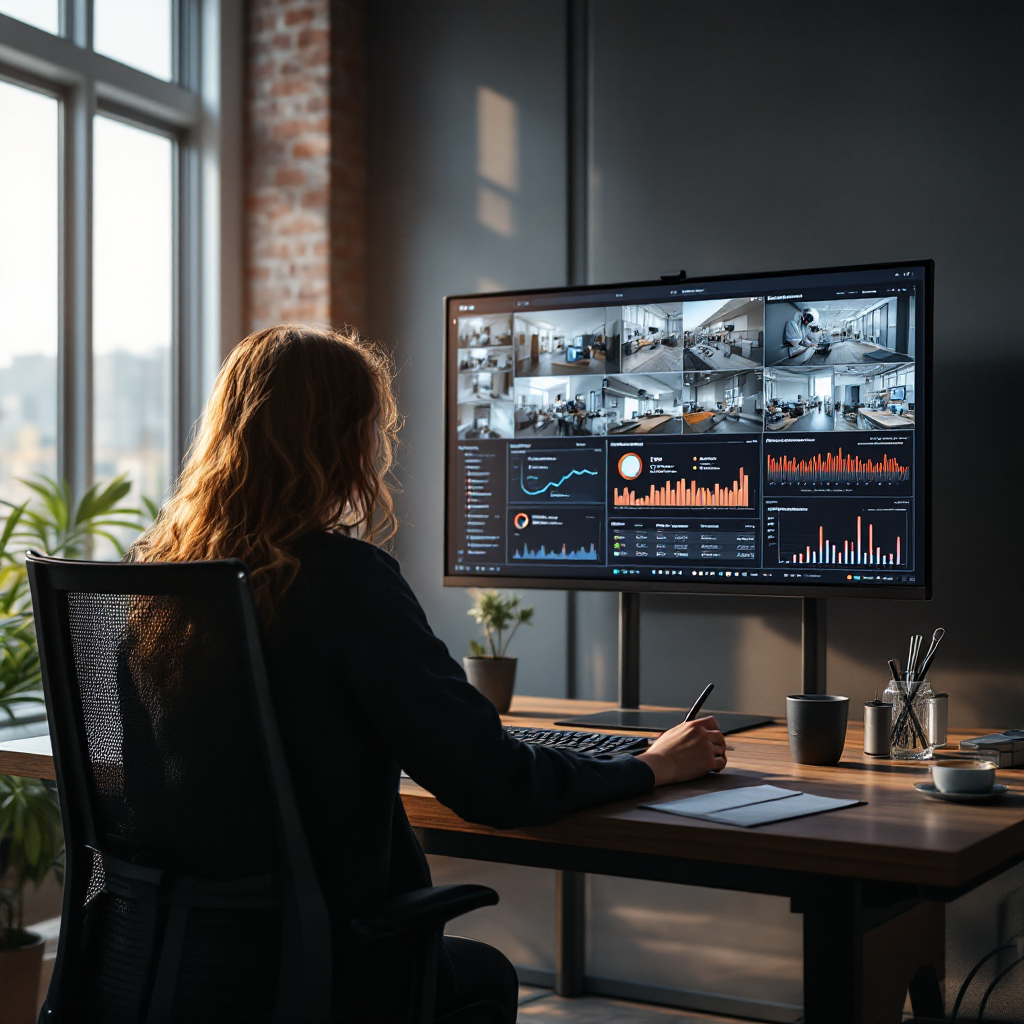
Real-time video analytics capture video clips and stream events as they happen. Also, systems follow a simple data flow: capture, process, classify, then alert. Specifically, cameras capture continuous video and send frames to edge or server-based AI models. Next, deep learning models analyse frames to identify behaviour and anomalies. Also, an ai system can generate alerts on a dashboard and push events to MQTT or BI tools. Furthermore, real-time alerts let staff intervene quickly and reduce animal stress.
Also, welfare indicators for ducks and geese include movement speed, posture changes, vocalisation proxies, and clustering behaviour. Specifically, key welfare indicators identified in the literature cover movement patterns and physical condition for both species A review of existing scientific literature on welfare assessment of waterfowl. Furthermore, these indicators can be encoded in models to support welfare monitoring and humane practice. Also, systems can flag animals that show distress or that are immobile while on a conveyor.
Moreover, studies show measurable impact. For example, AI-powered monitoring reduces welfare-related incidents by up to 30% in poultry processing environments welfare assessment review. Also, real-time models have reported detection accuracy rates above 90% for abnormal behaviours on farms Video Analytics Using Deep Learning Models – IEEE Xplore. Therefore, plants can translate similar results into slaughter operations to improve animal outcomes. Additionally, automated monitoring supports staff training and incident validation. Next, it also supports audit trails for animal welfare at slaughter, because every alert links to saved video clips and timestamps.
Furthermore, using artificial intelligence for real-time welfare monitoring helps with disease surveillance. For example, early behavioural changes can indicate infectious disease diagnosing infectious diseases requires a holistic approach. Also, continuous monitoring and data collection create a dataset that improves model training and future detection. Finally, real-time analytics make monitoring in slaughterhouses more objective, auditable, and actionable.
AI vision within minutes?
With our no-code platform you can just focus on your data, we’ll do the rest
smart camera technology and ai solutions: lessons from cattle handling
Smart camera technology must meet specific requirements for slaughterhouse environments. Furthermore, resolution, frame rate, and low-light performance matter. Also, cameras with 1080p or better and 30+ FPS help capture fast animal movement. Next, high dynamic range and infrared options help when lighting varies. Additionally, robust housings and flexible mounting points reduce downtime. Moreover, a reliable network and edge GPU or server provide the compute for ai models and continuous monitoring. Also, selecting cameras that support ONVIF/RTSP simplifies VMS integration.
Additionally, lessons from cattle handling show what translates to waterfowl. For example, assessment of cattle workflows has long used computer vision to monitor gait and slipping. Also, cattle handling studies emphasise the value of multi-view systems and calibrated cameras for more accurate assessment. Specifically, assessment of cattle literature suggests multi-angle data leads to fewer false positives. Therefore, similar multi-angle layouts improve bird posture detection and reduce occlusion in crowded pens. Furthermore, algorithms that detect slips, falls, and heat stress in cattle can be adapted for animal movement metrics in birds, with careful retraining and new dataset collection.
Also, ai solutions proven in cattle handling guide model training for poultry. For instance, transfer learning lets teams start with proven architectures and then fine-tune them on waterfowl data. Additionally, model training on hundreds of hours of video produces more robust classifiers. Next, domain adaptation techniques reduce the need for massive new datasets. Also, Visionplatform.ai provides a flexible model strategy that uses your VMS footage for local model improvement. Therefore, teams get accuracy gains without sending data to cloud services, which supports gdpr and eu ai act compliance. Finally, adapting cattle-derived tools requires attention to wing posture, waterfowl gait, and flocking behaviour. Consequently, teams should plan species-specific annotations and validation steps before deployment.
artificial intelligence to monitor and improve animal welfare and improve animal outcomes
AI architectures for behaviour recognition typically combine convolutional networks with temporal models. Furthermore, CNNs extract frame-level features and temporal layers model movement. Also, architectures such as 3D CNNs or CNN+LSTM capture both posture and motion. Next, multi-task heads can recognise posture, count animals, and detect distress concurrently. Additionally, ensemble models often improve robustness against lighting and occlusion. Also, model explanation techniques help staff validate detections and understand why an alert fired.
Also, disease-detection use cases show promise. For example, visual signs and behavioural deviations can be early markers of respiratory or mobility issues diagnosing infectious diseases requires a holistic approach. Furthermore, research supports the use of combined sensor and video data to improve diagnosis accuracy. Specifically, video analytics can detect reduced movement or abnormal head positions that accompany certain illnesses. Also, automated monitoring helps triage and route suspect animals to veterinary inspection, which reduces cross-contamination during the production process.
Additionally, metrics for measuring improved animal welfare and health outcomes must be clear. For example, reduction in welfare incidents, time-to-intervention, and prevalence of lesions are common metrics. Also, carcass quality and contamination rates correlate with improved animal care and handling. Next, AI systems can report KPIs to a dashboard to show trends and to validate interventions. Furthermore, continuous monitoring enables comparison before and after process changes, which helps validate the effect of staff training and equipment changes.
Moreover, combining computer vision with on-site model training keeps the workflow agile. Also, curated datasets from your own site accelerate model training and reduce false detections. Additionally, when teams can retrain locally they protect sensitive footage and support compliance with supports gdpr and eu ai act rules. Finally, this approach supports precision livestock farming goals and delivers measurable animal welfare improvements and welfare outcomes.
AI vision within minutes?
With our no-code platform you can just focus on your data, we’ll do the rest
quality assurance and food safety with an ai system
An ai system inspects carcasses, flags defects, and supports food safety checks. Also, computer vision can detect bruising, incomplete evisceration, and visible contamination. Specifically, models trained on labeled carcass images can recognise skin defects and foreign material. Furthermore, AI integrates with HACCP workflows and helps automate batch sampling. Also, automated monitoring reduces human error in repetitive inspection tasks and creates auditable records for each flagged carcass.
Additionally, systems can stream structured events to operations tools and dashboards. For example, Visionplatform.ai can publish detections to MQTT so QA teams can act and log incidents. Also, process anomaly detection models help spot deviations in processing lines process anomaly detection. Furthermore, research shows deep learning models can achieve detection accuracy rates exceeding 90% for abnormal behaviours and defects in similar settings Video Analytics Using Deep Learning Models – IEEE Xplore. Therefore, plants can expect accuracy gains that improve both carcass quality and regulatory compliance.
Also, integration with HACCP and other food safety protocols matters. For example, model outputs can trigger corrective actions, stop a line, or flag a batch for rework. Next, linking alerts to sampling records improves traceability and supports audits. Also, AI supports food safety by adding continuous, automated inspection coverage where human sampling cannot reach. Furthermore, combining AI with microbiological testing strategies reduces risk across the production process. Finally, adopting AI applications in QA must include validation steps, periodic revalidation, and a plan for model drift and retraining to maintain confidence.
implementing ai: eyes on animals and monitoring in slaughterhouses
Implementing AI in a slaughterhouse follows a clear sequence. First, map camera locations to key workflow points. Next, assess network and compute readiness. Then, choose cameras and edge or server hardware. Also, collect initial dataset and tag examples for model training. Specifically, include normal and abnormal cases, both for behaviour and carcass defects. After that, start with a pilot on a few streams. Additionally, validate model outputs against human observers. Next, scale gradually and integrate event streams into operations and BI systems.
Also, address common monitoring challenges. For example, lighting variability and occlusion reduce model accuracy. Furthermore, species variability between ducks, geese, broiler chickens, and laying hens means one model does not fit all. Also, transport and slaughter moments require special camera placement to identify animal handling and welfare issues. Next, plan for model training on site-specific footage, since this reduces false detections and improves performance. Additionally, using artificial intelligence to monitor must include a plan for continuous monitoring and model retraining as conditions change.
Moreover, operational recommendations include local data collection and edge processing to support supports gdpr and eu ai act compliance. Also, link camera events to operational dashboards so teams can act without searching through hundreds of hours of video. For example, forensic search techniques let QA and welfare teams find the right video quickly forensic search. Additionally, people-counting style analytics help measure throughput and batch sizes people counting. Finally, consider the long-term dataset plan: invest in labeled footage for model training and plan periodic validation to keep models accurate. Overall, implementing AI and ai-based camera surveillance delivers continuous monitoring, better animal care, and measurable improvements in animal welfare monitoring and food safety.
FAQ
What is AI video analytics and how does it apply to duck and goose slaughterhouses?
AI video analytics uses computer vision and deep learning to automatically analyse video footage. It applies to duck and goose slaughterhouses by monitoring behaviour, counting batches, and flagging welfare issues and carcass defects in real time.
Can AI reduce welfare incidents in slaughterhouses?
Yes, studies report reductions in welfare-related incidents by up to 30% with AI monitoring welfare assessment review. Automated alerts let staff intervene faster and gather evidence for training and audits.
How accurate are AI systems at detecting abnormal behaviour or defects?
Deep learning models in related settings have shown accuracy rates above 90% for abnormal behaviour detection IEEE study. Accuracy depends on dataset quality, camera placement, and species-specific training.
Do I need new cameras to deploy AI?
Not always. Many solutions work with existing CCTV and VMS. However, smart camera technology with good resolution and frame rate improves detection and reduces occlusion issues.
How does AI integrate with food safety protocols like HACCP?
AI can feed structured events to HACCP workflows and dashboards. Alerts can trigger sampling, rework, or line stops, and every event links to video for audit trails.
Will using AI violate GDPR or the EU AI Act?
On-prem or edge processing and local model training reduce the risk of moving sensitive footage offsite. Deploying AI with local control over datasets supports compliance with supports gdpr and eu ai act principles.
How do I train models for waterfowl specifically?
Collect annotated video of ducks and geese in your environment and include examples of normal and abnormal behaviour. Then use transfer learning and local model training to adapt base models to your dataset and conditions.
Can AI help detect disease in birds at slaughter?
AI can flag behavioural changes and physical signs that correlate with disease and support health monitoring. Combined with veterinary inspection, video indicators can speed up detection and containment MDPI research.
How do I measure the success of an AI deployment?
Measure reductions in welfare incidents, time-to-intervention, and improvements in carcass quality and compliance rates. Also, track false positive rates and model drift to ensure ongoing performance.
What are common pitfalls when implementing AI in slaughterhouses?
Common pitfalls include inadequate camera placement, lack of species-specific dataset, and ignoring validation and retraining plans. Also, failing to integrate alerts into operational workflows reduces the value of automated monitoring.