
AI video analytics platform overview in Milestone XProtect VMS
AI video analytics refers to the automated processing of video footage to extract meaningful events, classify objects, and trigger responses. It helps security teams move from manual review to faster decision-making, and it makes legacy camera networks searchable. In modern video management, AI and metadata combine to index video streams so that operators can find incidents quickly. Milestone builds this capability into XProtect and into its ecosystem of partners, and Milestone XProtect acts as the central VMS that stitches models, rules, and alerts together.
Milestone Systems offers an open platform approach that enables third-party analytics, and it supports a modular XProtect architecture that scales from single-site deployments to multi-site enterprise systems. The architecture separates recording, indexing, and analytics so teams can run deep models at the edge while retaining recorded video centrally. This pattern reduces latency and keeps sensitive footage inside on-prem environments when required, which helps with compliance. The XProtect VMS integrates with access control systems and with analytics directly on cameras or edge servers, and it makes video footage video searchable for rapid forensic analysis.
Handling large video streams requires metadata indexing, efficient storage, and smart retrieval. XProtect stores event metadata alongside recorded video so operators can query detections and play back only relevant segments. This reduces time-to-evidence for investigations and speeds up forensic analysis. For traffic monitoring and city surveillance, the platform ingests vehicle detection and pedestrian flows and feeds dashboards that support business intelligence and operations. For example, city surveillance deployments use aggregated counts to improve traffic routing and to improve wait times in line at public venues.
Use cases span smart cities, transportation, retail, and healthcare. In airports, operators use human detection and perimeter monitoring to control access to restricted areas and to reduce property damage. In retail, retailers use analytics to understand customer behavior and to optimize store layouts. In healthcare, staff use analytics to support patient safety and to reduce workplace accidents. For examples of airport solutions such as people detection and perimeter monitoring, see Visionplatform.ai’s people detection in airports page and perimeter breach examples that show how AI sensors integrate with a VMS for faster response (people detection in airports, perimeter breach detection in airports). Overall, the Milestone platform and partner ecosystem enable intelligent video analytics software to deliver situational awareness to response teams and to other operational systems.
Key features of AI-driven video analytics in XProtect VMS
Milestone XProtect combines object detection, facial recognition, and behaviour analysis to support security and operations teams. These key features help reduce false alarms and improve response times. The platform supports object detection and advanced analytics at multiple points: on-camera, at the edge, and in server-based pipelines. This flexibility allows teams to tune rules for site-specific scenarios and to maintain high detection accuracy across lighting and weather conditions. The system also supports analytics artificial intelligence facial recognition models when law, policy, and local rules permit, which can speed identification in time-sensitive incidents.
Customisable alarm rules let administrators build instant workflows. For example, an operator can create an alarm that triggers when a vehicle detection event occurs in a no-park zone, and then route an alert to a security console and to access control. XProtect supports rich alarm actions, and it can publish events to external systems via APIs and MQTT so events power dashboards and business intelligence. Visionplatform.ai integrates with Milestone to stream structured events and to extend alerts into operational systems, so cameras become sensors for OT and BI as well as for security.
The open platform supports third-party analytics plugin support, including CVEDIA-RT integration, and it lets resellers and system integrators deploy models that match site needs. An analytics plugin architecture enables certified partners to add capabilities without changing core VMS code. That means briefcam video summaries, patented video synopsis features, and bespoke models can coexist. The plugin approach also supports scalability for high-resolution and multi-site deployments. XProtect can manage many concurrent high-bitrate video streams while keeping analytics load balanced across edge servers and central hardware.
AI vision within minutes?
With our no-code platform you can just focus on your data, we’ll do the rest
Specification, language versions available and country availability of Milestone XProtect video management software
Specification and system requirements for XProtect vary by edition, and installers should consult the official documentation for exact CPU, GPU, and storage sizing for each deployment. At a minimum, Milestone recommends modern multi-core CPUs and SSDs for database and metadata storage when analytics run on-site. For analytics workloads, GPUs or dedicated inference accelerators improve throughput. The specification also covers network bandwidth and camera licencing per channel. For enterprise systems, Milestone XProtect VMS supports distributed recording servers and failover, so critical infrastructure sites can maintain continuity.
Language versions available for XProtect cover the main regions, and Milestone provides product interfaces in multiple languages to support global deployments. Country availability is broad, with certified resellers and distribution partners across EMEA, the Americas, and APAC. Partners handle localisation, hardware provisioning, and local compliance. As a reseller or integrator, you can access Milestone certification programs to ensure deployments meet standards for access control systems, video management system integration, and third-party analytics plugin compatibility.
The licensing model for XProtect typically uses channel-based licences and module add-ons. Milestone offers editions tailored to small sites and to large enterprise operations. Third-party certification details appear in Milestone partner documentation, and certified plugins help integrators match analytics to operational needs. When planning a deployment, consider integration with existing access control, and ensure the chosen XProtect edition supports the analytics you need. Visionplatform.ai often advises customers on right-sized hardware and on preserving data ownership by processing analytics on-prem, which helps with EU AI Act readiness and local privacy rules.
Milestone Systems maintains a global partner network so organisations can find local support. System integrators often test compatibility with common camera models and with ONVIF/RTSP feeds. For organisations that need airport-grade performance or crowd analytics, Milestone XProtect and certified partners scale to support public transport, retail seaports, and busy terminals while keeping audio, metadata, and video searchable for forensic analysis.
Advanced AI-powered analytics plugin: CVEDIA-RT AI analytics for video streams detection
The CVEDIA-RT AI analytics plugin is an example of advanced ai that integrates into XProtect through Milestone’s plugin architecture. It brings real-time inference to video streams so detections appear within seconds of events. That low latency is critical for deployments where seconds matter, such as perimeter protection and restricted areas. CVEDIA-RT performs human detection, vehicle detection, and other custom classes at the edge and streams structured events into the VMS. This model supports site-specific tuning, which reduces false positives and keeps alert volumes manageable.
Advanced AI processes video streams at the edge to minimise round-trip time and to ensure that sensitive video stays within the site. Edge processing also lowers bandwidth costs by sending only events rather than full high-bitrate video to the cloud. Detection accuracy and false-positive rates depend on camera placement, lighting, and model thresholds. CVEDIA-RT lets administrators tune thresholds so teams balance sensitivity with operational load. For deployments that must control access to restricted areas, careful thresholding prevents nuisance alerts while ensuring genuinely risky events trigger immediate response.
Installation steps for an analytics plugin like CVEDIA-RT typically include validating hardware, allocating GPU resources, and configuring the plugin within XProtect. System architects must assign CPU, GPU, and storage budgets and test performance under peak load. Performance optimisation often involves batching inference, adjusting frame sampling, and using hardware acceleration. For teams that want to integrate detection with broader operations, the plugin streams events that can populate dashboards, feed business intelligence, and reduce time-to-evidence in forensic analysis. For guidance on people and crowd analytics in airport environments, refer to Visionplatform.ai’s crowd detection density resource (crowd detection density in airports).
AI vision within minutes?
With our no-code platform you can just focus on your data, we’ll do the rest
Video surveillance with real-time alert and analytics directly on an AI-powered platform
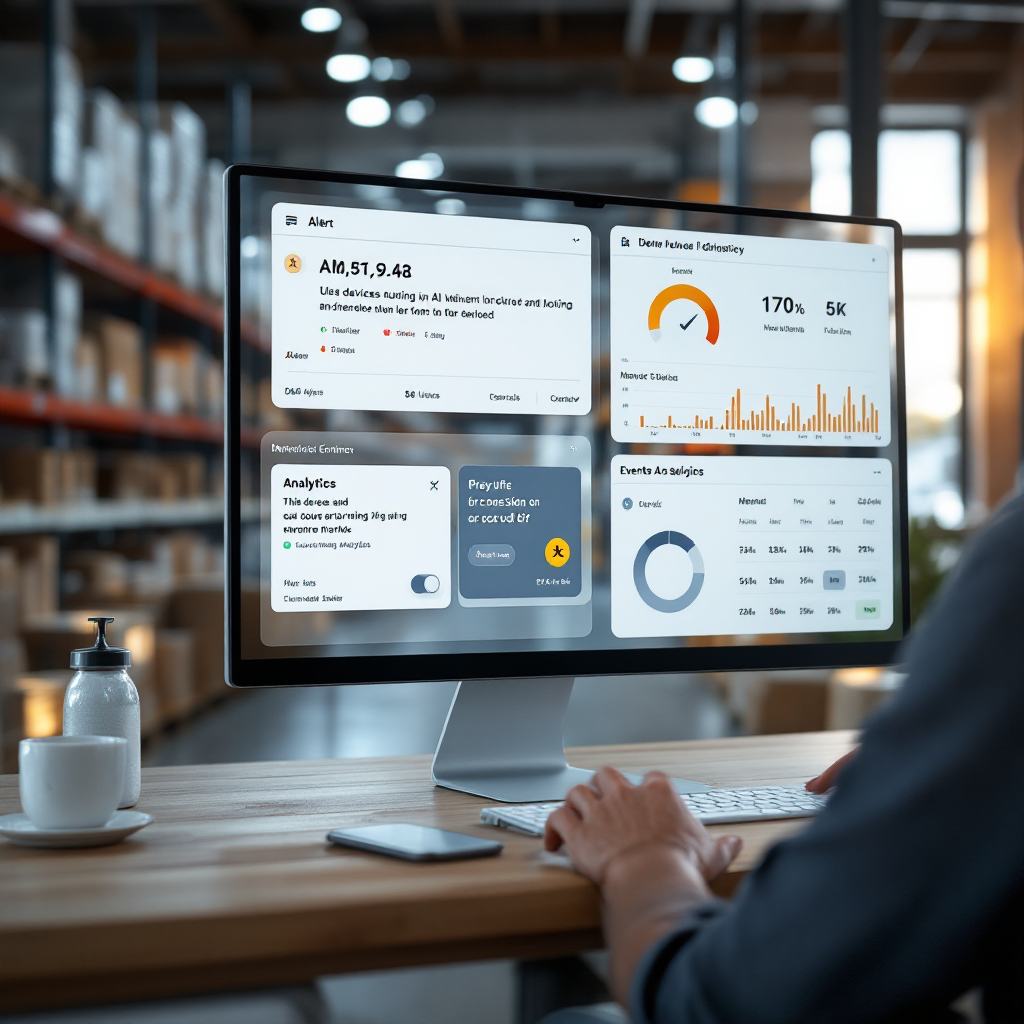
Real-time video processing transforms video surveillance into a proactive tool. XProtect and partner plugins provide real-time alerts so operators can assess threats as they happen. Core surveillance use cases include perimeter protection, crowd management, and monitoring of critical infrastructure. For perimeter work, models detect breaches and object detection flags unusual movement. For crowd management, analytics track density and flow to improve public safety and to improve wait times in line at busy checkpoints. These alerts provide situational awareness to response teams so they can act fast.
Configuring real-time alerts in XProtect involves defining rules, setting regions of interest, and choosing notification channels. An alert can trigger a camera popup, send a message to a control room, or activate an access control policy. Integrations let events flow to dispatch systems and to SCADA or BMS panels, so an alarm can also open gates or lock doors when needed. This sort of automation helps control access to restricted areas and can prevent multiple people from entering a door on a single access event, for example by enforcing single access badge policies.
Analytics directly on edge devices reduce latency and help keep data local, whereas cloud processing centralises compute but requires bandwidth and introduces data residency considerations. For privacy-sensitive sites, on-prem analytics manage data flows and support compliance. Dashboard visualisation and reporting consolidate analytics data and allow teams to run forensic analysis later. Forensic tools like patented video synopsis and video searchable indexes let investigators gather evidence for criminal investigations and speed up time-to-evidence. The combination of alerts, dashboards, and integrated access control systems helps reduce property damage and reduce workplace accidents through faster incident handling.
Integrating existing video management systems with video analytics software and analytics platform
Most organisations have existing video systems and legacy cameras. Milestone supports integrations so analytics can be added without full camera replacement. Video analytics integration often uses ONVIF/RTSP streams, and it connects plugins or external analytics platforms to XProtect. This approach lets teams reuse existing video and maximise hardware investments. It also avoids vendor lock-in and enables phased deployment strategies across sites.
Support for legacy cameras and third-party VMS integrations means integrators can add analytics to hotels, factories, and transportation hubs with minimal disruption. The analytics platform can publish events to MQTT or webhooks, and it can integrate events into access control systems and business systems for broader automation. This lets cameras become sensors for operations as well as for security. Visionplatform.ai focuses on turning existing CCTV into an operational sensor network, and it supports hybrid deployments where some inference runs at the edge and some runs on-prem servers.
Operational efficiency gains from a centralised analytics platform include faster forensic analysis, fewer false alarms, and automated workflows that reduce guard intervention. Analytics data aggregates into reports that support business intelligence, and teams can track KPIs like queue lengths or vehicle counts to improve throughput. Case studies report improved ROI when analytics reduce response times and lower manual review hours. The market for ai video analytics is growing, and analysts estimate a market size of about USD 9.40 billion in 2024 with steady growth thereafter (AI Video Analytics Market – Global Market Size, Share and Trends).
Integrators should plan bandwidth, GPU resources, and lifecycle updates for models. Forensic analysis and tracking video summary features like briefcam video summaries can further reduce investigator workload. When scaled correctly, a Milestone-based solution supports airports, seaports, retail, and public transport while preserving data access and ownership. Finally, expert commentary notes that “The rapid evolution of AI-powered video analytics is transforming how organizations interpret visual data, moving from reactive to proactive security measures” (research in video analytics: advancements and trends), which explains why integrators and resellers invest in analytics plugin ecosystems and in certified deployments.
FAQ
What is AI video analytics and how does it work with Milestone XProtect?
AI video analytics uses machine learning models to identify objects, behaviours, and events in video streams. In Milestone XProtect, analytics plug-ins and edge models send metadata and alerts to the VMS so operators can act on detections in real time.
Can I run analytics on my existing cameras without replacing them?
Yes. Many analytics solutions support ONVIF/RTSP streams so they can process existing video. Visionplatform.ai, for example, focuses on turning existing CCTV into operational sensors while keeping data on-prem.
Does XProtect support facial recognition features?
XProtect supports facial recognition through certified third-party plugins where allowed by law and policy. Administrators must verify local regulations and configure systems accordingly to ensure compliant use.
What hardware do I need for CVEDIA-RT AI analytics?
CVEDIA-RT and similar plugins run best on systems with GPU acceleration for inference, or on optimised edge devices. You should size CPUs, GPUs, and storage according to the number of video streams and the required frame rate.
How fast are alerts in a Milestone deployment?
Alert latency depends on where inference runs. Analytics directly on edge devices usually provide the fastest, near real-time alerts, while cloud processing can add delay due to upload and queueing. Edge deployments keep latency low and data local.
Can analytics reduce false alarms?
Yes. By tuning thresholds, using context-aware models, and combining multi-sensor inputs, analytics can cut false positives. That reduces guard fatigue and improves response quality.
How does Milestone handle multi-site, high-resolution deployments?
XProtect supports distributed recording and load balancing so it can scale for multi-site and high-resolution scenarios. Certified plugins and proper resource allocation help maintain performance as sites grow.
Are there privacy or compliance benefits to on-prem analytics?
On-prem analytics keep video and training data inside the organisation, aiding GDPR and other regulatory compliance. This approach aligns with EU AI Act considerations and reduces third-party data exposure.
What operational gains can analytics provide beyond security?
Analytics supports business intelligence by supplying counts, heatmaps, and event streams. Organisations use these insights to understand customer behaviour and to improve operational KPIs like throughput and wait times.
Where can I learn more about airport-specific analytics and use cases?
There are dedicated resources for airport detection and analytics, such as people detection, crowd density, and perimeter breach pages. For practical examples, see Visionplatform.ai’s airport pages for people detection and crowd analytics (people detection in airports, crowd detection density in airports).