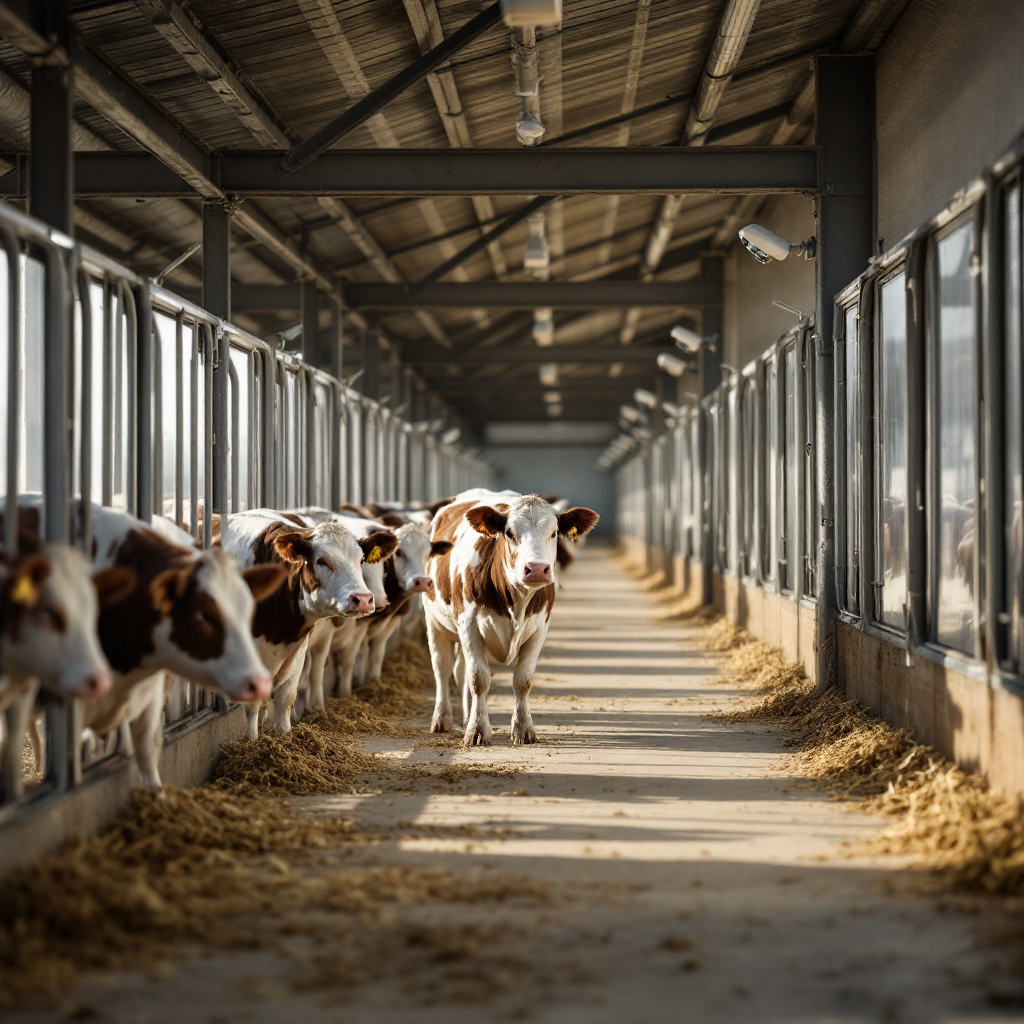
using ai and computer vision for lairage occupancy monitoring
AI applies to lairage occupancy monitoring in straightforward ways. First, cameras collect image and video from holding pens. Then, computer vision pipelines process those streams rapidly. Also, edge devices can run models on site to preserve privacy. For example, Visionplatform.ai turns existing CCTV into operational sensors that publish structured events to dashboards and SCADA, and so can streamline facility workflows and reduce manual checks.
Camera-based computer vision setups rely on object detection and segmentation to count animals. Next, algorithms classify animals, and then object tracking links detections across frames. Also, a well-tuned algorithm will deal with occlusion and varying light. Research shows AI occupancy systems can achieve >90% counting accuracy even under various lighting and crowded conditions, with high robustness. Therefore, real-time occupancy data helps staff avoid overcrowding and stress.
Real-time alerts matter. For instance, automated triggers warn when a pen exceeds a set capacity. Also, the event stream can feed farm management dashboards so planners adjust pen rotation. In addition, automated logs support audits and compliance with welfare rules. The combination of computer vision systems and on-prem processing avoids excessive cloud transfer and aligns with EU requirements, and Visionplatform.ai emphasises customer-controlled datasets and on-site inference to keep data local.
Using AI also reduces labor. Staff no longer walk every pen merely to count animals. Instead, they respond to precise alerts. Also, the system provides historical occupancy trends and heatmaps to optimise layouts. For more on counting and density analytics tied to security and operations, see our people counting and heatmap occupancy pages like the people-counting-in-airports resource and the heatmap-occupancy-analytics-in-airports example.
Finally, deploying computer vision to monitor lairage supports better animal care. Automated detection of overcrowding can prevent stress or discomfort, and thus help to improve animal welfare. Also, these systems integrate with farm management and with RFID or wearable tags if needed, so they enhance both monitoring and operational decision-making.
vision ai in livestock monitoring
Vision AI enables continuous livestock monitoring across barns and lairage. First, deep learning models detect and follow each animal. Then, object detection and tracking tools create per-animal trajectories. Also, models classify posture, feeding, and social interaction. This combination produces actionable metrics for animal behavior and health.
Deep learning models can identify an individual animal across frames. For example, techniques like re-identification and pose estimation help isolate movement signatures. Also, researchers report that AI-driven movement tracking can detect behavioral anomalies with up to 85% sensitivity, noting the value of continuous automated monitoring. Therefore, systems pick up early signs of illness and prompt interventions.
Vision AI setups often combine cameras with sensors. For instance, RFID or wearable data can augment visual cues. Also, integrated feeds improve track accuracy and help classify feeding patterns and activity levels. This multi-modal approach strengthens health monitoring and supports precision livestock farming efforts. In practice, systems detect changes over time and flag deviations so managers act quickly.
Some farms use AI to monitor animal motion for gait analysis. That helps detect lameness and other mobility issues. Also, computer vision tools can quantify time spent lying, standing, and walking, and thus give a fine-grained view of animal behavior and health. For farms seeking to improve animal welfare and increase productivity, these insights are critical.
Visionplatform.ai supports tailored model strategies so sites can pick models and refine them on local footage. Also, the platform streams events for operational dashboards. This approach lets farms move beyond alerts and use vision data to guide resource allocation, and to integrate with farm management software for smarter scheduling and maintenance.
AI vision within minutes?
With our no-code platform you can just focus on your data, we’ll do the rest
annotation and animal monitoring methods
High-quality annotation underpins accurate animal monitoring. First, manual labelling of image or video frame data establishes ground truth. Then, teams use that labelled dataset to train deep learning models. Also, automated labelling tools speed up the process by pre-annotating likely regions and letting humans correct them. This hybrid workflow saves time and raises consistency.
Annotation must cover diverse animal species, breeds, and various environmental conditions. For example, lighting, camera angle, and bedding type change visual appearance. Also, a dataset that captures these variations ensures the model generalises. Therefore, thoughtful sampling and balanced labelling are essential for robust performance.
Segmentation labels body parts sometimes. Also, keypoint labelling supports gait analysis and posture classification. In addition, bounding boxes and class labels support object detection and tracking. These different annotation types feed multiple downstream tasks and thus raise overall system capability.
Annotation directly affects detection accuracy. A well-annotated dataset reduces false detections and helps object tracking remain stable in crowds. Also, consistent labels let the algorithm learn subtle cues that indicate stress or illness. For instance, labelling abnormal postures or isolation behaviour improves models that detect welfare issues.
Tools that integrate with existing VMS and that allow annotation on local servers are preferable for privacy and compliance. Visionplatform.ai offers workflows that reuse VMS footage inside the customer environment. This lets operators keep training data on-prem, speed up retraining, and maintain audit logs. Also, on-site training reduces vendor lock-in and supports EU AI Act readiness while improving model fit for site-specific monitoring systems.
monitor animal movement with computer vision
Computer vision to monitor animal movement yields rich behavioural maps. First, object tracking builds trajectories for each animal. Then, analytics compute time budgets for grazing, resting, and transit. Also, these maps let managers spot abnormal routines quickly. Mapping trajectories helps farms understand space use and stocking density.
Trajectory tracking supports grazing studies as well as lairage flows. For example, managers can see where animals graze most, how long they rest, and where congestion occurs. Also, path heatmaps show preferred routes and pinch points. This data helps streamline pen layout and rotation schedules. In addition, the information can improve feed placement and water access to reduce competition and stress.
Gait analysis is another application. Computer vision tools quantify stride length, limb symmetry, and posture. Also, early signs of illness often appear in altered gait. Therefore, monitoring gait helps detect health issues early and can reduce the spread of disease. Research indicates that automated monitoring can detect anomalies with high sensitivity, aiding early intervention and lowering losses in production settings.
Continuous, hands-off monitoring reduces handling stress. Also, remote observation allows veterinarians to triage cases faster. Vision AI combined with sensors improves fidelity. For instance, a system that fuses camera data with RFID reads tracks feeding and social interactions more reliably. Moreover, object detection and tracking pipelines based on algorithms like yolov8 can be adapted on site for specific animal species and lighting scenarios.
Finally, computer vision-based movement monitoring feeds predictive analytics. Also, analytics predict when a pen may exceed safe capacity or when an animal needs inspection. Integrated alerts then prompt staff action. This loop supports both better animal care and increased productivity in livestock farming.
AI vision within minutes?
With our no-code platform you can just focus on your data, we’ll do the rest
monitoring animal behavior and animal behavior anomalies to improve animal welfare
Monitoring animal behavior continuously helps improve animal welfare across operations. First, AI and camera analytics track activity levels, feeding patterns, and social interactions. Then, models compare current metrics to historical baselines. Also, automated alerts notify staff when behaviour deviates from norms.
Continuous metrics can include time spent feeding, time spent lying, and frequency of interactions. Also, these metrics feed into dashboards for trend analysis. For example, a sudden drop in activity levels might indicate early signs of illness. Therefore, early alerts allow prompt checks and reduce welfare issues.
Automated systems also support audits. Event logs document occupancy, movement, and detected anomalies over time. Also, these records help demonstrate compliance with welfare standards during inspections. For operational teams, integrating these logs into farm management and analytics tools simplifies reporting and helps streamline responses.
AI-driven detection of abnormal behaviour can flag stress or discomfort, and thus indicate health issues early. For instance, isolation from the group, repetitive pacing, or altered feeding patterns often precede diagnosable illness. Also, pairing visual alerts with health monitoring and veterinary checks shortens response times and reduces disease impact. Research underscores the value of continuous automated monitoring for humane, scalable assessment of welfare and practical interventions.
Visionplatform.ai’s approach publishes events via MQTT so teams can operationalise vision data beyond security use. Also, this enables predictive scheduling for feed delivery based on detected activity, which improves both animal welfare and productivity. Finally, these systems support precision livestock farming by enabling targeted treatments and better resource allocation.
used to monitor animal behavior: using ai for livestock management and making farming smarter
AI for livestock management connects video analytics to operational decision-making. First, vision AI systems stream structured events to farm management platforms. Then, analytics predict needs and optimise pen rotations. Also, this reduces wasted labour and improves resource allocation.
Integration matters. For example, connecting camera events to a farm management dashboard lets teams act on occupancy and movement data in real-time. Also, Visionplatform.ai integrates with leading VMS and streams events via MQTT. This makes it simple to include vision data in BI, SCADA, or maintenance tools. In addition, the platform supports on-prem deployment for GDPR and the EU AI Act.
Predictive analytics optimise feeding schedules and rotations. Also, models forecast when pens will need cleaning or when feed should be delivered. This reduces downtime and raises productivity. For livestock farming, that means healthier animals and more efficient operations. Also, better scheduling reduces density-related stress and welfare issues.
Future directions include edge inference, multi-farm network analytics, and autonomous systems for animal observation. Also, federated learning across sites could improve models while keeping data local. Moreover, ethical guidelines and auditable logs will be crucial for acceptance by auditors and the public. Finally, technologies like wearable sensors, RFID tags, and camera analytics will work together to monitor animal health and welfare holistically, and thus support sustainable farming practices.
Using AI and computer vision tools to monitor animal behavior simplifies daily tasks and helps farms scale. Also, these systems enable livestock monitoring market innovations that deliver measurable returns. In short, vision AI can improve animal care, streamline operations, and support smarter, more sustainable management practices.
FAQ
How does AI vision count animals in a lairage?
AI vision uses cameras and object detection to identify animals in each frame. Then, object tracking links detections across frames so the system can count unique individuals over time. Also, models trained on annotated datasets improve accuracy under varied lighting and clutter.
Can computer vision detect lameness or gait problems?
Yes. Computer vision techniques such as keypoint estimation and gait analysis measure stride and posture. Also, deviations from baseline metrics can trigger alerts so staff can inspect animals early and reduce the spread of disease.
What is required to train these AI models?
Training requires a labelled dataset with diverse image and video samples across breeds and environments. Also, annotation types like bounding boxes, segmentation, and keypoints enhance capability. Finally, onsite data keeps model training relevant to the farm’s conditions.
Are these systems compliant with data protection rules?
Systems that process video on-prem reduce data transfer and can support GDPR and the EU AI Act. Also, solutions that keep training data local and provide auditable logs make compliance easier for enterprises.
How accurate are AI occupancy monitors?
Well-trained systems often exceed 90% accuracy in counting animals in varied conditions, as reported in recent studies. Also, combining camera data with RFID or wearable inputs can further improve reliability.
Can vision AI integrate with existing farm management tools?
Yes. Platforms that stream events via MQTT or webhooks integrate with dashboards, BI, and SCADA systems. Also, this enables farm managers to use vision data to schedule feeding, rotate pens, and track productivity.
What are common challenges when deploying vision AI on farms?
Challenges include data diversity, lighting variability, and model drift. Also, integration with legacy VMS and training staff to interpret outputs are common hurdles. Using flexible model strategies and on-site annotation helps overcome these issues.
How quickly can anomalies be detected?
Real-time monitoring can flag anomalies within minutes of occurrence. Also, automated alerts reduce the time from detection to action, which helps in treating health issues early and improving animal welfare.
Do farms need cloud connectivity for AI?
No. Edge and on-prem solutions allow local inference and training. Also, keeping data in the local environment limits exposure and supports regulatory compliance. Visionplatform.ai offers on-prem and edge deployment options for this purpose.
What future developments should farms expect?
Expect more edge inference, federated learning across farms, and richer multi-modal analytics combining cameras, RFID, and wearables. Also, clearer ethical guidelines and better integration with farm management will make AI-driven livestock monitoring more practical and widely adopted.