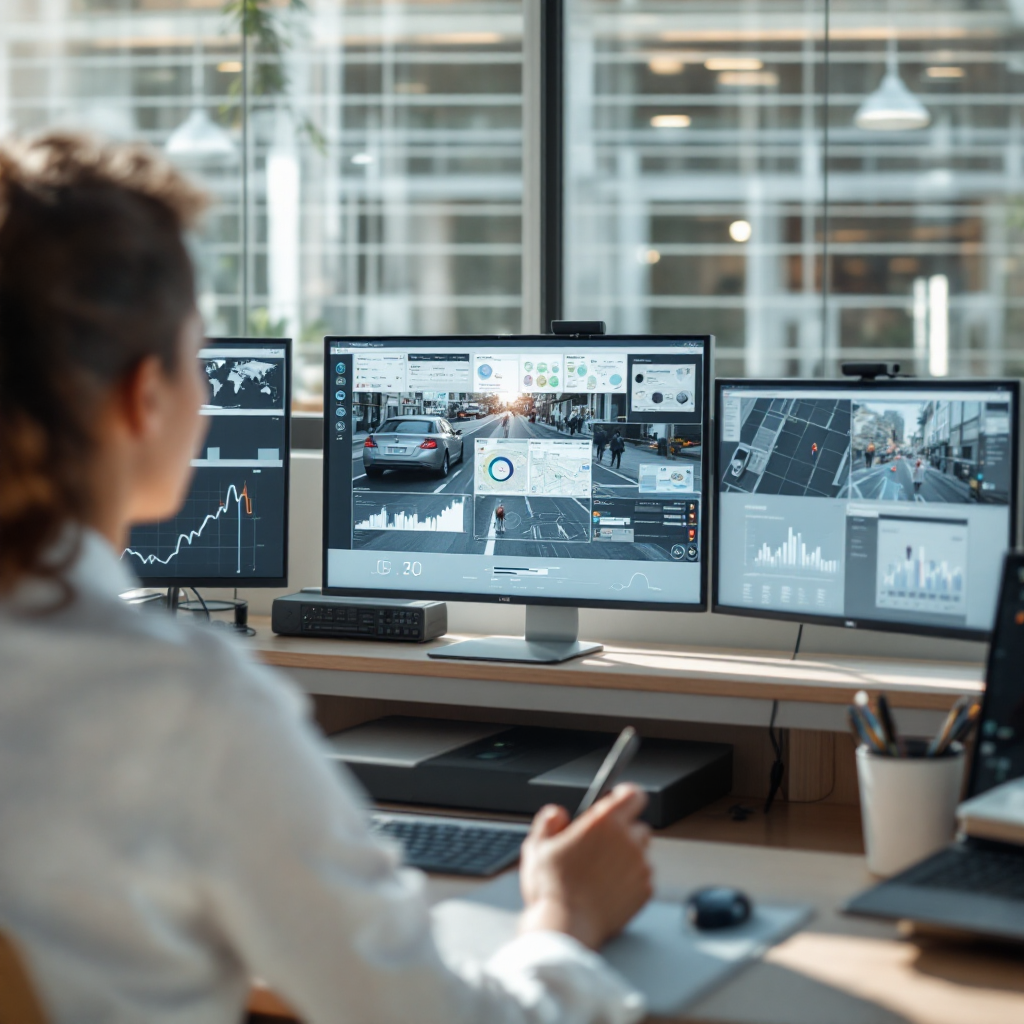
video analytics in genetec security center
Firstly, secondly, next, then, now, also, additionally, consequently, therefore, however, meanwhile, subsequently, finally, thus, besides, alternatively, instead, likewise, otherwise, nevertheless, similarly, in addition, as a result. Genetec brings AI-driven video analytics directly into its core platform. The platform gives operators the tools they need to detect problems, to receive real-time alerts, and to act fast. Genetec’s approach reduces blind spots and helps teams understand what’s happening around large sites.
Genetec’s market leadership is well documented. Omdia ranked the company as the worldwide leader in video surveillance software in 2025, showing strong placement across enterprise deployments and service agreements (Omdia report). Novaira Insights also lists the firm as a top vendor for growth in software and services (Novaira Insights). These independent findings explain why large organisations standardise on Genetec tools.
The platform includes camera integrity and tamper detection to protect system integrity and to reduce downtime. A camera integrity monitor flags malfunction and tamper events, and then the system can send a notification to the right operator. The design aims to turn raw video footage into actionable signals so security teams can make informed decisions quickly. Security video analytics and video analytics tools work together in one environment to minimise false alarms and to free operator time.
Genetec places emphasis on real-time detection and on providing actionable context for incidents. The system combines analytics with a unified dashboard so operators can monitor multiple feeds. That same environment supports a video surveillance system at scale, whether it protects a campus, a hospital, or a transport hub. For organisations that want to use video analytics but keep control of their data, Visionplatform.ai offers approaches that integrate with existing deployments while keeping on-prem processing as a governance option. This helps teams scale detection without moving sensitive footage offsite.
kiwivision video analytics solution for enhanced video surveillance
Firstly, secondly, next, then, now, also, additionally, consequently, therefore, however, meanwhile, subsequently, finally, thus, besides, alternatively, instead, likewise, otherwise, nevertheless, similarly, in addition, as a result. KiwiVision brings a focused video analytics solution into the Security Center environment. The embedded KiwiVision™ video analytics package specialises in real-time object detection, loitering detection, and behaviour analysis. This kiwivision integration extends the platform’s reach and makes threat detection more proactive.
kiwivision video analytics uses machine learning techniques to automatically detects people, vehicles and objects of interest. It tracks direction and distance, and it can flag abandoned objects or suspicious activity near restricted areas. The analytics combine object detection with rules so the system can detect tailgate events at access points, or identify vehicles and objects in no-entry zones. When a detection occurs, the software can generate a clear alert that gives operators time-stamped clips and context so they can verify the incident fast.
Use video analytics to reduce manual monitoring and to reduce noise. For example, a busy concourse can generate hundreds of alerts, but the embedded KiwiVision analytics can classify an abandonedbag or a harmless delivery. KiwiVision’s models also include a people counter for occupancy and a people-counting mode to report foot traffic and occupancy levels. These features help security teams and operations staff alike. For more specialised detection like people recognition, Visionplatform.ai shows how you can tailor models to site-specific needs and keep training data private, so you get detections that match your environment.
Practical use cases include perimeter protection around loading docks, early detection of loitering near critical assets, and automated notification when vehicles enter restricted areas. KiwiVision’s analytics transform the data from cameras into clear events, and they allow teams to receive alerts only when meaningful thresholds occur. This capability supports threat detection and helps reduce the time operators spend on low-value tasks. For samples of people and vehicle analytics in transport contexts, see our people detection work and our vehicle detection pages for airport scenarios (people detection).
AI vision within minutes?
With our no-code platform you can just focus on your data, we’ll do the rest
unified video management system (vms) and access control integration
Firstly, secondly, next, then, now, also, additionally, consequently, therefore, however, meanwhile, subsequently, finally, thus, besides, alternatively, instead, likewise, otherwise, nevertheless, similarly, in addition, as a result. A robust video management system links cameras, analytics, and door systems so operators get a single pane of glass. The video management solution in Security Center ties VMS streams and access events together. That unified security view reduces context switching for the operator and shortens decision loops when incidents occur.
Genetec’s platform integrates VMS and access control so security staff can correlate a door open with a nearby camera feed instantly. The Security Center environment provides a unified timeline that combines video, access logs, and analytics alerts. In practice, this means that when an access badge is used at an odd hour, the operator sees the card read, the camera clip, and any analytics flags in one view. Combining vms records and access records speeds incident triage and improves situational awareness.
Genetec has extended this open approach by integrating third-party device ecosystems, including Ajax security systems, which demonstrates how access control and video systems come together in one workspace (Ajax integration). That integration supports both perimeter and internal area protection workflows. It also helps to detect unauthorized access and to reveal tailgate events at entrances so security teams can intervene.
Operators benefit from fewer windows, faster searches, and clearer alerts. The model also supports workflows that automate routine responses, such as locking an exit after an intrusion alarm, while sending the right notification to the nearest operator. Linking access control and the video management system increases efficiency across the security infrastructure and creates a single place to review incidents. If you manage airport environments and want to merge access events with forensic records, see our forensic search page for how combined logs accelerate investigations (forensic search).
advanced video analytics and intelligent automation for operational efficiency
Firstly, secondly, next, then, now, also, additionally, consequently, therefore, however, meanwhile, subsequently, finally, thus, besides, alternatively, instead, likewise, otherwise, nevertheless, similarly, in addition, as a result. Advanced video analytics unlocks higher automation and better decision outcomes. Features such as advanced video analytics include facial attribute scanning, perimeter detection, crowd-counting, and license plate recognition. These tools generate structured events that feed automated playbooks and dashboards.
AI reduces workload by automating low-value tasks and by improving detection accuracy. An ai-powered people counter provides occupancy metrics and live occupancy levels so operations teams can manage queues and access. Crowd density and direction control analytics let management detect patterns during peak hours. When analytics trigger, the system can send real-time alerts to the right operator, or it can start a scripted response that locks gates and notifies guards.
Intelligent automation helps security teams reduce false alarms and focus on high-priority incidents. For instance, when a suspicious activity is detected near a perimeter, the system can automatically pull camera clips, call a nearby guard, and log the event for later review. This automated workflow saves time and improves response times. It also helps to make more informed and faster decisions during an incident.
These tools deliver operational insights and a clear dashboard that lets managers make better decisions with less guesswork. The analytics can detect patterns across multiple cameras and correlate those events with access logs or intrusion sensors. That correlation yields relevant data for post-event analysis and supports continuous improvement. The same analytics provide business value, as operators can use occupancy metrics to optimise staffing. For real-world examples of crowd and occupancy analytics, review our crowd detection and people counting resources (crowd detection, people counting).
AI vision within minutes?
With our no-code platform you can just focus on your data, we’ll do the rest
automation and surveillance and access control to speed up investigations
Firstly, secondly, next, then, now, also, additionally, consequently, therefore, however, meanwhile, subsequently, finally, thus, besides, alternatively, instead, likewise, otherwise, nevertheless, similarly, in addition, as a result. Automation can help close cases faster and reduce time spent on manual evidence collection. Automated evidence tagging and timeline reconstruction let investigators move from a tip to a case file in minutes. The platform correlates events with access logs, which helps teams quickly find who badge-swiped and when a door opened.
When you combine video and access records, the system builds a comprehensive view that simplifies incident reconstruction. Forensic search becomes faster because the system indexes objects and persons across hours of video footage. Investigators can search by vehicle, by region in the frame, or by the time a badge was used. This correlation turns slow searches into quick reviews and helps to close cases faster.
Real deployments in healthcare and public safety show measurable benefits. For example, hospitals use automated tagging to locate patient falls, to verify secure exits, and to track staff movement during incidents. These workflows speed audits, and they reduce liability exposure. For airport and critical infrastructure teams that need to review access and video, our perimeter breach detection work highlights how quick cross-referencing accelerates response (perimeter breach detection).
Automation also helps to produce relevant data for prosecutions or compliance audits. The system records chain-of-custody metadata and timestamps for each clip. That capability makes it easier to hand over admissible evidence and to answer compliance questions. Operators and investigators can therefore focus on analysis rather than on file retrieval, which improves productivity during high-pressure events.
physical security and security solutions: enhance operational efficiency
Firstly, secondly, next, then, now, also, additionally, consequently, therefore, however, meanwhile, subsequently, finally, thus, besides, alternatively, instead, likewise, otherwise, nevertheless, similarly, in addition, as a result. Video analytics plays a central role in a holistic physical security strategy. It ties together intrusion sensors, access control, environmental sensors, and a video management solution into one coherent view. This unified approach helps organisations reduce risk and to improve response coordination.
Integrating analytics with other security solutions lets you transform the data into operational insights. For example, cameras can feed occupancy metrics to building management, which then adapts HVAC or lighting based on foot traffic. This approach turns cameras into actions and enhance cross-team workflows that extend beyond pure security. Visionplatform.ai specialises in turning data from your cameras into events and into streams that business systems can use for dashboards and for operational reporting.
Future trends include more cloud-based services and broader VSaaS adoption. However, many customers will keep critical processing on-prem to meet compliance needs. Hybrid models will likely dominate, with sensitive inputs processed locally and aggregated insights pushed to cloud dashboards. As AI models continue to improve, they will detect patterns that help reduce downtime, improve area protection, and cut false alerts. Organisations should plan for continuous updates and for clear governance over models and data.
Overall, the right mix of analytics, automation, and integration makes security and operational teams more effective. By combining intrusion alerts, access logs, and video events, teams can prioritise responses, make informed decisions, and reallocate resources where they matter most. A strong security infrastructure that uses video analytics applications will both reduce risk and provide business insights to improve operations.
FAQ
What is KiwiVision and how does it work with Security Center?
KiwiVision is an embedded analytics package that works inside Genetec’s Security Center. It applies machine learning models to camera streams to detect objects, loitering, and suspicious activity and then creates alerts for operators.
How does Genetec rank in the video surveillance market?
Independent analysts such as Omdia list Genetec as a global leader in video surveillance software (Omdia), and other research confirms its strong position in software and services (Novaira Insights). These reports reflect broad enterprise adoption.
Can I integrate third-party access control with the VMS?
Yes. Security Center supports integrations with third-party systems, including Ajax devices, and provides a unified view that ties access events to camera footage so operators can respond faster (Ajax integration).
How do automated workflows speed up investigations?
Automation tags events and reconstructs timelines so investigators spend less time searching. Correlating video with access logs enables rapid incident review and helps teams close cases faster.
Can analytics run on-prem to meet compliance needs?
Yes. Many deployments keep processing on-prem or at the edge to maintain control over data. Visionplatform.ai supports on-prem and edge model strategies to help organisations meet GDPR and EU AI Act requirements.
How do analytics help with occupancy and crowd management?
Advanced analytics provide people counters and crowd density reports. These metrics let operations teams manage foot traffic and staffing, and they help meet safety and comfort goals in high-traffic areas.
What types of threats can analytics detect?
Analytics can detect intrusion attempts, tailgating, abandoned objects, unauthorised access, and suspicious activity near restricted areas. They also support perimeter and area protection workflows.
Are alerts from analytics reliable for operators?
When configured correctly, analytics reduce false positives and deliver actionable alerts. Combining analytics with camera integrity monitors and tamper detection improves signal quality for the operator.
How does integration improve system integrity?
Linking analytics, access control, and sensor data helps the security team to act quickly when events occur. A unified system integrity view flags camera malfunctions and device tamper so teams maintain continuous coverage.
What additional resources can help me implement these solutions?
Start with vendor guides and case studies, and evaluate on-prem versus cloud options. For specific airport scenarios, Visionplatform.ai provides tailored pages on detection types such as perimeter breach detection and forensic search to help plan deployments (perimeter breach detection, forensic search, people detection).