hanwha vision AI-powered video analytics and intelligent capability
Hanwha Vision has moved video from passive recording to active sensing, and it does so by embedding artificial intelligence directly in camera hardware. The Wisenet 9 SoC powers this shift, and it runs complex image processing on the edge to reduce latency and bandwidth needs. For example, the SoC lets a camera filter events before they leave the device, and this design reduces both bandwidth and storage demands while protecting data locally. You can read more about the Wisenet 9 SoC and product highlights from Hanwha Vision’s ISC West showcase.
First, AI turns each camera into an on-site sensor that sees, classifies, and prioritises events in real time. Second, this approach improves situational awareness and speeds response. Third, it makes advanced video available beyond security teams for operations and executive dashboards. In retail, for instance, insights from cameras support merchandising and queue management, and operators can act on wait times data to reduce loss and improve service. For a practical example of people-centric metrics, see our people counting reference people counting, which shows how camera data becomes operational metric.
Hanwha Vision positions itself as a global vision solution provider and it promotes trustworthy, explainable models. An Soon-Hong said that the market is moving toward “super-intelligent” systems that use AI to decide and not merely to record; this quote and analysis appear in Hanwha’s trend release on video surveillance trends for 2025. In addition, the firm highlights its world-class optical design that supports low-light performance and accurate classification.
Visionplatform.ai sees this shift as complementary. We help organisations turn existing CCTV into operational sensors and integrate detections into VMS and business systems, and we do so with on-prem control to meet data-protection needs. So, when a site needs customised models, or when teams want to leverage AI without sending video to cloud only, our platform supports that integration and keeps datasets local for compliance.
Overall, the combination of edge-based video analytics with robust SoC design delivers faster alerts, better situational awareness, and less dependence on central servers. Therefore, operators get a more proactive video security system that supports safety and business intelligence while lowering cost and risk.
analytics and operational insights: object detection and loitering detection in the p series
The P Series brings on-board analytics to everyday deployments. Its embedded engine classifies people, vehicles, and objects at the edge, and then it sends structured events rather than raw streams. This classroom of features includes object detection, which recognises shapes and classes even in dynamic scenes. For manufacturing floors, object detection helps track pallets, vehicles, and tools, and it cuts manual checks while improving throughput. For retail, object detection informs staff about product handling and customer flow, and it improves merchandising decisions.
Loitering detection is a key capability in the P Series that provides proactive alerts when an individual remains in an area beyond expected time. When applied to access zones or perimeter areas the functionality reduces risk by flagging suspicious behavior and supporting rapid verification. For readers who want a detailed use case, our loitering detection resource loitering detection outlines how dwell-time rules map to alert thresholds and operational workflows.
The P Series uses on-board AI to apply watchlists and heatmaps, and it feeds a central dashboard with refined event data instead of raw video. As a result, security personnel spend less time on false alarms and more time on verified incidents. The system also supports license plate recognition for vehicle access and logistics. For example, licence plates can be matched to watchlists to trigger gate actions or notifications, which accelerates throughput at busy entrances.
This series also extends beyond standard alarms and supports beyond security goals. Facilities monitor queue lengths and wait times to improve customer satisfaction, and supervisors measure occupancy to optimise staffing. The P Series does so while maintaining high detection accuracy, thanks to world-class optical design and the SoC’s image processing pipeline. Additionally, the cameras can run custom classifiers, so sites can train models for site-specific objects without sending footage to external providers. In manufacturing, this reduces downtime since the camera recognises blocked aisles, misplaced parts, or vehicle movement patterns quickly.
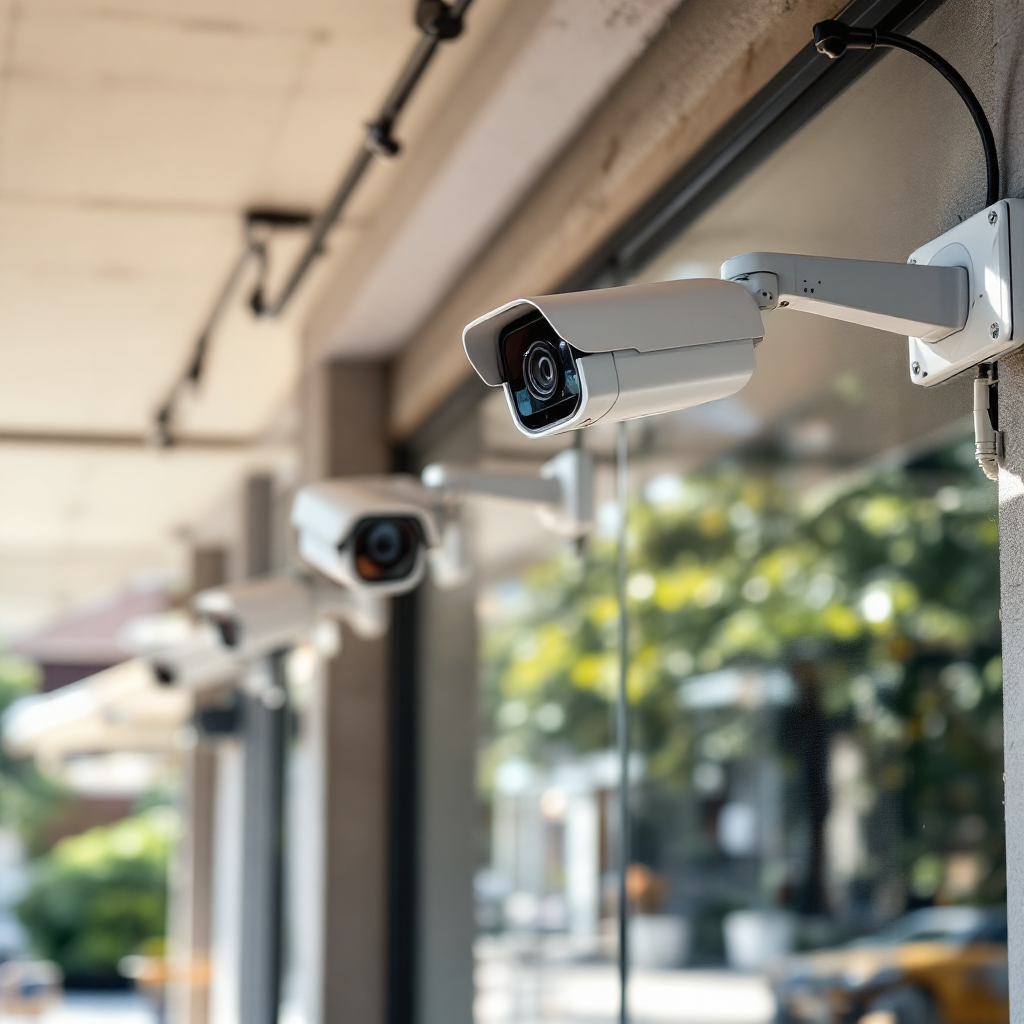
Finally, P Series analytics produce operational insights that feed dashboards and operational systems. They create event streams usable by SCADA or BI tools, and this allows facilities teams to convert detection into measurable improvement. The combined effect is smarter use of camera data for both security and operations.
AI vision within minutes?
With our no-code platform you can just focus on your data, we’ll do the rest
intelligent video and AI alarm management for accurate alert and insight
Intelligent video workflows reduce noise and sharpen focus. Hanwha Vision’s architecture adds AI alarm filters and customisable alert rules to handle complex scenarios. These filters check object attributes, object direction, and contextual cues before an alert fires. This limits unnecessary alarm load and supports reducing false alarms, so teams can trust alerts and respond faster. In practice, a camera will validate a crossing event only when an authorised vehicle and its plate match policies, and then it will escalate the alert to a central console.
Built-in AI alarm rules allow managers to specify watchlists, time windows, and exclusion zones. For instance, a site can mute alarms when service vehicles load during scheduled windows, and it can remain sensitive to intrusion detection during closed hours. The workflow supports webhooks and MQTT so that alarm data becomes actionable across platforms. Our platform also demonstrates how alarms can feed operational dashboards rather than remain buried in a VMS. See our intrusion sample for an example of rules and integrations intrusion detection.
False positives drop because AI analytics understand object size, speed, and classification. The system combines edge inference with central correlation, and this hybrid method reduces verification time. For high-risk installations, intelligence such as watchlists and face or plate matching improves threat detection and situational awareness. As a result, security teams adopt a tiered response model where automated gates, access control, and human verification act in sequence.
Intelligent alarm management also supports business functions. Alarms can trigger operational notifications, and this helps teams act on incidents that affect throughput or service. For example, an alert about a broken queue barrier can be routed to maintenance while the security team receives a parallel verification task. Thus, the platform delivers both security value and safety and business intelligence. In short, accurate alarms lead to faster action, better resource allocation, and improved outcomes.
cloud-based sightmind for enhanced operational analytics in the x series
SightMind™ is Hanwha Vision’s cloud platform that scales analytics and centralises health and event data. The cloud-hosted approach simplifies remote configuration and system-wide updates. It gives administrators a single pane for rules, firmware distribution, and event review. For deployments that need both edge inference and centralised oversight, SightMind provides a hybrid path that balances local processing with cloud-level analytics. Hanwha showcased many SightMind capabilities at ISC West; see the event review for context covering their ISC West innovations.
The X Series devices complement P Series edge functions by streaming refined events to the cloud for longitudinal analysis. While P Series focuses on immediate, on-camera decisions, X Series plus SightMind enable holistic platform metrics, trend analysis, and historical search. The cloud platform standardises telemetry across dispersed sites and supports cross-site dashboards. It also handles watchlists, role-based access, and system health alerts for installers and operators.
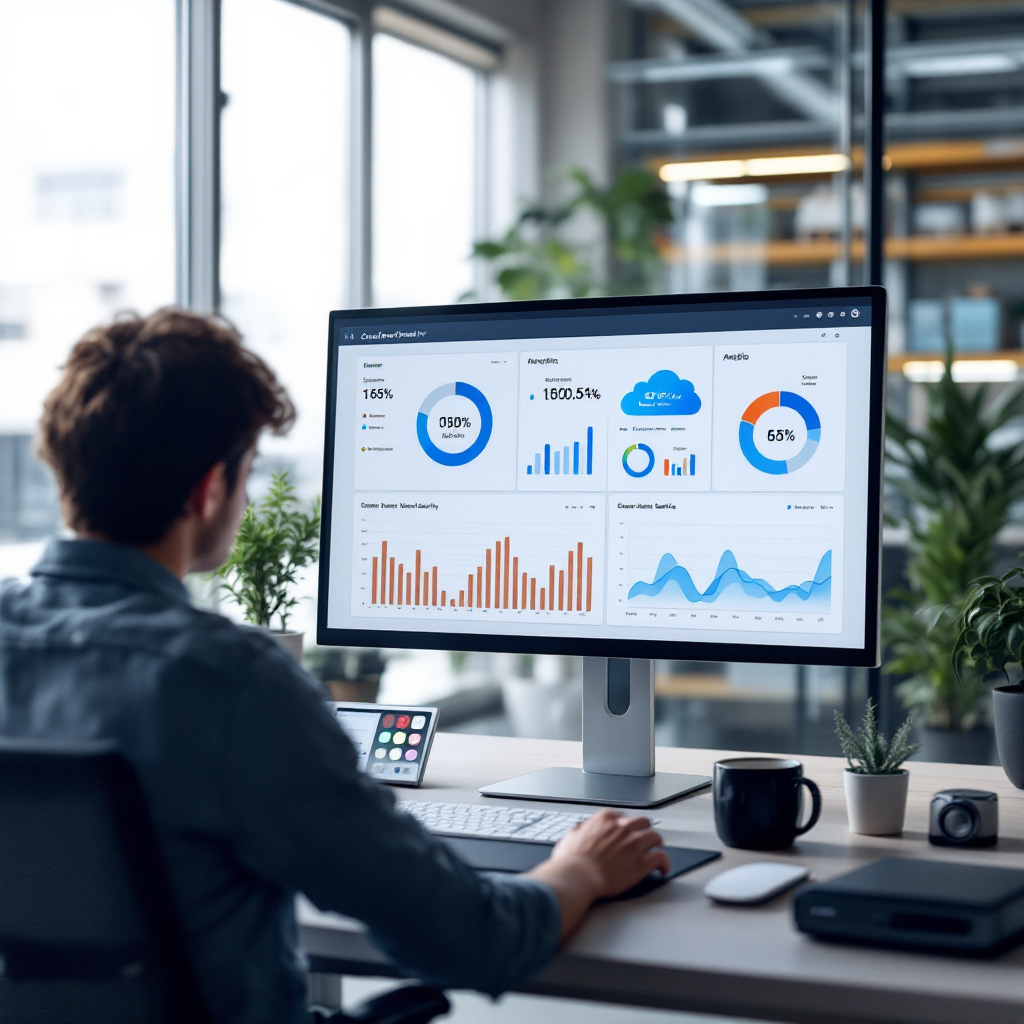
Cloud access reduces the burden on local teams. Administrators can pull firmware reports, check camera status, and export analytics summaries. In addition, cloud-hosted services enable collaboration between security, operations, and executive teams. For organisations that prefer private control, hybrid deployments keep sensitive data on-prem while sending metadata to the cloud. This integration matches diverse compliance needs, and it supports EU AI Act readiness by offering configurable data flows.
SightMind also supports advanced business functions such as trend-based optimisation, and it integrates with third-party platforms for shipping and logistics. For airports, for example, cloud analytics pair with ANPR streams and passenger flow metrics to optimise gate staffing and reduce passenger wait times. For more specialised airport use cases including ANPR and PPE detection, explore our ANPR and PPE resources ANPR/LPR and PPE detection. SightMind therefore acts as the central platform that turns distributed devices into a coherent analytics environment.
AI vision within minutes?
With our no-code platform you can just focus on your data, we’ll do the rest
noise reduction and detection accuracy: P series AI capability
Noise reduction matters for detection accuracy, and the P Series focuses on multi-frame noise reduction to improve low-light imagery. The camera stacks frames and filters sensor noise, and then it delivers clearer images for classifiers. This technique improves the chance that small objects and license plates get recognised at dusk or under artificial lighting. The SoC’s image processing pipeline enhances contrast and reduces artefacts, so downstream AI models make better decisions.
In crowded scenes the system uses spatial and temporal cues to separate overlapping objects. That means object detection scales from single-person monitoring to dense crowd tracking. For airports or transit hubs, crowd-density measures and queue analytics prevent bottlenecks and improve passenger flow. For those interested in crowd management, see our crowd detection and density resource crowd detection. The P Series also helps detect suspicious behavior and loitering, giving teams time to verify and intervene before incidents escalate.
Critical infrastructure benefits when cameras maintain detection accuracy under harsh conditions. For example, vehicle identification works even in mixed lighting, and the system pairs plate reads with access control to validate entries. The cameras use a combination of optical design and SoC-level processing to maximise clarity at range. The approach complements intrusion detection systems and supports perimeter breach workflows.
Beyond raw detection, sites gain operational insights from reliable events. When detections become consistent, analysts can trust dashboards and KPIs and then run optimisation programs for throughput and safety. Our platform publishes events in real time for BI systems, and that enables continuous improvement across teams. In short, noise reduction improves detection, and improved detection yields measurable operational gains.
AI-powered video analytics for operational insights and optimisation
From capture to dashboard, an end-to-end pipeline turns pixels into actionable events. First, cameras capture video and apply image processing and multi-frame noise reduction. Next, embedded inference classifies objects, and then the system streams structured events to the platform. Finally, dashboards and APIs feed operations, so teams convert alerts into workflow tasks. This chain supports both security and operational optimisation.
Data-driven optimisation improves throughput and safety. For manufacturing, cameras register production line anomalies and trigger process anomaly alerts that reduce downtime. For retail and transport, queue and wait times analytics help reallocate staff to meet demand and reduce congestion. Visionplatform.ai specialises in taking those events and publishing them to MQTT and VMS so that BI tools and SCADA can consume them. By doing so, cameras become sensors that support safety and business intelligence across the enterprise.
Looking forward, trends point to more autonomous decision-making at the edge, and to stronger integration between systems. Hanwha Vision forecasts trustworthy AI and sustainability as pillars of future development, and that view aligns with broader industry research on video as a sensor and AI adoption market forecasts to 2035. In addition, recent industry reporting highlights the shift toward AI-enabled surveillance as a core business technology in new AI-based research.
As organisations weigh options, they should balance edge inference and cloud orchestration, and they should control data flows for compliance. In practical terms, that means choosing systems that let you train models on-site, integrate alerts with existing workflows, and scale from tens to thousands of streams. In the end, AI-powered solutions will make surveillance smarter and operations more efficient, and they will do so while protecting privacy and reducing false alarms.
FAQ
What is the Wisenet 9 SoC and why does it matter?
The Wisenet 9 SoC is Hanwha Vision’s chip that runs image processing and AI models on the camera. It matters because it reduces latency and localises processing, which lowers bandwidth and preserves privacy.
How does object detection work in the P Series?
P Series cameras apply trained classifiers on incoming frames to identify people, vehicles, and other object classes. They then send structured events to a platform or VMS so teams can act on detections quickly.
Can loitering detection be tuned for specific sites?
Yes, loitering detection uses configurable thresholds for dwell time and zones so each site can tailor sensitivity. That reduces unnecessary alerts while keeping attention on genuine suspicious behavior.
What is SightMind and what does it do?
SightMind is Hanwha Vision’s cloud platform that aggregates events, health metrics, and analytics across devices. It enables centralised management, trend analysis, and collaboration across sites.
How do cloud and edge approaches differ?
Edge processing makes immediate decisions on-camera and reduces bandwidth and latency. Cloud platforms provide long-term storage, cross-site correlation, and centralised analytics for optimisation.
Can camera analytics support business systems?
Yes, camera events can feed BI, SCADA, and operational dashboards to drive optimization and safety improvements. Our platform publishes events to MQTT and integrates with VMS for this purpose.
How does noise reduction improve detection?
Multi-frame noise reduction cleans up low-light imagery so the AI models see clearer inputs. That leads to higher detection accuracy for plates, faces, and small objects.
Are AI alarms reliable enough for security teams?
With layered filters, watchlists, and context-aware rules, AI alarms become more reliable and reduce false alerts. Integrations with access control and verification workflows further strengthen response quality.
How does this tech support compliance and privacy?
By performing inference on edge devices and supporting hybrid cloud flows, organisations can keep sensitive video local while sharing metadata for operations. This helps meet GDPR and other regulatory frameworks.
What future trends should organisations prepare for?
Expect more autonomous edge decisioning, stronger cybersecurity, and tighter integration with operational systems. These trends will drive better optimisation and situational awareness across sites.