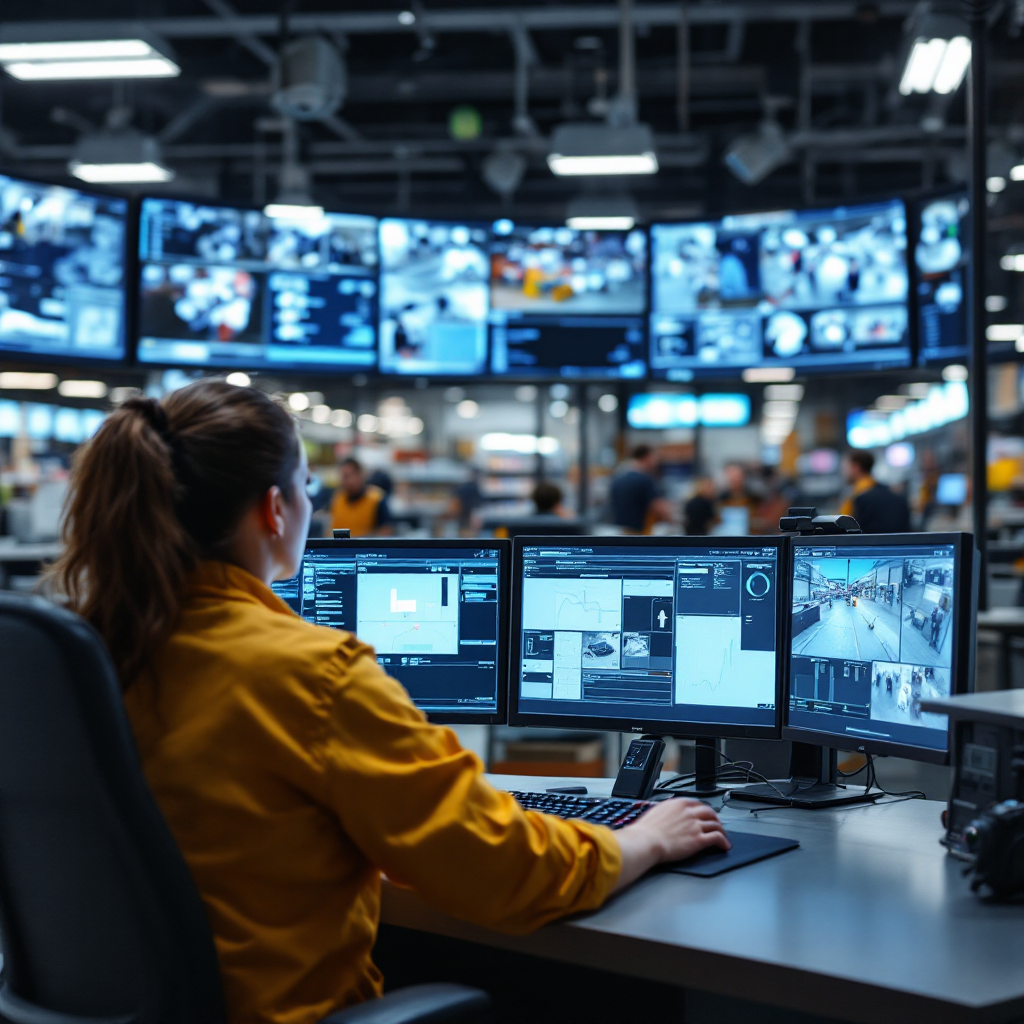
Agentes de IA para Segurança: Do Alarme à Eficiência de Monitoramento
A IA transforma fluxos ruidosos de alarmes em alertas priorizados com os quais as equipes podem agir. Primeiro, sensores e câmeras transmitem dados continuamente. Em seguida, a IA ingere esses dados e filtra o que importa. Depois, os operadores veem informações concentradas e acionáveis. Essa mudança ajuda a reduzir falsos positivos e a cortar tempo desperdiçado. Por exemplo, sistemas orientados por IA podem reduzir alarmes falsos em até 50% (fonte), e podem melhorar a resposta em cerca de 30% (fonte). Essas estatísticas mostram ganhos claros para lojas de varejo e sites empresariais.
O loop básico de monitoramento é simples e eficaz. Primeiro, a coleta de dados reúne fluxos de sensores, câmeras e PDV. Depois, a análise aplica modelos de ML, regras de correlação e sinais contextuais. Em seguida, o sistema emite alertas graduados. Por fim, operadores humanos ou fluxos automatizados agem e registram o incidente. Esse loop se repete em tempo real e aprende ao longo do tempo. A IA fornece uma triarmação de alarmes mais inteligente e ajuda a equipe a focar em trabalho crítico em vez do ruído rotineiro.
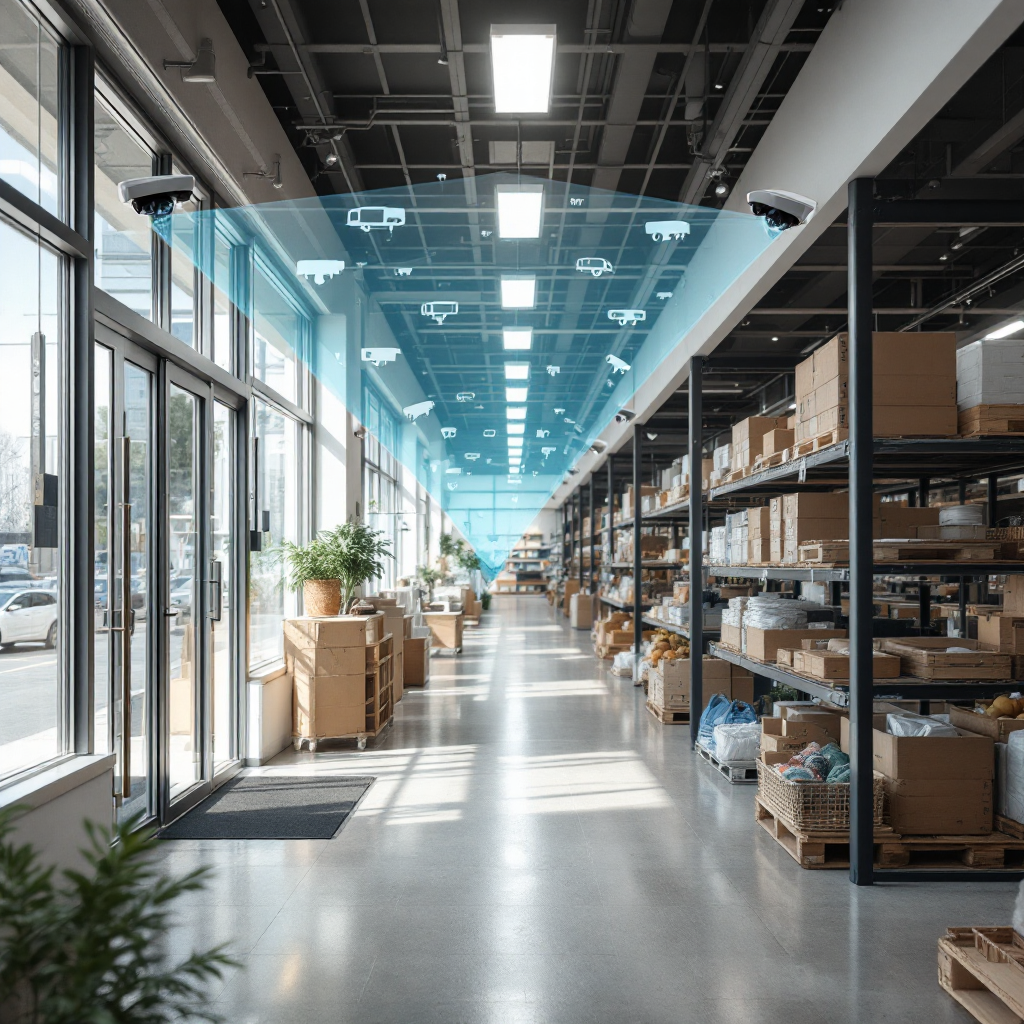
Agentes de IA para segurança operam na interseção de software e hardware. Eles combinam reconhecimento de padrões, detecção de anomalias e regras de negócio para decidir o que escalar. Para muitas empresas, usar câmeras como sensores é um avanço importante. Visionplatform.ai, por exemplo, transforma CFTV existente em uma rede de sensores operacional para que as equipes obtenham detecções precisas em tempo real sem mover vídeo para fora do local. Essa abordagem ajuda a manter conformidade com o GDPR e a EU AI Act, além de manter os dados de treinamento localmente para atualizações de modelos mais seguras.
Além disso, integrar IA com um quadro de governança claro reduz riscos. Uma opinião citada resume isso: o surgimento da IA e das arquiteturas de data lake “significativamente transformou como os alarmes são gerenciados, interpretados e acionados” (ARC Advisory Group). Portanto, organizações que combinam IA, práticas seguras de dados e supervisão humana podem melhorar o monitoramento, aumentar a proteção e economizar em custos operacionais.
How an AI-Powered Alarm Agent Works in Retail Security
An AI-powered alarm agent runs a clear architecture: data lakes, edge inference, and integration layers. First, cameras and POS devices stream to a local buffer. Then, ML models process frames for people, vehicles, ANPR, and suspicious activity. Visionplatform.ai, for instance, uses on-prem and edge processing to keep data local and to improve accuracy on site-specific scenes. This design limits data transfer and helps with compliance.
The workflow is step-by-step and predictable. Step one is signal filtering. The agent removes benign triggers like lighting changes and repeated harmless events. Step two is threat classification. The model classifies activity as shoplifting, loitering, unauthorized access, or a false alarm. Step three is verification. The agent cross-checks camera feeds with access logs and POS activity. If available, it pulls ANPR data for vehicle matches. This reduces the need for manual review and helps loss prevention staff act fast.
Integration matters. An AI agent links to CCTV, access control, and point-of-sale systems to build context. It can publish real-time alerts and structured events to a security platform or MQTT bus. This allows dashboards and BI systems to use camera data beyond standard alarms. For more on people-focused analytics, see how people detection in airports works for crowded environments (detecção de pessoas). For loitering use cases, retailers can learn from loitering detection examples (detecção de permanência suspeita). These links show how camera-based detection generalizes across sites.
AI agents run both at the edge and in central stacks. Edge inference yields instant, low-latency real-time alerts. Central analysis uses data lakes for trend analytics. This hybrid approach helps maintain uptime and allows models to adapt to new store layouts. Also, staff training must include how to verify agent outputs. Human oversight improves trust. In a nutshell, the architecture pairs local speed with central intelligence, and it automates routine triage while keeping personnel in the loop.
AI vision within minutes?
With our no-code platform you can just focus on your data, we’ll do the rest
Smarter Threat Detection and Protection with AI Agents
AI brings advanced pattern recognition and predictive analytics to everyday security. Pattern models learn normal store rhythms and flag deviations. For example, a model can mark repeated shelf interactions without purchase as suspicious, or it can identify coordinated group activity near exits. These capabilities improve detection accuracy and reduce needless escalations. As a result, loss prevention teams spend less time chasing false positives and more time on prevention and protection.
Beyond reactive alarms, AI enables predictive signals that spot potential failures or coordinated fraud before alarms trigger. Predictive analytics use historical POS records, camera sequences, and access logs to estimate risk. Then, the agent assigns a score and a recommended action. This approach helps detect shoplifting rings and insider theft. It also strengthens protection against fraud because anomalous transaction patterns can be correlated with video and access events to form an evidence package.
Trust in AI grows when accuracy improves. Studies show wide adoption of these systems and measurable benefits. Over 60% of enterprises report integrating AI agents into security operations (SailPoint). Also, AI and data lakes have “significantly transformed how alarms are managed” (ARC). These references support the claim that AI-driven monitoring moves teams from reaction to proactive protection.
Real applications include video search and structured event streams. Retailers can detect loitering, unauthorized access, and suspicious behavior and then escalate for verification. To see more on intrusion-focused detection methods, review intrusion detection patterns used in transport hubs (detecção de intrusão). Combining intelligent video with POS correlation yields stronger evidence for loss prevention and helps reduce shrinkage. Finally, AI agents can automate routine reports so staff focus on high-value tasks, and they can improve situational awareness in real-time scenarios.
Case Studies in Retail Security Industry: AI Agents for Security
Real-world deployments show clear returns. Supermarkets and fashion outlets that adopt AI agent solutions report lower shrinkage, faster responses, and better staff allocation. In one example, a multi-site supermarket chain used camera-based analytics to identify suspicious customer groups and to correlate them with POS anomalies. This led to measurable cost savings and fewer false alarms. Vendors also report that response times dropped, and security personnel could prioritize critical incidents more reliably (fonte).
Case studies reveal best practices for rollout. First, begin with a pilot that uses your existing cameras and VMS. Second, tailor models to the site to reduce false detections. Visionplatform.ai emphasizes this path: pick a model, improve it with site data, or build a custom model, all while keeping data on-prem. This approach helps maintain compliance and avoid vendor lock-in. Third, integrate POS and access logs for richer context so alerts carry evidence and recommended actions.
Results often include saved hours and lower personnel costs. Stores save on unnecessary patrols. They also lower incident investigation time, because agents produce structured records and searchable video that link to each alert. In several deployments, retailers saw shrinkage reductions and stronger loss prevention outcomes. Lessons learned highlight governance, regular model retraining, and human-in-the-loop checks to preserve accuracy. A final lesson is to align alerts with operations so that real-time alerts feed workflows across security and business teams.
Also, one study cautions that growing control given to AI increases risk: “The more control a user cedes to an AI agent, the more risks increase” (arXiv). This advice led teams to adopt staged automation, clear escalation paths, and audit logs. Those safeguards improve trust and allow operators to verify critical incidents before broad escalation. Overall, these case results show that careful design and iterative deployment produce the best outcomes for retail security and loss prevention.
AI vision within minutes?
With our no-code platform you can just focus on your data, we’ll do the rest
Options and Trust: How to Rely on AI Agents for Alarm Verification
Choosing the right option matters. Vendors offer cloud and on-prem solutions, and open-source stacks exist for teams with engineering capacity. Each path has trade-offs. Cloud platforms scale easily, and they offer centralized model updates. On-prem solutions keep data local and ease compliance. Open-source gives customization but requires heavy maintenance. For many retailers, a hybrid option balances speed and governance while keeping sensitive video on site.
Trust builds with governance and human-in-the-loop checks. Staged automation means agents perform triage and assign confidence scores. Then, operators validate medium- and low-confidence alerts. This process reduces false escalations and helps staff learn when to trust the agent. Also, audit logs showing how a detection was made help teams review incidents and refine models. For example, Visionplatform.ai provides auditable event logs and on-prem processing to support EU AI Act readiness.
Security hardening is essential to prevent agent manipulation. Teams must secure model training pipelines, protect telemetry channels, and rotate keys regularly. Periodic red-team tests help identify deception risks and adversarial input vectors. Also, governance must include clear escalation policies so critical incidents escalate only after verification. This reduces the chance of a costly false incident and preserves operator confidence.
Finally, comparison shopping helps. Evaluate vendors on integration, latency, and customization. Check for features like ANPR, PPE detection, and forensic search. Also, require clear SLAs and support for model retraining on your footage. These checks ensure the chosen platform matches your needs, and they help you rely on an AI-powered approach without losing control over data or outcomes.
Advance in AI Agent Monitoring: Simplifying Security Work
Advances on the horizon will simplify security work further. Federated learning will let stores improve models across sites without moving raw video off premises. Also, multi-agent collaboration will allow specialized agents to share signals and to recommend joint actions. Edge AI will make instant, real-time decisions at the camera or GPU server. These trends will help minimize latency and improve local autonomy.
Regulation and standards will evolve, and compliance will become a differentiator. Expect clearer rules around data handling and model transparency. Vendors that support on-prem training, auditable logs, and transparent configurations will lead the pack. Also, industry standards will help buyers compare systems on real metrics like false-alarm reduction and response times.
To future-proof retail security operations, take three steps. First, build an integration-first architecture so video can power operations and BI as well as alarms. Second, adopt staged automation with human oversight so operators maintain trust. Third, prioritize platforms that allow local model training and data ownership so you can remain compliant and secure. These steps help ensure your security practice keeps pace with technical advancement and regulatory change.
AI agents are changing monitoring from noisy to meaningful. They help detect suspicious activity, they support loss prevention teams, and they improve protection. When implemented carefully, AI-driven solutions, paired with human oversight, deliver measurable value for retail security and the broader security operations landscape.
FAQ
How do AI agents reduce false alarms in retail security?
AI agents analyze multiple signals and apply learned patterns to filter benign events. They cross-check video with POS and access logs, which reduces false positives and helps staff focus on real incidents.
Can AI agents work with my existing CCTV and VMS?
Yes. Modern systems are designed to integrate with common VMS products and ONVIF/RTSP cameras. For example, platforms that use your existing cameras let you improve accuracy without vendor lock-in and keep data local for compliance.
What are the key steps in the AI alarm monitoring loop?
The loop includes data collection, analysis, alert generation, human verification, and learning from outcomes. This cycle repeats in real-time to improve accuracy and reduce routine noise.
How do AI agents help loss prevention teams?
AI agents prioritize alerts and produce searchable records and video clips tied to POS anomalies. This saves investigation time, helps identify patterns, and reduces shrinkage through targeted interventions.
Are on-prem solutions better for compliance?
On-prem processing keeps video and training data in your control, which helps with GDPR and EU AI Act requirements. It also reduces risk from cloud data transfers and enables local model tuning.
What safeguards prevent AI agent manipulation?
Safeguards include securing model pipelines, encrypting telemetry, rotating credentials, and running adversarial tests. Policies for human verification and audit logs further reduce manipulation risk.
How do I choose between cloud, on-prem, and open-source options?
Choose cloud for scale and managed updates, on-prem for data control and compliance, and open-source if you have in-house engineering. A hybrid approach often balances governance and agility.
Will AI agents replace human operators?
No. AI agents automate routine triage and surface high-confidence alerts, but humans remain essential for verification and complex decisions. The best practice is staged automation with human-in-the-loop oversight.
How quickly can AI improve response times?
Many deployments report response improvement of roughly 30% as agents cut noise and speed verification. Faster, more relevant alerts let teams respond to critical incidents more immediately.
Where can I learn more about camera-based detection capabilities?
Look for documentation and case pages on people detection, loitering, and intrusion detection to understand specific use cases. These resources explain how video analytics convert CCTV into operational sensors and support both security and business systems.