Understanding detection and sensor fundamentals in manufacturing safety
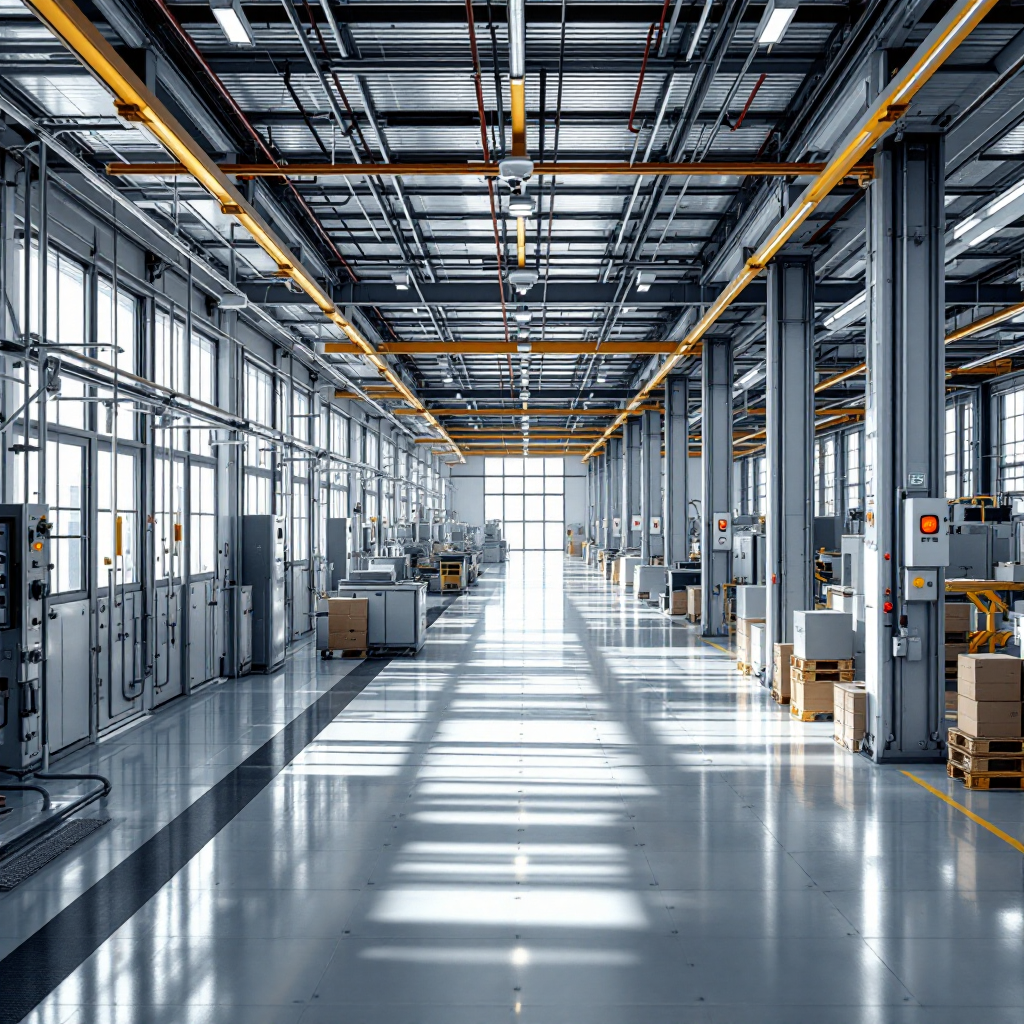
Early detection saves lives and reduces losses in industrial facilities. First, operators need clear early detection strategies for an industrial fire. Also, managers must prioritise continuous monitoring where combustible materials, high temperatures, or hydrocarbon processes exist. For example, large warehouses and production floors often host electrical panels, cable runs, and machinery that can spark ignition. Therefore, a structured approach to safety systems matters more than ad hoc devices. In this chapter we explain core concepts, common sensor types, and the regulatory context that shapes implementation.
Point sensors remain common. Photoelectric and ionisation smoke detectors are widely used to detect smoke or heat before flames spread. Also, photoelectric units excel at identifying smouldering combustion, while ionisation units respond faster to fast flaming ignition. In many plants, heat detectors and beam detectors complement smoke detectors to cover open areas and high ceilings where smoke may not reach point sensors quickly. Additionally, aspirating systems draw air samples to laboratory-grade detectors for rapid, low-level particle detection.
Regulators require documented zones, approved components, and routine testing for industrial facilities. For instance, global market drivers reflect tightening standards and growing adoption of integrated systems; the global flame and smoke detectors market was valued at roughly $6.3 billion and continues to expand as rules change and technology improves (BCC Research). Next, operators should map protected space, plan cable runs for reliable power and signalling, and verify compatibility with central control panels. Also, operators must consider environmental hazards such as dust, steam, and corrosive atmospheres that can affect sensor life.
In practice, good design blends multiple device types into layered protection. Also, Visionplatform.ai helps convert existing CCTV into operational sensors so teams get real-time events from cameras that augment physical detectors. For more about camera-based analytics applied to safety and smoke scenarios, see our fire and smoke detection work in aviation settings for related concepts fire and smoke detection in airports. Finally, training and maintenance keep systems reliable. Regular service reduces malfunction risk and ensures rapid response when an actual fire hazard appears.
Type of flame detector: Exploring flame detection technologies
First, understand that flame detectors are specialised sensors designed to detect the presence of a flame quickly and accurately. Optical flame detectors monitor light in one or more spectral bands to detect emitted by flames, and optical flame detectors are common in harsh industrial applications. Also, ultraviolet (UV) detectors respond to ultraviolet emissions from combustion, while infrared and multi-spectrum units capture radiant energy across several bands. Each type of flame detector offers different detection range, sensitivity settings, and immunity to nuisance sources.
Optical flame detectors use fast-response photodiodes and filters. Also, UV detectors excel at detecting certain hydrocarbon fires before they produce large plumes, and they respond to the presence of a flame even in low-visibility conditions. Infrared detectors read thermal signatures; an ir sensor can detect radiant energy from flames and then signal an alert. Moreover, multi-spectrum flame detector models combine UV and infrared inputs to increase reliability and lower false alarm rejection capability, making them suitable for petrochemical, paint, or solvent-handling zones.
Environmental factors affect performance. Dust, steam, welding plumes, and reflective surfaces can confound flame monitoring. Also, sunlight and hot machinery can generate thermal signatures that mimic flames. Therefore, selection must consider facility layout, open areas versus confined spaces, and different fuel types because different fuel sources emit different optical and infrared spectral characteristics. For guidance on matching detector types to complex sites, facility managers can explore analytics that augment hardware with vision-based checks. For example, our process anomaly detection work shows how camera data can support safety workflows process anomaly detection in airports. Finally, factor in maintenance access, detection range, and compatibility with fire protection and fire suppression hardware when choosing a type of flame detector.
AI vision within minutes?
With our no-code platform you can just focus on your data, we’ll do the rest
Enhancing smoke detection with air sampling techniques
Aspirating smoke detection and air sampling detectors offer an early-warning advantage for smouldering fires and concealed combustion. First, an aspirating system draws air samples continuously through a network of pipes to a central analysis unit. Also, the sampling unit monitors particulate concentration and optical scatter at low thresholds. As a result, these systems detect the development of combustion well before visible smoke reaches standard smoke detectors. For spaces with suspended dust or tall racking, air sampling often outperforms single-point sensors.
Air sampling works by pulling air through a pipe network with strategically placed ports. Next, the sampled air passes a chamber where light-scatter or laser-based photometry measures particles. Also, the system uses algorithms to separate benign particulates from combustion by patterns in particle size and change over time. This approach suits protected space such as electrical switch rooms, archives, and early-warning zones in warehouses. For a manufacturing facility with flammable dust or oily residues, air sampling improves the odds of spotting a developing fire hazard early and initiating mitigation.
Benefits include early detection, high sensitivity, and centralised monitoring. Also, aspirating units let maintenance teams set sensitivity settings to balance nuisance alerts against response time. Installation best practices call for pipe runs that avoid contamination, routine filter changes, and service schedules aligned with production cycles. Additionally, integrate air sampling outputs with alarm panels and building control systems to trigger an automatic fire suppression system or localised ventilation controls when thresholds indicate ignition. For guidance on camera-based detection augmenting air sampling, see our thermal people detection and related surveillance analytics which show how multiple sensors combine to improve situational awareness thermal people detection in airports. Finally, plan for redundancy so a single point of failure does not remove early warning capability.
ir and uv flame monitoring sensors: Technical insights
IR and UV sensors detect different flame characteristics and so complement each other in many industrial applications. First, an ir sensor examines infrared bands where hot combustion emits radiant energy. Also, the infrared spectral output helps detect flames through smoke and partial obstruction, and it supports rapid detection of open fire and high-temperature combustion. Conversely, ultraviolet or UV sensors respond to short-wave emissions that many flames produce even before they generate much smoke.
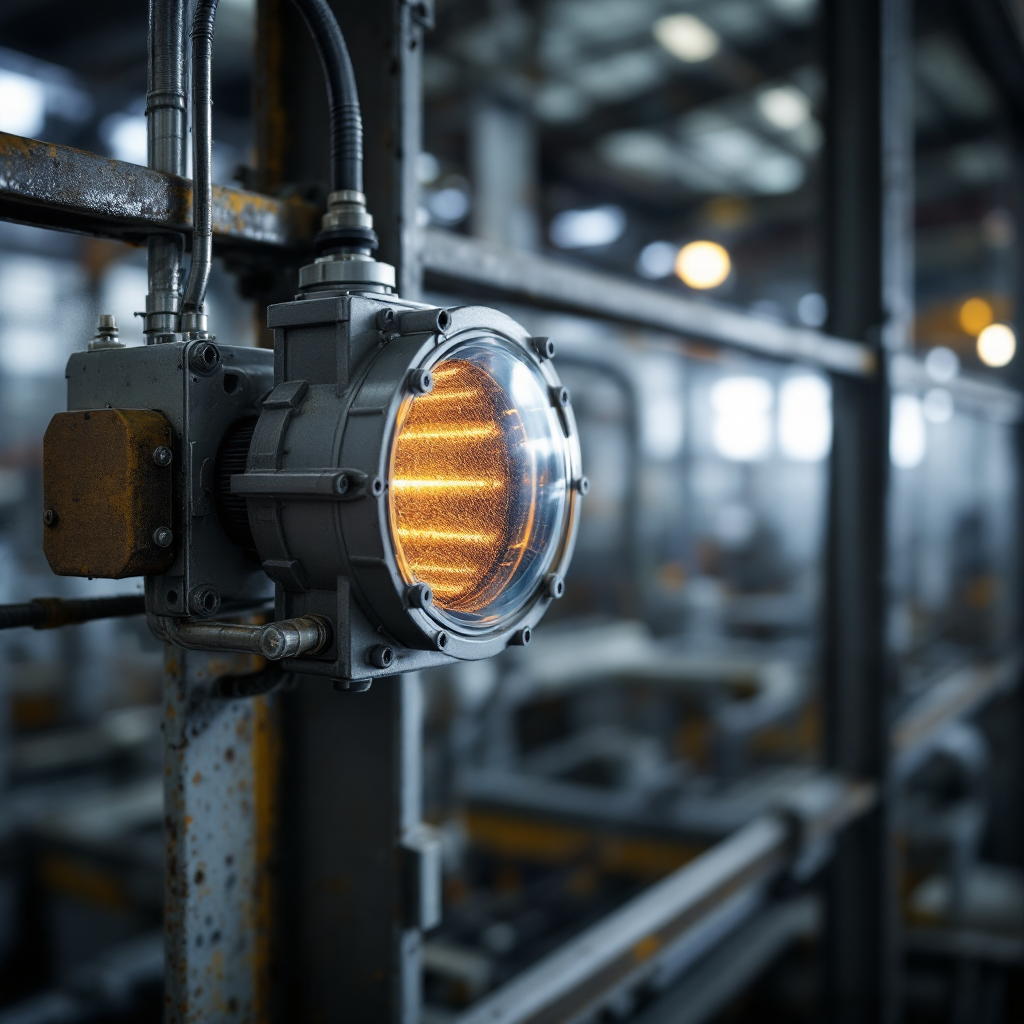
Signal processing and pattern-recognition methods turn raw photodiode outputs into reliable alarms. Also, modern detectors use digital filters, frequency analysis, and simple machine-learning algorithms to identify characteristic flicker frequencies and spectral ratios emitted by flames. For example, flame detectors use algorithms that compute the ratio between ultraviolet and infrared signals to verify the presence of a flame and to reject false signatures from hot surfaces. Additionally, thermal imaging cameras add spatial context and can detect temperature anomalies across large areas to supplement point sensors.
False-alarm sources include welding arcs, sunlight reflections, and hot process surfaces. Also, dust and steam can alter spectral transmission. Therefore, advanced detectors apply temporal filtering to ensure that short-duration spikes, such as those from weld, do not trigger an alert. The detector circuitry often monitors modulation patterns consistent with combustion to improve false alarm rejection capability. When designing a system, choose sensors rated for corrosive or high-dust atmospheres if the site contains aggressive environments. Furthermore, system integrators must test detectors against the specific different fuel sources present on site because emitted by flames varies by fuel, and calibration must match real conditions.
AI vision within minutes?
With our no-code platform you can just focus on your data, we’ll do the rest
Detector integration: Building reliable alarm and fire response systems
Integrated detector arrays form the backbone of robust fire protection in manufacturing. First, networked detectors feed centralised control panels and safety systems so operators can see alarms and act quickly. Also, automation helps: when a sensor triggers, the control panels can route an alert to security, operations, and a central dashboard, and they can trigger an integrated fire suppression action if thresholds require. A fire suppression system usually receives clear, verified inputs to avoid unnecessary discharge, which is critical when suppression uses water or extinguishing agents around sensitive equipment.
Integration best practices include redundant communication paths, power supplies, and independent alarm chains so a single fault does not remove coverage. Also, incorporate CCTV analytics as a secondary channel to verify events and provide visual context. Visionplatform.ai turns existing cameras into operational sensors and streams real-time detections to control systems, which reduces false alerts and provides visual confirmation before dispatch. In addition, use MQTT or webhooks to route structured events into OT and BI stacks so teams can measure response time and mitigation effectiveness.
Also, connect detectors use protocols that support encrypted telemetry. Next, align control panels with emergency plans so an alert triggers evacuation signals and zones that isolate gas supplies, cut power to non-essential machinery, and close dampers. For gas-rich processes add gas detection to the alarm mix to detect leakages that could escalate to ignition. Finally, schedule regular tests of the entire chain — from detector to control panel to suppression — to verify functionality and to detect cable wear or corrosion before it causes a malfunction or compromised response.
Challenges in detection: False alarms in flame and smoke detection, mitigation, and future trends
False alarms remain a persistent challenge in industrial environments. First, common nuisance sources include welding, steam from cleaning, dust clouds, and heat from process ovens or radiant surfaces. Also, routine activities such as maintenance can trigger point sensors that were not tuned for transient production events. NIST research highlights that updated smoke alarms still trigger during benign cooking demonstrations, and the same principle applies to manufacturing: sensitivity must balance early warning with nuisance rejection (NIST).
AI and machine-learning models help lower false alarms by learning site-specific patterns. Also, deep learning applied to camera feeds improves early fire and smoke identification by analysing spatial and temporal cues that point sensors cannot capture. For instance, recent studies show that vision-based algorithms reduce delayed response times and false alarm rates when trained on diverse datasets (MDPI). Likewise, benchmark datasets such as FireSense accelerate method development by providing varied flame and smoke examples for validation (FireSense review).
Also, standards and smart sensor innovations will shape future practice. For example, integrated systems that combine air sampling, photoelectric smoke detectors, thermal imaging, gas detection, and optical flame detectors provide layered protection. Also, cloud-free, on-prem model training supports GDPR and EU AI Act readiness while keeping models tuned to local operations. Visionplatform.ai promotes on-prem, edge-first analytics so enterprises retain control over data and model behaviour, which helps reduce nuisance alerts and supports auditability. Finally, as fire safety advances, expect smarter sensors, improved false alarm rejection capability, and better guidelines for mixed-sensor deployments that match the change over time of industrial processes.
FAQ
What is the difference between smoke detection and flame detection?
Smoke detection identifies particles or combustion by-products in the air, often before glowing or open fire appears. Flame detection senses the radiant energy or light patterns that indicate the presence of a flame, so it can confirm an open fire quickly.
How do aspirating smoke detection and air sampling differ from conventional smoke detectors?
Aspirating systems draw air samples through tubing to a central detector and can detect very low levels of smoke particles. Conventional smoke detectors are point sensors that react when smoke reaches the sensor location, which can delay early warning in large or high-ceiling spaces.
When should I use optical flame detectors versus infrared sensors?
Use optical and ultraviolet detectors when you need fast response to certain combustion signatures, especially in hydrocarbon-rich environments. Use infrared or thermal imaging to detect radiant energy through partial occlusion or to monitor temperature anomalies across large areas.
Can camera analytics reduce false alarms from detectors?
Yes. Camera-based AI can verify a physical alarm by confirming visible smoke or flame, which lowers unnecessary activations. Also, on-prem analytics can adapt to site-specific conditions and stream structured events into control systems for faster, more accurate responses.
How do I integrate detectors with a fire suppression system?
Integrate detectors with control panels that follow approved logic so verified alarms trigger suppression only when required. Also, design redundancy and interlocks so suppression activation does not create additional hazards for personnel or equipment.
What maintenance do flame detectors and air sampling systems require?
They need scheduled inspections, cleaning, and calibration to account for dust, corrosion, or drift in sensitivity settings. Also, maintain pipework and filters for aspirating systems to ensure consistent sample flow and correct readings.
How does gas detection fit into a fire safety plan?
Gas detection monitors fuel and toxic atmospheres and can provide early signs of leaks that might lead to combustion. Also, tying gas detection into alarm workflows helps stop processes and isolate hazard sources before ignition.
Are there standards that govern detector placement and testing?
Yes. National and international standards define zoning, spacing, and testing protocols for smoke detectors, flame detectors, and heat detectors. Also, follow local fire codes and the manufacturer guidelines for coverage and response time requirements.
What causes most false alarms in manufacturing environments?
Common causes include welding arcs, steam, dust, and transient process emissions that mimic smoke or thermal signatures. Also, inadequate sensitivity settings or poor placement of detectors can increase nuisance alerts.
How can I evaluate the right detection technologies for my facility?
Assess the hazard profile, including combustible materials, process temperatures, and ventilation. Also, consider mixed sensor deployments, integrate CCTV analytics for verification, and test against representative scenarios to ensure reliable detection and mitigation.