warehouse: fire risk and fire safety imperatives
Warehouses present a clear fire risk and demand focused fire safety planning. The typical layout includes endless rows of storage racks and wide aisles. As a result, staff can be far from a potential fire and smoke can travel before anyone notices. High ceilings often sit above these storage areas, and heat and smoke rise toward the ceiling where they can accumulate. This dynamic makes early detection essential and forces designers to think in three dimensions.
Many warehouses hold flammable goods such as cardboard, plastics, textiles, and palletised products. These materials can fuel rapid combustion and accelerating flames. Fires can spread through racking systems and across pallets in minutes, and sprinkler coverage may lag if a blaze develops inside dense cartons. Warehouse operators must therefore match their protection system to the type of inventory, the layout, and how goods are stacked. Safety standards and local codes, often informed by NFPA guidance, set minimum requirements and inform placement and zoning for fire detection and suppression.
Health impacts also drive investment. Smoke inhalation causes injury and long-term risk, and smoke particles can spread through ventilation and loading bays to other facilities. The reliability of early detection matters for evacuation and for coordinated response by emergency services. For hard-to-reach areas, thermal imaging cameras help spot heat growth before flames appear, and visible early signs often overlap with video-based detection tools that can identify a developing fire visually.
Finally, operations require balance. An overly sensitive system can produce unwanted alarms that disrupt warehouses and cost time and money. Conversely, a system that under-detects can allow a small ignition to become catastrophic. Industry reports project rising demand for dedicated flame and smoke protection as modern warehousing grows, and leaders now call for layered approaches that combine heat, smoke, and optical methods for reliable detection.
detection system: smoke detection systems and flame detectors
Choosing the right detection system starts with a sound assessment of building geometry, inventory type, and occupancy. Beam smoke detection often suits large open spaces where many point detectors would be impractical. Beam detectors span long distances and can cover large open areas with a single optical link. They work by projecting a beam across the span and watching for interruptions or attenuation caused by smoke particles. For warehouses with tall ceilings and minimal ceiling-mounted access, beam smoke detection offers coverage that is both cost-effective and responsive.
Point-type smoke detector technology still plays a role in localised spots. Photoelectric detectors respond well to smouldering fires and dense smoke, while ionization detectors respond faster to fast flaming combustion, though ionization detectors are now less common in storage areas because of nuisance alarms. Heat detectors and flame detectors provide another layer. Specialist flame detectors use ultraviolet or infrared bands to detect radiation emitted by flames. A common industrial approach pairs beam or aspirating smoke detectors with flame detectors for goods that burn rapidly or emit hot surfaces.
When designing, planners must consider the ceiling height and obstacles such as tall racking and mezzanines. A mix of devices reduces blind spots and speeds detection of a developing fire. Systems installed for life safety must interface with a fire alarm system and with building control for automatic responses like sprinkler systems activation and controlled evacuation signals. For warehouses that use CCTV and existing VMS, integrating video analytics that offer video smoke detection can add immediate visual confirmation and reduce false alarms. Visionplatform.ai helps operators convert cameras into operational sensors so visual detections can stream to dashboards and to the alarm system for faster action. For more on video-based capabilities, see the platform’s work on fire and smoke detection in airport settings here.

AI vision within minutes?
With our no-code platform you can just focus on your data, we’ll do the rest
advanced smoke detection: vesda and aspirate solutions
Aspirating smoke detection, often known by the trade name VESDA, actively samples air and then analyses it in a central detector. Tubes draw air from the protected area to a detector that filters and measures microscopic smoke particles. This air sampling approach finds traces of combustion well before a developing fire becomes visible. As a result, it is ideal for sensitive or high-value storage areas that need providing an early warning and for areas where point-type devices might miss early signatures due to air movement or obstructions.
Aspirating designs include fan-driven air sampling, a network of pipe inlets across the storage area, and a central unit that performs particle counting and pattern analysis. VESDA systems can offer adjustable sensitivity and redundancy for cleaner trending and fewer false alarms. They typically include filtration stages to reduce dust and particle loads and use algorithms to distinguish background particulate from real threat. For large warehouses with dusty operations, this matters for maintenance and for unwanted alarms. The Ultimate Guide to Advanced Fire Detection in Warehouses recommends a very-early-warning approach for these spaces source.
Benefits include high sensitivity and consistent sampling coverage even in high ceilings and behind racking. Placement and zoning follow a careful map of intake points so that loading bays, mezzanines, and storage areas each have coverage. Maintenance is proactive: filter checks, sensitivity adjustments, and clean pipework keep the monitoring system reliable. Aspirating systems respond well to dense smoke and to slow, smouldering events that might not trigger heat detectors. For warehouses that must protect critical inventory and operations, aspirating smoke detection supports both life safety and asset protection goals.
For operators using cameras and edge analytics, aspirating alerts can be cross-verified by video events to confirm location and reduce false alarms. Visionplatform.ai’s approach to on-prem video analytics can stream aspirating alarms into a monitoring system and publish events for operational use, thereby tightening the loop between detection and response.
flame detection: video analytics and AI-enhanced detection
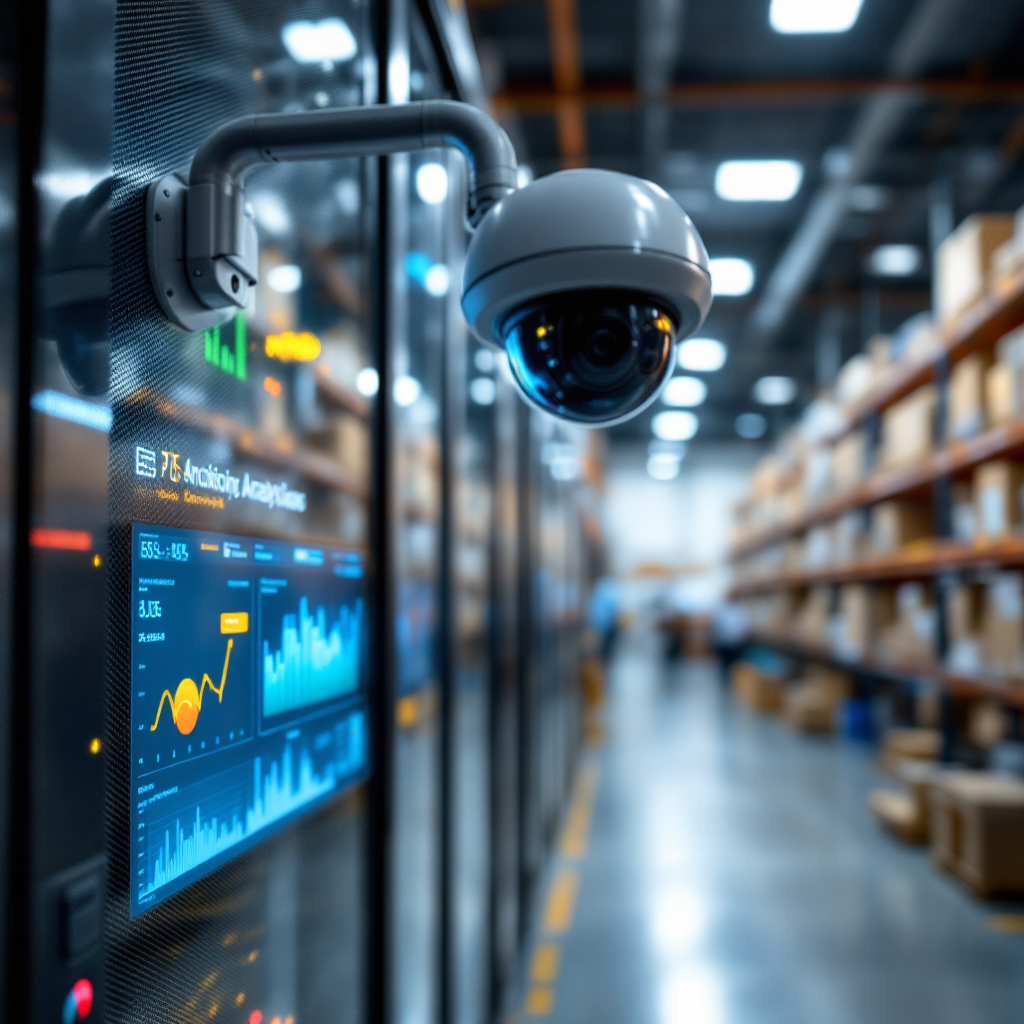
Video smoke detection and video-based flame detection broaden the toolkit for identifying potential fire. Cameras can spot visual signs long before a heat detector trips and can indicate the exact rack or pallet where smoke or flame appears. Video analytics look for motion, shape, and color changes consistent with flame and smoke signatures. The optical methods rely on changes in pixel patterns, and modern systems add spectral analysis in UV and IR bands to increase confidence.
Deep-learning models such as FFDNet demonstrate how AI can reduce false positives by learning real flame signatures and ignoring reflections or bright lights. Research shows that combining classical optical filters with convolutional neural networks leads to higher accuracy in complex scenes source and a recent multilevel framework explores optimising such systems source. These models train on diverse footage and then run at the edge to meet privacy and latency requirements.
Integration with existing CCTV and VMS is straightforward when analytics are deployed on-prem. Visionplatform.ai turns existing cameras into an operational sensor network and allows training on site-specific footage to reduce false detections. This approach keeps data in your control and aligns with EU AI Act requirements by processing on edge servers. When the video analytics detect a potential fire, they can send structured events to the monitoring system and to the warehouse management team for immediate action.
Flame detectors in the traditional sense—dedicated UV or infrared units—remain useful for hydrocarbons and fast-burning materials. However, video offers flexible coverage across vast storage areas and supports human verification. Together they form a layered strategy where each method backs up the others for reliable detection and swift response.
AI vision within minutes?
With our no-code platform you can just focus on your data, we’ll do the rest
alarm system: reducing false fire alarms in warehouse fire alarm system
False alarms can be expensive and disruptive. Common causes include dust, insects, forklift exhaust, welding sparks, and routine smoke from packaged goods during handling. These nuisance triggers can desensitise staff and may lead to ignored alerts. To prevent that, designers use multi-sensor verification and cross-trigger logic so that an alarm only escalates when two or more independent indicators confirm a potential fire.
Multi-sensor panels can combine photoelectric detectors with heat detectors and CO sensors. They can also accept inputs from aspirating smoke detection and from video smoke detection analytics. When a camera identifies a visible plume and a VESDA unit reports rising particulate counts, the control panel can generate an immediate alarm and snapshot for verification. This cross-trigger logic limits unwanted alarms while keeping sensitivity for a developing fire.
Calibration and routine testing are essential. Sensitivity adjustments must match the environment, and maintenance routines help prevent detectors might clog with dust or fail due to mechanical issues. Scheduled testing of sprinkler systems and the warehouse fire alarm system ensures that an immediate alarm will translate into action. Training on evacuation procedures and coordinated drills complement the technical measures and improve real-world outcomes. For reference, industry data indicates that stand-alone smoke detectors still hold a large market share, but smart, connected models reduce operational burden and improve reliability source.
Finally, ensure alarm notifications reach both operations and emergency services. A monitoring system should log events, send push notifications, and offer video clips. Visionplatform.ai supports streaming of structured events to dashboards and MQTT endpoints so teams receive timely, actionable context when the alarm system triggers. This practice shortens response times and helps protect people and assets.
effective fire detection: best practices for detection across warehouse spaces
An effective fire detection strategy layers technologies and teams. Combine heat detectors with smoke detection and with optical flame detection so each method covers the weaknesses of another. For example, heat detectors react to temperature rise, while photoelectric detectors respond to visible smoke particles, and flame detectors sense ultraviolet or infrared emissions emitted by flames. Using all three provides redundancy and improves chances to identify a potential fire early.
Placement matters. Use aspirating air sampling for enclosed stock rooms and beam detectors for large atria. Add point-type smoke detectors in control rooms and offices. For loading bays and outdoor interfaces, choose devices rated for indoor and outdoor use. Periodic risk assessments should review rack heights, storage configurations, and workflow changes that affect air movement and smoke stratification. Be sure to account for dense smoke formation in tightly packed pallets and for how fires can spread along conveyor lines and into mezzanines.
Connectivity and real-time monitoring help operations. IoT-enabled devices and a monitoring system that aggregates aspirating alerts, beam detection data, and video events give a unified view. This approach supports faster evacuation decisions and more precise fire suppression deployment. Training staff and running regular drills ensure that teams know where to go and how to support first responders. Also, maintain a clear record of safety standards compliance and of sensitivity adjustments for detectors after any layout change.
Finally, plan for integration with fire suppression. Sprinkler systems remain a core mitigation tool, and some facilities also use gas-based fire suppression for sensitive stocks. Align detection thresholds so the detection of smoke or an identified flame leads to appropriate and staged actions rather than a single automatic discharge that could harm goods or people. With layered systems, routine testing, and operational analytics, warehouses can achieve reliable detection, timely evacuation, and stronger protection for both people and assets.
FAQ
What makes warehouses more vulnerable to fire?
Warehouses often store large volumes of combustible materials and have high ceilings that allow fires to grow before they are noticed. In addition, long aisles and dense racking can hide a developing fire and complicate rapid response.
How do beam detectors help in large open warehouses?
Beam detectors project an optical beam across a large open area to detect smoke attenuation or interruption. They are cost-effective for long spans and reduce the number of point devices needed in high ceilings and large open sections.
What is aspirating smoke detection and when should it be used?
Aspirating smoke detection draws air through a network of pipes to a central unit for particle analysis, offering very high sensitivity. It is ideal for high-value storage areas and for early warning where point detectors might miss low-level smoke.
Can video analytics replace traditional detectors?
Video analytics complement but do not fully replace traditional detectors. They can provide visual confirmation and precise location data, and when used with aspirating or beam devices they reduce false alarms and speed response.
How can AI reduce false alarms in warehouses?
AI models trained on site-specific footage can distinguish real flame or smoke signatures from reflections, dust, or vehicle exhaust. Running models on the edge and improving them with local data reduces unwanted alarms and improves reliability.
What routine maintenance do smoke detectors need?
Detectors need cleaning, filter changes for aspirating systems, and regular sensitivity checks. Periodic functional testing and inspection of pipework and sampling points prevent degraded performance and unwanted alarms.
How should an alarm system integrate with operations?
An alarm system should send structured events to operators and to monitoring dashboards, and it should interface with sprinkler systems and evacuation procedures. Integration ensures that alerts trigger appropriate and timely responses.
Are thermal imaging cameras useful in warehouses?
Yes. Thermal imaging cameras detect heat anomalies before flames appear and can spot overheating equipment or hotspots on racks. They add another layer of early detection and can guide targeted inspections.
What steps reduce nuisance alarms in dusty environments?
Use aspirating systems with filtration, apply multi-sensor verification, and configure sensitivity adjustments to match the environment. Regular cleaning and targeted placement also lower the rate of unwanted alarms.
How does Visionplatform.ai support warehouse fire detection?
Visionplatform.ai converts existing CCTV into an operational sensor network that streams video detections to your VMS and monitoring system. The platform runs on-prem to keep data local, reduces false detections by training on site footage, and publishes structured events so teams act faster and smarter.